
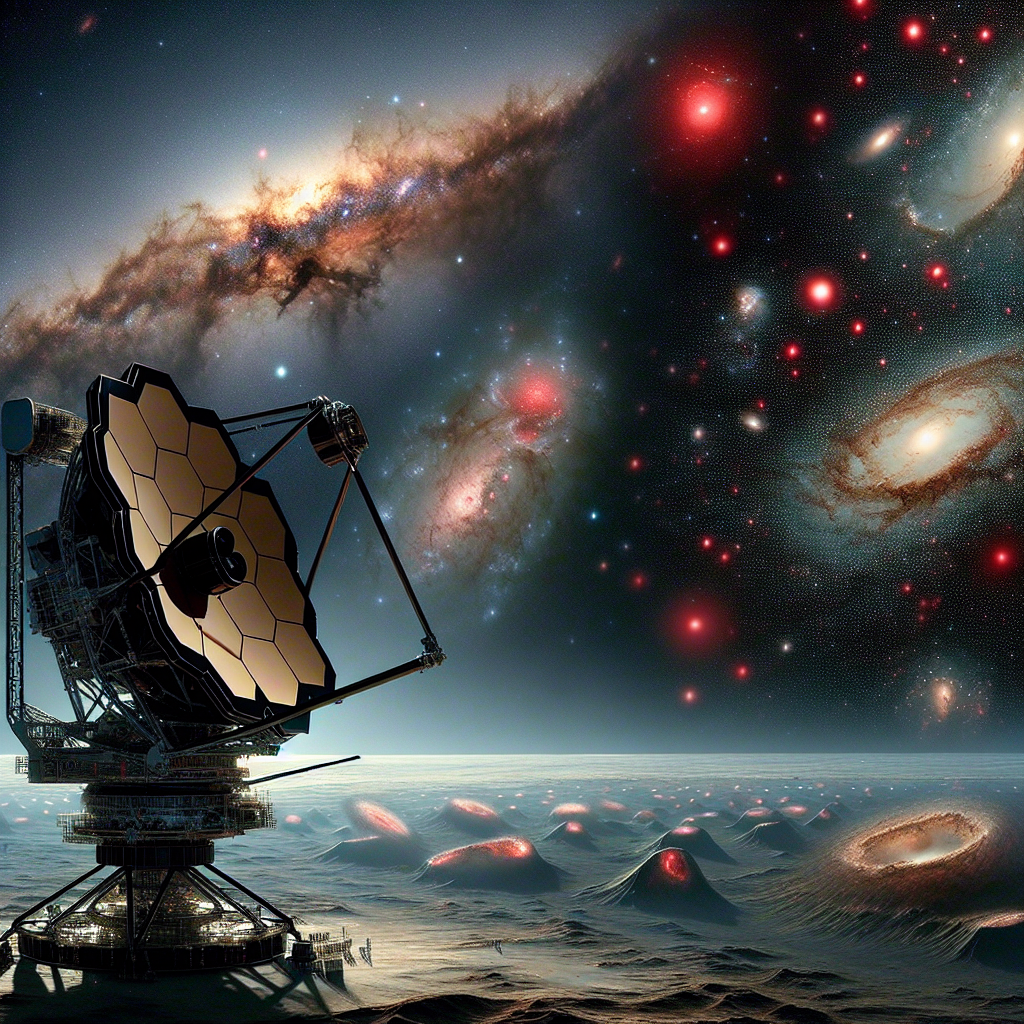
James Webb Telescope Unveils Enigmatic Red Dots and Lifeless Galaxies
James Webb Telescope Unveils Enigmatic Red Dots and Lifeless Galaxies
Introduction to the Discovery
The James Webb Space Telescope (JWST) has made a groundbreaking discovery, revealing mysterious red dots and seemingly lifeless galaxies in the distant universe. This finding has sparked intrigue and curiosity among astronomers and space enthusiasts alike.

Key Discoveries
- Enigmatic Red Dots: The telescope has identified numerous red dots scattered across the cosmos, which are believed to be ancient galaxies or celestial bodies.
- Lifeless Galaxies: Some galaxies observed appear to be devoid of the usual star-forming activities, raising questions about their formation and evolution.
Scientific Implications
The discoveries made by the JWST have significant implications for our understanding of the universe:

- Galactic Evolution: The lifeless galaxies challenge existing theories about galaxy formation and evolution, suggesting alternative pathways or influences.
- Cosmic History: The red dots may provide insights into the early universe, offering clues about the conditions and processes that prevailed shortly after the Big Bang.
Future Research Directions
These findings open up new avenues for research and exploration:

- Further Observations: Continued monitoring and analysis of these red dots and lifeless galaxies will be crucial to unravel their mysteries.
- Advanced Simulations: Scientists may employ advanced simulations to model the potential scenarios leading to the observed phenomena.
Conclusion
The James Webb Space Telescope’s discovery of enigmatic red dots and lifeless galaxies offers a tantalizing glimpse into the complexities of the universe. These findings not only challenge existing astronomical theories but also pave the way for future explorations that could redefine our understanding of cosmic history and evolution.













