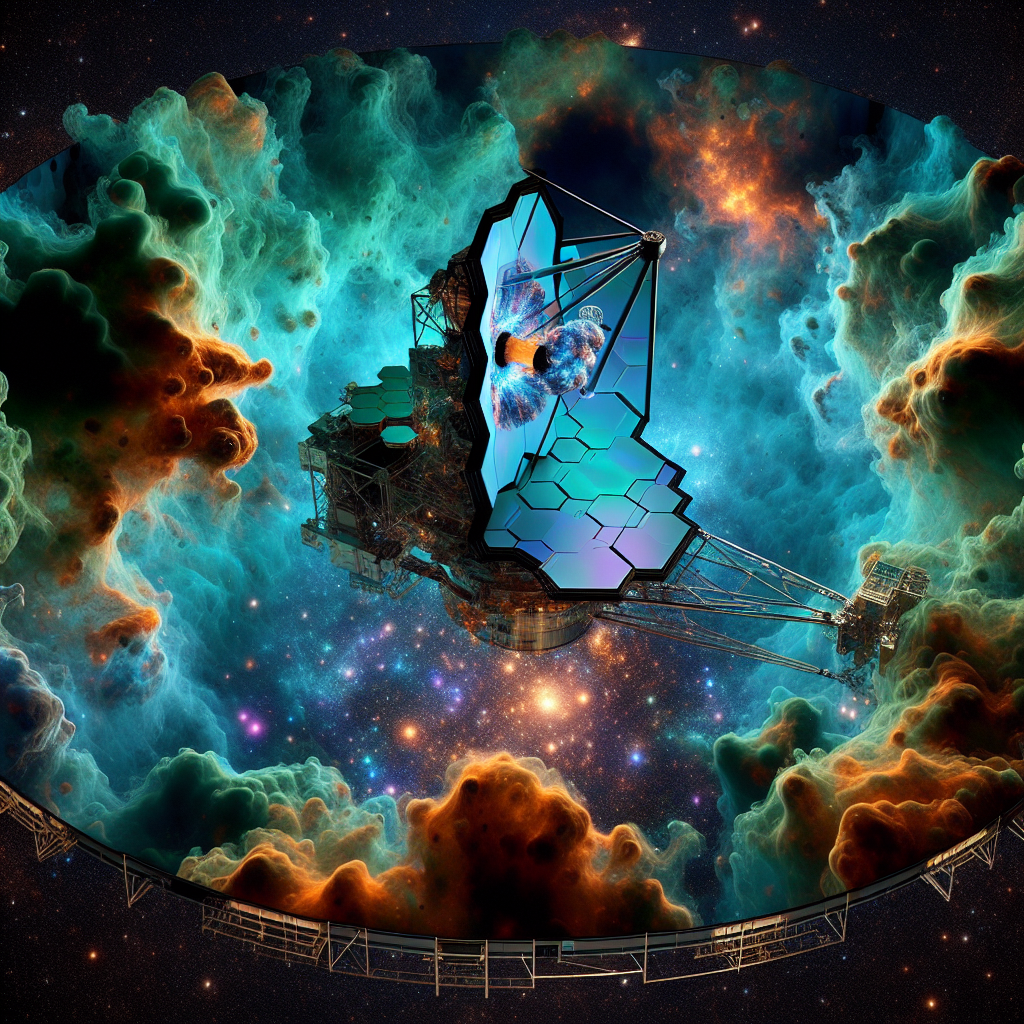
James Webb Telescope Unveils 3D Dust and Gas Structures
James Webb Telescope Unveils 3D Dust and Gas Structures
Revolutionizing Our Understanding of the Cosmos
The James Webb Space Telescope (JWST) has once again pushed the boundaries of astronomical exploration by revealing intricate 3D structures of dust and gas in space. This groundbreaking discovery offers unprecedented insights into the formation and evolution of celestial bodies.

Key Discoveries
- 3D Visualization: The JWST’s advanced imaging capabilities have allowed scientists to visualize the complex three-dimensional structures of cosmic dust and gas, providing a more comprehensive understanding of their role in star and planet formation.
- Enhanced Detail: The telescope’s infrared technology has unveiled details previously obscured by cosmic dust, offering a clearer view of the universe’s building blocks.
- New Insights: These observations are crucial for understanding the lifecycle of stars and the dynamic processes that govern galaxy formation.
Implications for Astronomy
The revelations from the James Webb Telescope are set to transform our approach to studying the universe. By offering a detailed view of the dust and gas structures, astronomers can now:

- Develop more accurate models of star and planet formation.
- Investigate the origins of complex organic molecules in space.
- Explore the conditions that lead to the birth of new galaxies.
Conclusion
The James Webb Space Telescope’s unveiling of 3D dust and gas structures marks a significant milestone in space exploration. By providing a clearer picture of the universe’s fundamental components, it opens new avenues for research and deepens our understanding of the cosmos. This discovery not only enhances our knowledge of the universe’s past but also paves the way for future astronomical breakthroughs.