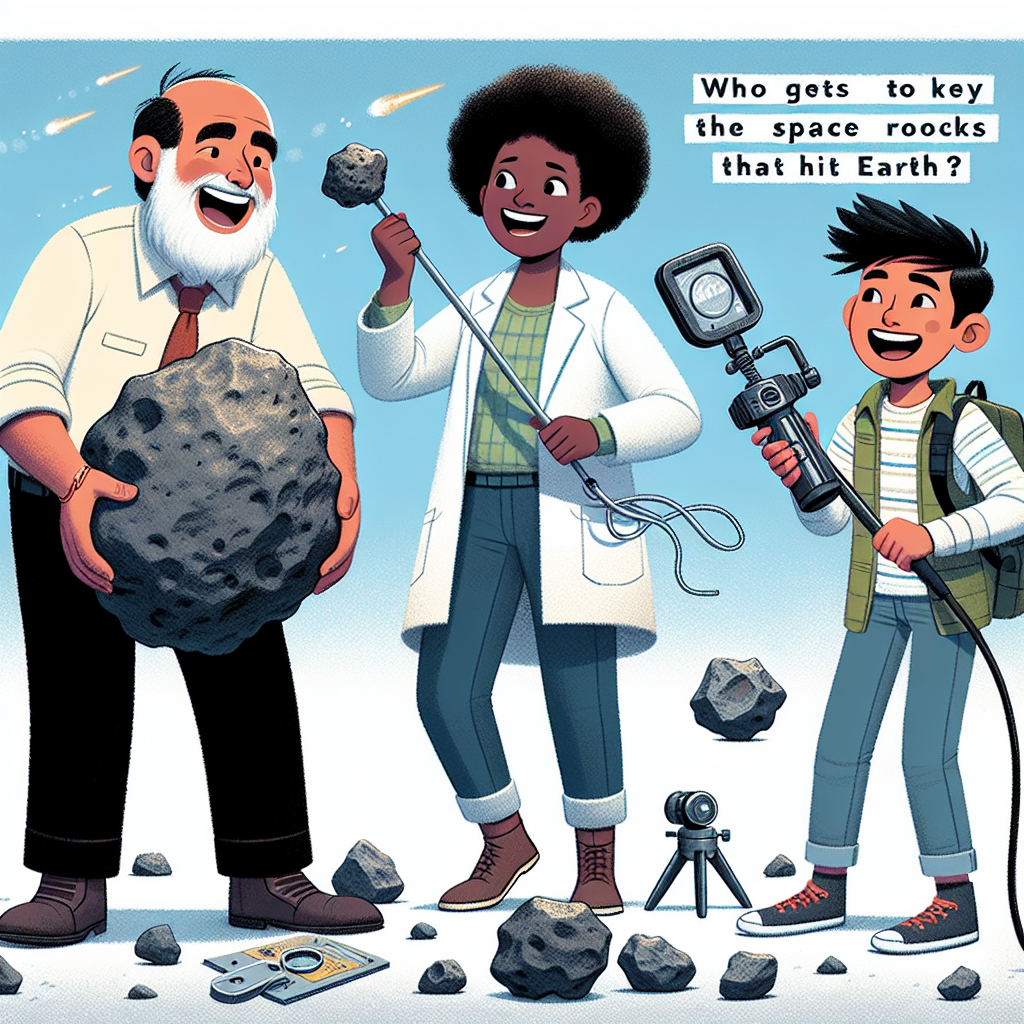
Who Gets to Keep the Space Rocks That Hit Earth?
Who Gets to Keep the Space Rocks That Hit Earth?
Introduction to Space Rocks
Space rocks, or meteorites, are fascinating celestial objects that occasionally make their way to Earth. These extraterrestrial visitors spark curiosity and raise questions about ownership and rights. The topic of who gets to keep these space rocks is both intriguing and complex, involving legal, scientific, and ethical considerations.

Legal Framework and Ownership
The ownership of meteorites is governed by a mix of international treaties, national laws, and local regulations. Key points include:

- International Treaties: The Outer Space Treaty of 1967, which most countries have signed, states that celestial bodies are the province of all humankind, but it does not specifically address meteorites.
- National Laws: Different countries have varying laws regarding meteorite ownership. For example, in the United States, meteorites found on private property typically belong to the landowner.
- Local Regulations: Some regions have specific rules about the collection and sale of meteorites, often to protect scientific interests.
Scientific and Cultural Significance
Meteorites hold immense scientific value, offering insights into the early solar system and the formation of planets. They are also culturally significant, often seen as rare collectibles or objects of spiritual importance. The debate over who should keep them often balances these interests:

- Scientific Research: Scientists advocate for meteorites to be studied in research institutions to advance knowledge.
- Private Collectors: Some individuals and collectors seek to own meteorites for personal interest or investment.
- Cultural Heritage: Indigenous groups may view meteorites as part of their cultural heritage and seek to preserve them within their communities.
Ethical Considerations
The ethical debate surrounding meteorite ownership involves questions of accessibility, preservation, and commercialization. Key ethical considerations include:
- Accessibility: Ensuring that meteorites are accessible for scientific study and public education.
- Preservation: Protecting meteorites from damage or loss, especially those with significant scientific or cultural value.
- Commercialization: The sale of meteorites can lead to ethical dilemmas about the commodification of natural objects.
Conclusion
The question of who gets to keep space rocks that hit Earth is a multifaceted issue involving legal, scientific, and ethical dimensions. While international treaties provide a broad framework, national and local laws often determine specific ownership rights. Balancing the interests of scientific research, private collectors, and cultural heritage remains a key challenge. Ultimately, the debate highlights the need for thoughtful consideration of how best to manage these extraordinary celestial gifts.