
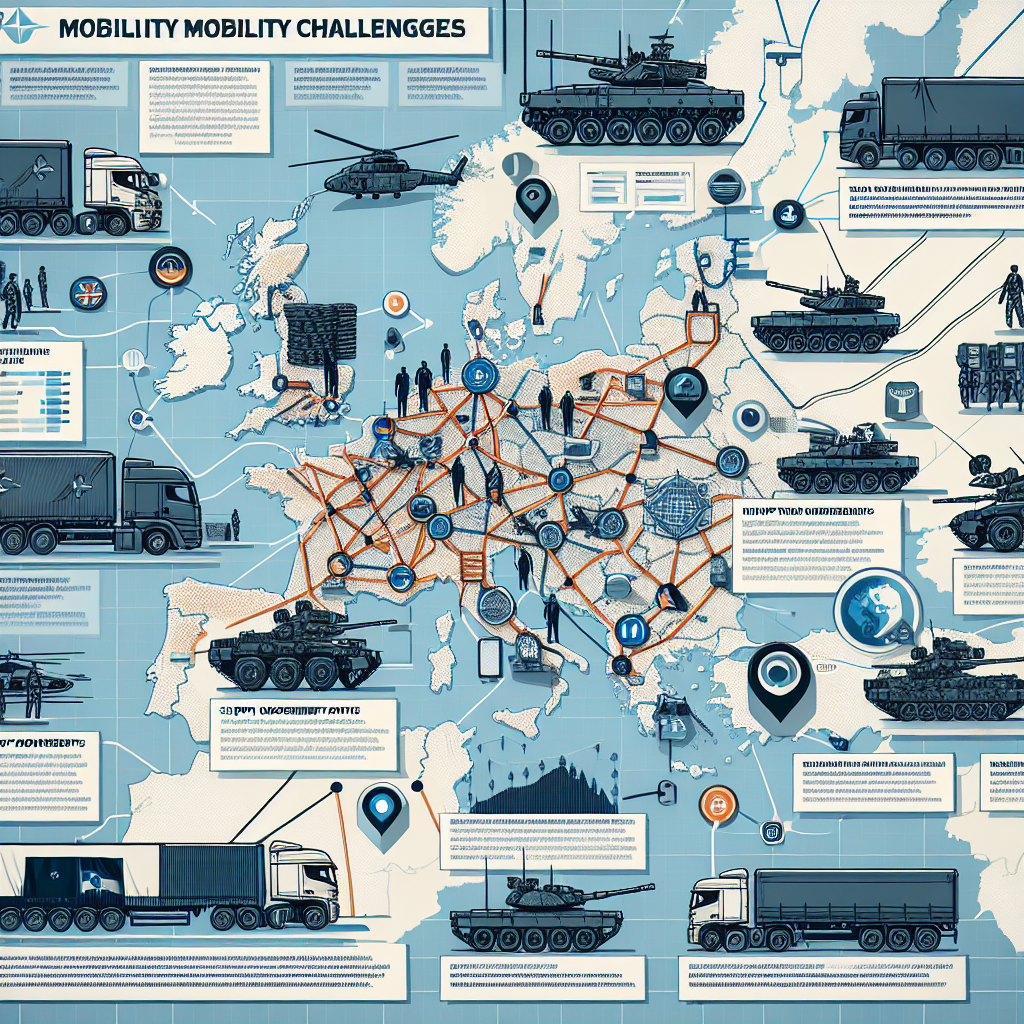
Report Highlights NATO Troops’ Mobility Challenges Across EU
Report Highlights NATO Troops’ Mobility Challenges Across EU
Introduction
A recent report has shed light on the significant mobility challenges faced by NATO troops when operating across European Union (EU) territories. These challenges pose potential risks to the alliance’s readiness and rapid response capabilities.

Key Mobility Challenges
The report identifies several critical obstacles that hinder the efficient movement of NATO forces within the EU:

- Regulatory Barriers: Complex and varied national regulations across EU member states create bureaucratic hurdles.
- Infrastructure Limitations: Inadequate transport infrastructure, including roads and railways, restricts swift troop movements.
- Border Delays: Despite the Schengen Area, border checks and customs procedures can cause significant delays.
- Coordination Issues: Lack of streamlined coordination between NATO and EU entities complicates logistical planning.
Impact on NATO’s Readiness
The mobility challenges have direct implications for NATO’s operational readiness:

- Delayed Deployments: Troop deployments may be delayed, affecting the alliance’s ability to respond to crises promptly.
- Increased Costs: Logistical inefficiencies lead to higher operational costs, straining defense budgets.
- Strategic Vulnerabilities: Mobility issues could be exploited by adversaries, undermining NATO’s strategic deterrence.
Recommendations for Improvement
The report suggests several measures to enhance NATO troops’ mobility across the EU:
- Harmonizing Regulations: Streamlining and harmonizing regulations across member states to reduce bureaucratic obstacles.
- Infrastructure Investments: Investing in transport infrastructure to support rapid and efficient troop movements.
- Enhanced Coordination: Improving coordination between NATO and EU institutions to facilitate better logistical planning.
- Joint Exercises: Conducting joint exercises to identify and address mobility bottlenecks in real-time scenarios.
Conclusion
The report underscores the urgent need for NATO and EU member states to address mobility challenges to ensure the alliance’s operational effectiveness. By implementing the recommended measures, NATO can enhance its readiness and maintain its strategic edge in an increasingly complex security environment.












