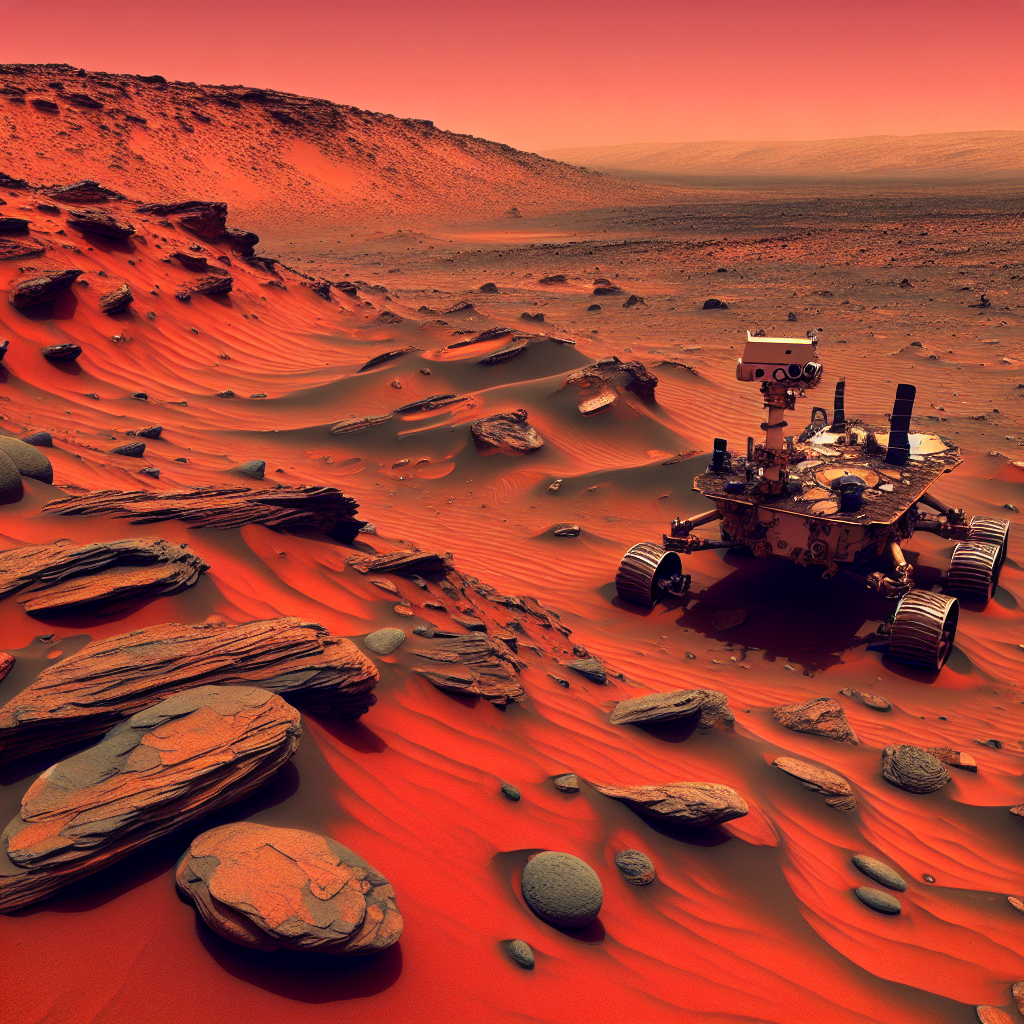
Scientists Uncover Ancient 3 Billion-Year-Old Martian Beach
Scientists Uncover Ancient 3 Billion-Year-Old Martian Beach
Introduction to the Discovery
In a groundbreaking revelation, scientists have identified what appears to be an ancient beach on Mars, dating back approximately 3 billion years. This discovery offers new insights into the planet’s geological history and its potential to have supported life.

Key Findings
- Location: The ancient beach was found in the Jezero Crater, a site previously identified as a former lakebed.
- Age: The beach is estimated to be around 3 billion years old, providing a glimpse into Mars’ wetter past.
- Evidence: Sedimentary structures and mineral compositions similar to those found in Earth’s beaches were identified, supporting the hypothesis of a shoreline.
Significance of the Discovery
This discovery is significant for several reasons:
Ads

- Water History: It reinforces the theory that Mars once had substantial bodies of water, crucial for understanding its climate history.
- Potential for Life: The presence of ancient water bodies increases the possibility that Mars could have supported microbial life.
- Future Exploration: The site could become a focal point for future missions aimed at uncovering signs of past life.
Conclusion
The uncovering of a 3 billion-year-old Martian beach is a monumental step in unraveling the mysteries of Mars’ past. It not only highlights the planet’s dynamic geological history but also opens new avenues for exploring the potential for ancient life on Mars. As scientists continue to study this remarkable find, our understanding of the Red Planet’s history and its capacity to harbor life will undoubtedly deepen.
Ads

Ads

Ads

Ads

Ads

Ads

Ads

Ads

Ads

Ads

Ads

Ads