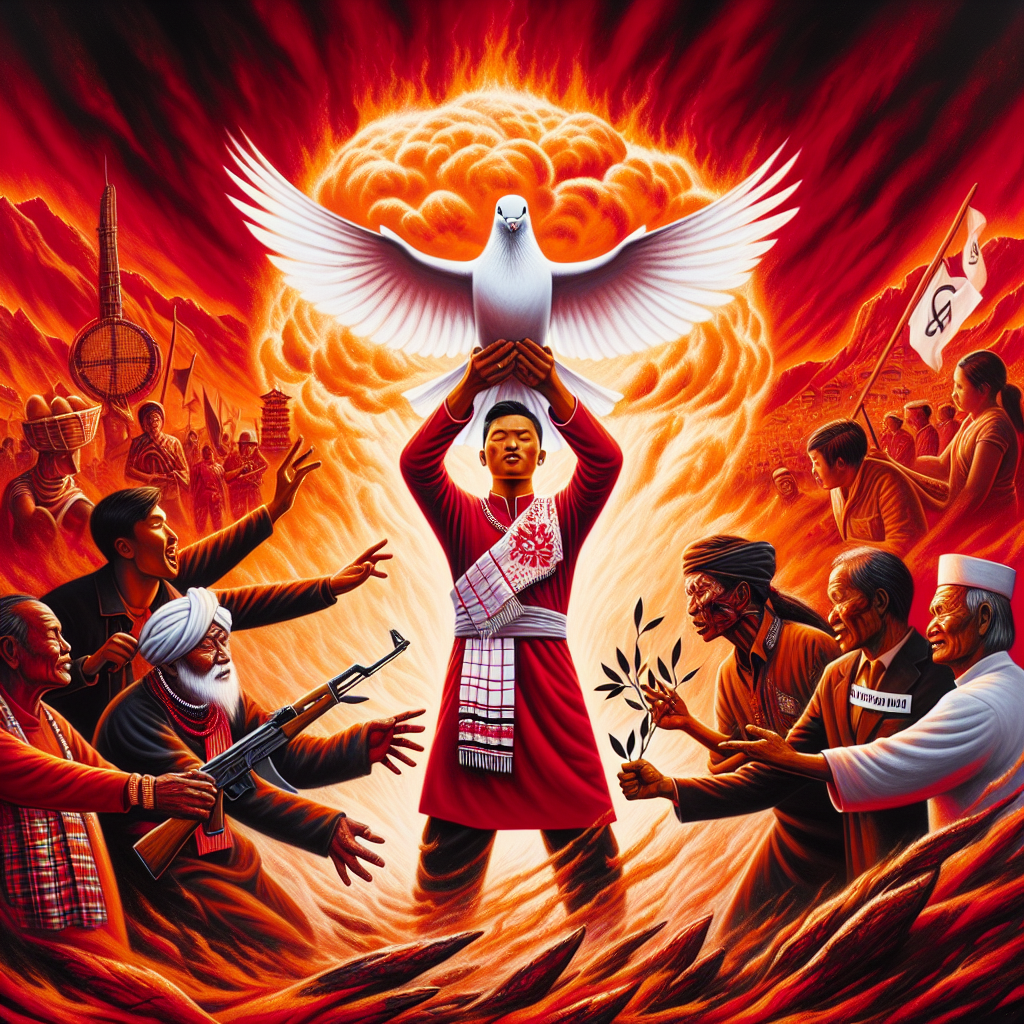
Explosive Tensions: The Struggle for Peace in Manipur, India
Explosive Tensions: The Struggle for Peace in Manipur, India
Background of the Conflict
Manipur, a northeastern state in India, has been a hotspot of ethnic and political tensions for decades. The region’s complex socio-political landscape is marked by a history of insurgency, ethnic strife, and demands for autonomy.

Key Players and Issues
- Ethnic Groups: The Meitei, Naga, and Kuki communities are the primary ethnic groups involved, each with distinct cultural identities and political aspirations.
- Insurgent Groups: Various insurgent groups have been active, seeking either greater autonomy or complete independence from India.
- Government Response: The Indian government has deployed military forces and implemented special laws to maintain order, which has sometimes exacerbated tensions.
Recent Developments
Recent clashes have intensified, leading to significant casualties and displacement of communities. Efforts for peace talks have been initiated but face challenges due to deep-rooted mistrust among the parties involved.

Challenges to Peace
- Mistrust: Historical grievances and lack of trust between ethnic groups and the government hinder dialogue.
- Complex Demands: Diverse demands from different groups make it difficult to reach a consensus.
- Security Concerns: Ongoing violence and insurgency activities pose significant security challenges.
Path Forward
For sustainable peace, a multi-faceted approach is essential, involving:

- Inclusive dialogue that respects the aspirations of all ethnic groups.
- Confidence-building measures to reduce mistrust.
- Development initiatives to address socio-economic disparities.
Conclusion
The struggle for peace in Manipur is a complex and ongoing challenge. While recent efforts have been made to initiate dialogue, achieving lasting peace requires addressing deep-seated issues and fostering trust among all stakeholders. The path forward lies in inclusive and sustained efforts that prioritize the well-being and aspirations of Manipur’s diverse communities.