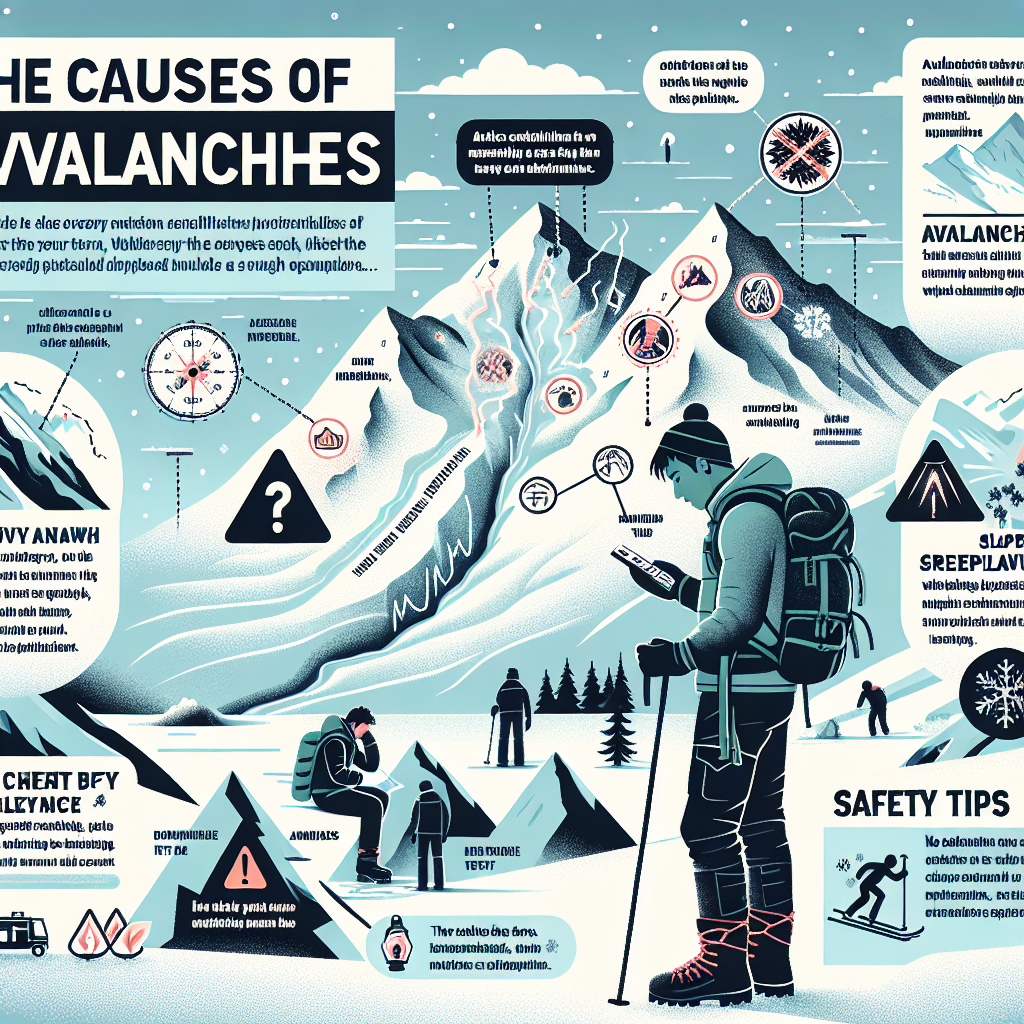
Understanding Avalanches: Causes and Safety Tips
Understanding Avalanches: Causes and Safety Tips
What Triggers Avalanches?
Avalanches are powerful natural events that occur when a mass of snow rapidly descends down a slope. Understanding their causes is crucial for safety and prevention. Key factors include:

- Snowpack Conditions: Weak layers within the snowpack can lead to instability.
- Weather Patterns: Heavy snowfall, rain, and temperature fluctuations can increase avalanche risk.
- Terrain: Steep slopes, typically between 30 to 45 degrees, are more prone to avalanches.
- Human Activity: Skiers, snowboarders, and snowmobilers can inadvertently trigger avalanches.
Recognizing Avalanche Warning Signs
Being able to identify potential warning signs can save lives. Look out for:
Ads

- Cracks in the Snow: Visible cracks can indicate instability.
- Recent Avalanches: Evidence of recent activity suggests heightened risk.
- Heavy Snowfall or Rain: These conditions can overload the snowpack.
- Audible Whumping Sounds: These sounds suggest collapsing snow layers.
Essential Safety Tips
Preparation and awareness are key to staying safe in avalanche-prone areas. Consider these safety tips:
Ads

- Check Avalanche Forecasts: Always review local avalanche forecasts before heading out.
- Carry Safety Equipment: Essential gear includes a beacon, probe, and shovel.
- Travel with a Group: Never venture into avalanche terrain alone.
- Take an Avalanche Safety Course: Education is vital for understanding risks and response strategies.
Conclusion
Avalanches are unpredictable and dangerous, but understanding their causes and recognizing warning signs can significantly reduce risks. By staying informed, carrying the right equipment, and practicing safety measures, individuals can enjoy winter activities while minimizing the threat of avalanches.
Ads

Ads

Ads

Ads

Ads

Ads

Ads

Ads

Ads

Ads

Ads