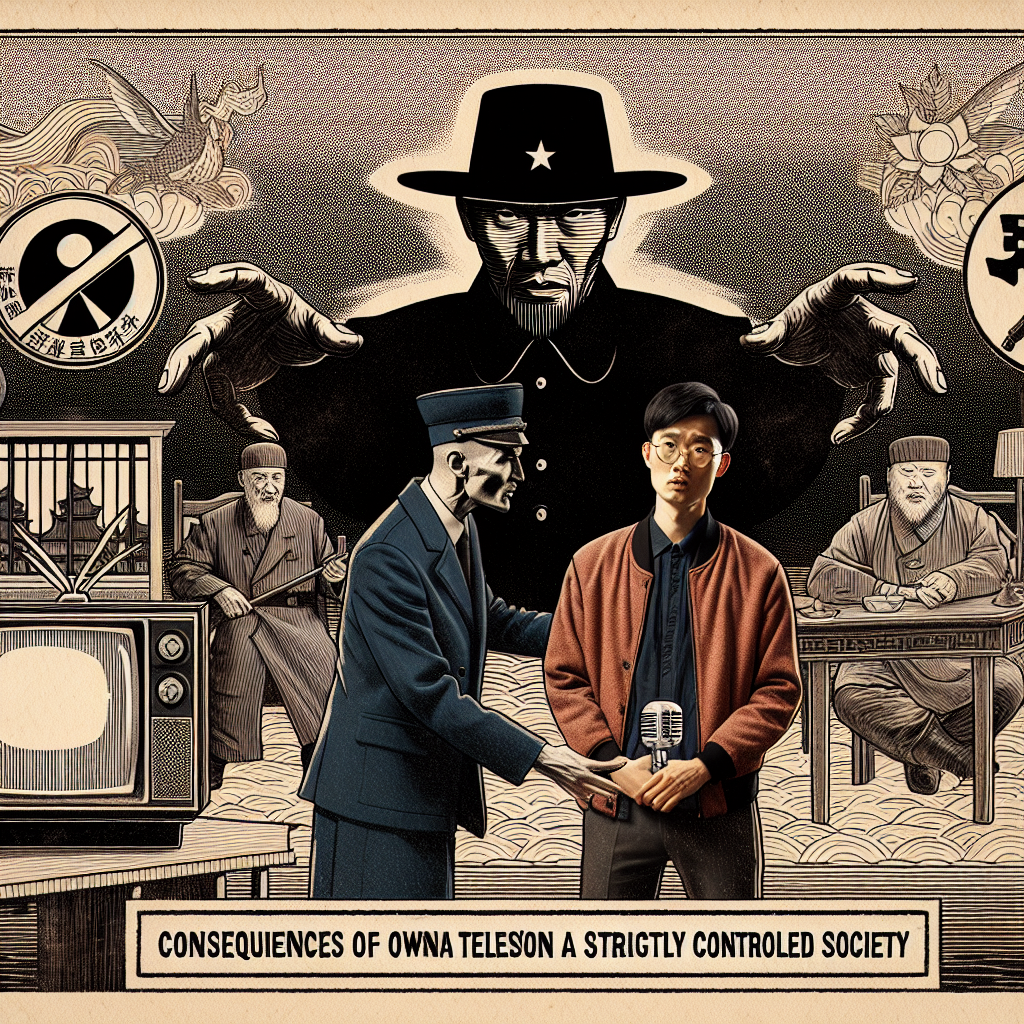
North Korean Defector Reveals Consequences of TV Ownership for Citizens
North Korean Defector Reveals Consequences of TV Ownership for Citizens
Introduction
A recent revelation by a North Korean defector has shed light on the severe repercussions faced by citizens in North Korea for owning unauthorized television sets. This disclosure provides a rare glimpse into the stringent control the regime exerts over information and media consumption.

Strict Media Control
In North Korea, the government maintains a tight grip on all forms of media, ensuring that citizens are exposed only to state-approved content. This control is a critical tool for the regime to maintain its power and influence over the population.

Consequences of Unauthorized TV Ownership
Owning a television set that can access foreign broadcasts is considered a serious offense in North Korea. The defector’s account highlights the harsh penalties imposed on those who defy these restrictions:

- Confiscation of unauthorized television sets.
- Severe fines and potential imprisonment for offenders.
- Mandatory re-education programs aimed at reinforcing state ideology.
Impact on Citizens
The strict media policies have profound effects on the daily lives of North Korean citizens:
- Limited access to global news and diverse perspectives.
- Increased isolation from the international community.
- Heightened reliance on state propaganda for information.
Conclusion
The defector’s revelations underscore the extreme measures taken by the North Korean regime to control information and suppress dissent. The consequences of unauthorized TV ownership serve as a stark reminder of the broader human rights challenges faced by the country’s citizens. This insight into the regime’s media control highlights the ongoing struggle for freedom of information in one of the world’s most isolated nations.