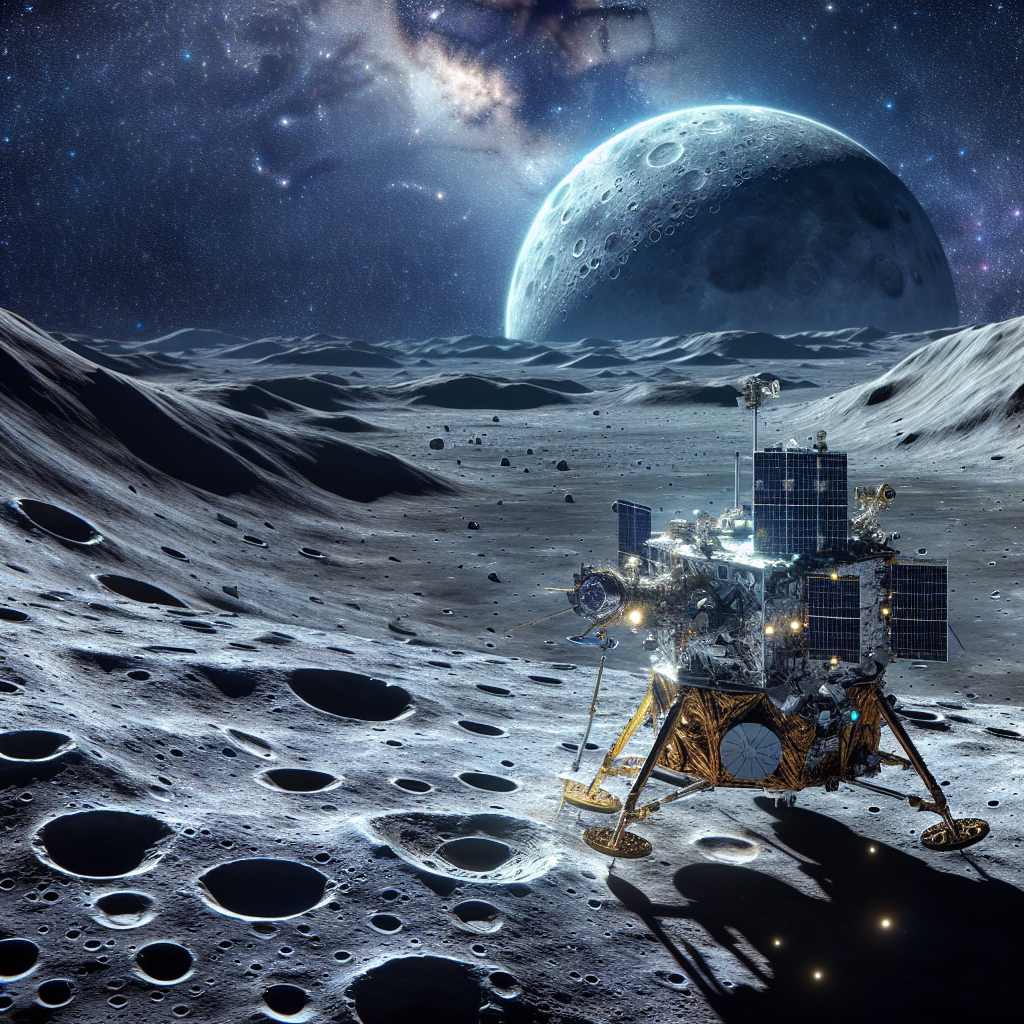
Chandrayaan-3 Indicates Potential Widespread Ice Presence on the Moon

Chandrayaan-3 Unveils Potential Widespread Ice on the Moon
Introduction
India’s Chandrayaan-3 mission has made a groundbreaking discovery that could reshape our understanding of the Moon’s resources. The mission’s findings suggest a significant presence of ice across the lunar surface, offering exciting possibilities for future lunar exploration and habitation.

Key Discoveries
- Widespread Ice Presence: Data from Chandrayaan-3 indicates that ice may be more prevalent on the Moon than previously thought, particularly in permanently shadowed regions.
- Resource Utilization: The presence of ice could be crucial for sustaining human life on the Moon, providing water for drinking, oxygen for breathing, and hydrogen for fuel.
- Scientific Implications: Understanding the distribution and quantity of lunar ice can offer insights into the Moon’s history and its potential for supporting life.
Technological Achievements
Chandrayaan-3’s success is attributed to its advanced instruments designed to detect and analyze lunar ice. These technologies have set a new benchmark for lunar exploration missions.


Future Prospects
- Lunar Colonization: The discovery of ice could accelerate plans for establishing a sustainable human presence on the Moon.
- International Collaboration: This finding opens doors for international partnerships in lunar exploration and resource utilization.
- Further Research: Continued exploration and analysis are needed to fully understand the extent and accessibility of lunar ice.
Conclusion
Chandrayaan-3’s discovery of potential widespread ice on the Moon marks a significant milestone in space exploration. This finding not only enhances our scientific understanding of the Moon but also paves the way for future missions aimed at utilizing lunar resources. As we look to the future, the Moon’s icy reserves could play a pivotal role in humanity’s quest to explore and inhabit other celestial bodies.