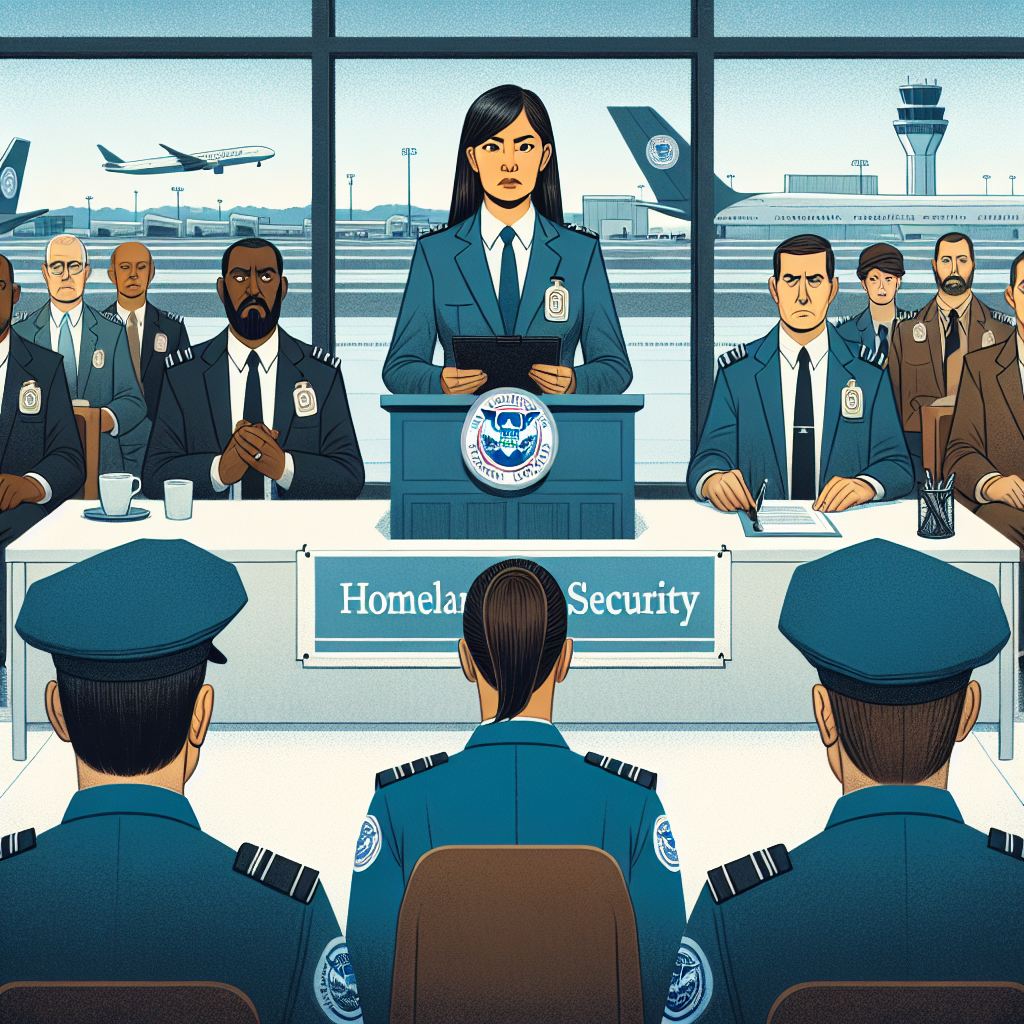
Homeland Security Terminates TSA Staffers’ Collective Bargaining Agreement
Homeland Security Terminates TSA Staffers’ Collective Bargaining Agreement
Overview
The Department of Homeland Security (DHS) has made a significant decision to terminate the collective bargaining agreement with Transportation Security Administration (TSA) staffers. This move has sparked discussions and concerns regarding labor rights and operational efficiency within the TSA.

Key Developments
- Termination Decision: The DHS has officially ended the collective bargaining agreement, which previously governed the working conditions and rights of TSA employees.
- Reasoning: The decision is reportedly aimed at enhancing flexibility and efficiency in TSA operations, particularly in response to evolving security challenges.
- Impact on Employees: The termination affects thousands of TSA staffers, raising concerns about job security, working conditions, and employee morale.
Reactions and Implications
- Union Response: Labor unions representing TSA employees have expressed strong opposition, arguing that the move undermines workers’ rights and could lead to deteriorating working conditions.
- Operational Efficiency: Proponents of the decision argue that it will allow for more agile and responsive security measures, potentially improving national security.
- Future Negotiations: The termination opens the door for potential renegotiations of terms, which could lead to new agreements that balance operational needs with employee rights.
Conclusion
The termination of the TSA staffers’ collective bargaining agreement by the DHS marks a pivotal moment in the ongoing dialogue between labor rights and national security. While the decision aims to enhance operational flexibility, it has also raised significant concerns about the future of employee rights and working conditions within the TSA. The coming months may see further developments as stakeholders navigate the implications of this decision.
Ads

Ads

Ads

Ads

Ads

Ads

Ads

Ads

Ads

Ads

Ads

Ads