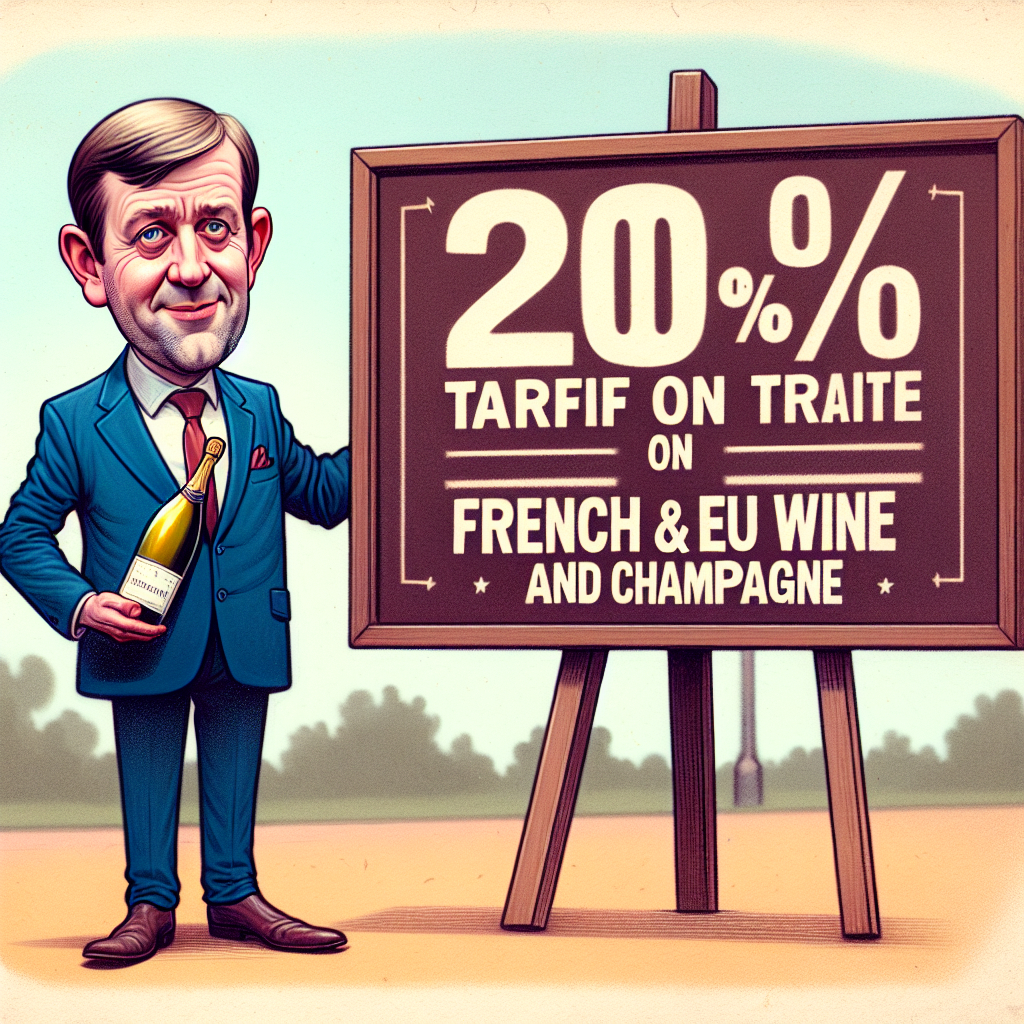
Trump Proposes 200% Tariff on French and EU Wine and Champagne
Trump Proposes 200% Tariff on French and EU Wine and Champagne
Introduction
In a bold move that could significantly impact international trade, former President Donald Trump has proposed a 200% tariff on French and European Union (EU) wine and champagne. This proposal is part of a broader strategy to address trade imbalances and protect American industries.

Key Motivations Behind the Proposal
- Trade Imbalance: Trump aims to rectify what he perceives as unfair trade practices that disadvantage American producers.
- Support for Domestic Industry: The tariff is intended to bolster the U.S. wine industry by making imported wines less competitive.
- Political Leverage: The proposal could serve as a bargaining chip in broader trade negotiations with the EU.
Potential Impacts
- Price Increase: Consumers may face higher prices for French and EU wines, potentially reducing demand.
- Industry Response: U.S. wine producers might benefit from reduced competition, but importers and retailers could suffer.
- Diplomatic Tensions: The proposal could strain U.S.-EU relations, leading to retaliatory measures.
Reactions from Stakeholders
The proposal has elicited mixed reactions from various stakeholders:

- U.S. Wine Industry: Some producers support the move, hoping for increased market share.
- Importers and Retailers: Many express concern over potential losses and disruptions in supply chains.
- EU Officials: European leaders have criticized the proposal, warning of possible retaliatory tariffs.
Conclusion
The proposed 200% tariff on French and EU wine and champagne by Donald Trump is a significant development in international trade relations. While it aims to protect American industries and address trade imbalances, it also risks escalating tensions with the EU and impacting consumers and businesses. The outcome of this proposal will depend on diplomatic negotiations and the responses from both domestic and international stakeholders.