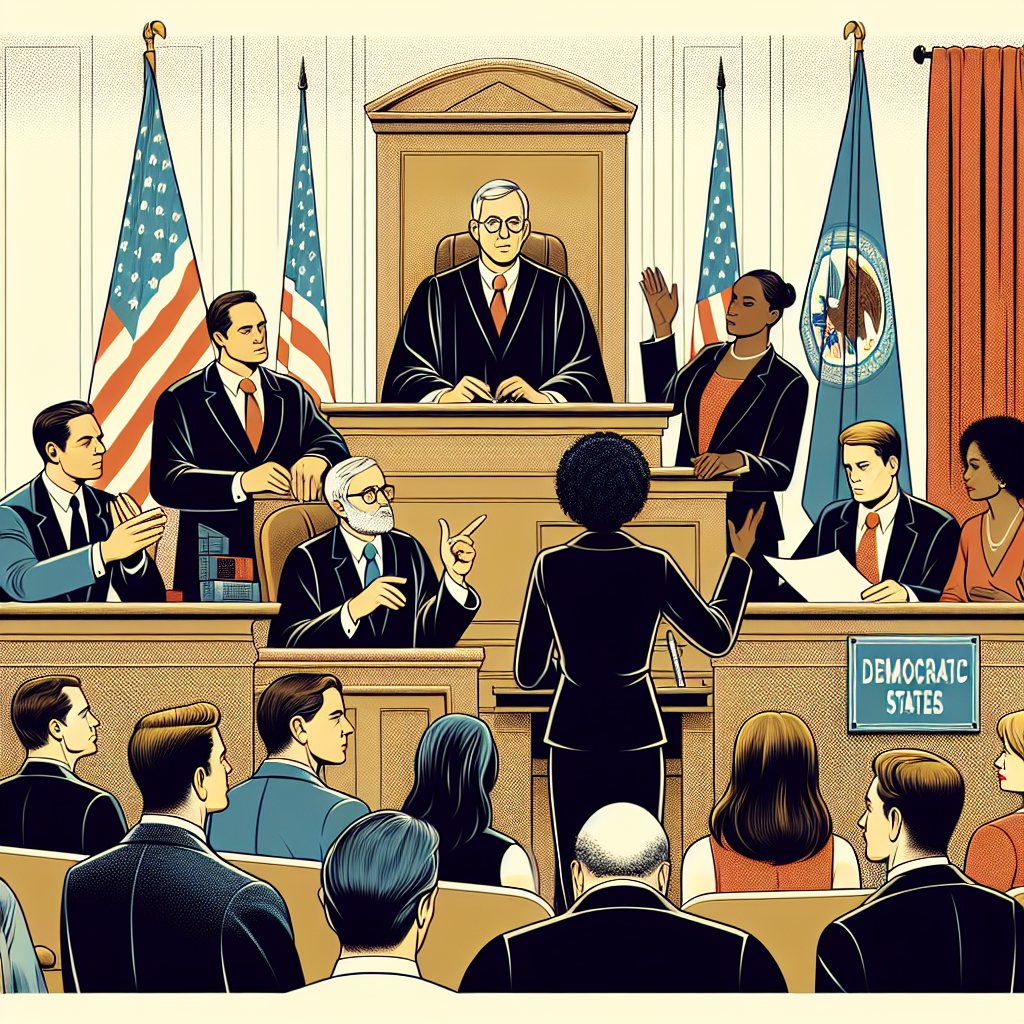
Democratic States File Lawsuit to Halt Education Department Job Cuts
Democratic States File Lawsuit to Halt Education Department Job Cuts
Introduction
Several Democratic-led states have initiated legal action against the U.S. Department of Education, aiming to prevent proposed job cuts that could significantly impact educational services. This lawsuit underscores the ongoing tension between state governments and federal policies regarding education management and funding.

Key Concerns
The lawsuit highlights several critical issues that the states believe warrant judicial intervention:

- Impact on Educational Services: The proposed job cuts are feared to reduce the quality and accessibility of educational services, particularly in underserved communities.
- Economic Consequences: Job losses could have broader economic implications, affecting local economies and increasing unemployment rates.
- Legal and Procedural Issues: The states argue that the Department of Education may have bypassed necessary legal procedures in planning these cuts.
States Involved
The lawsuit is spearheaded by a coalition of Democratic states, including:

- California
- New York
- Illinois
- Massachusetts
Federal Response
The Department of Education has defended its decision, citing budgetary constraints and the need to streamline operations. However, it faces mounting pressure to reconsider its approach in light of the legal challenge.
Potential Outcomes
The lawsuit could lead to several potential outcomes:
- Injunction Against Job Cuts: A court ruling in favor of the states could temporarily halt the job cuts.
- Policy Revisions: The Department may be compelled to revise its policies and engage in more comprehensive consultations with stakeholders.
- Increased Federal-State Dialogue: The case could foster more robust dialogue between federal and state governments regarding education policy.
Conclusion
The lawsuit filed by Democratic states against the Department of Education highlights significant concerns over proposed job cuts and their potential impact on educational services and local economies. As the legal proceedings unfold, the case could influence future federal education policies and foster greater collaboration between state and federal entities.