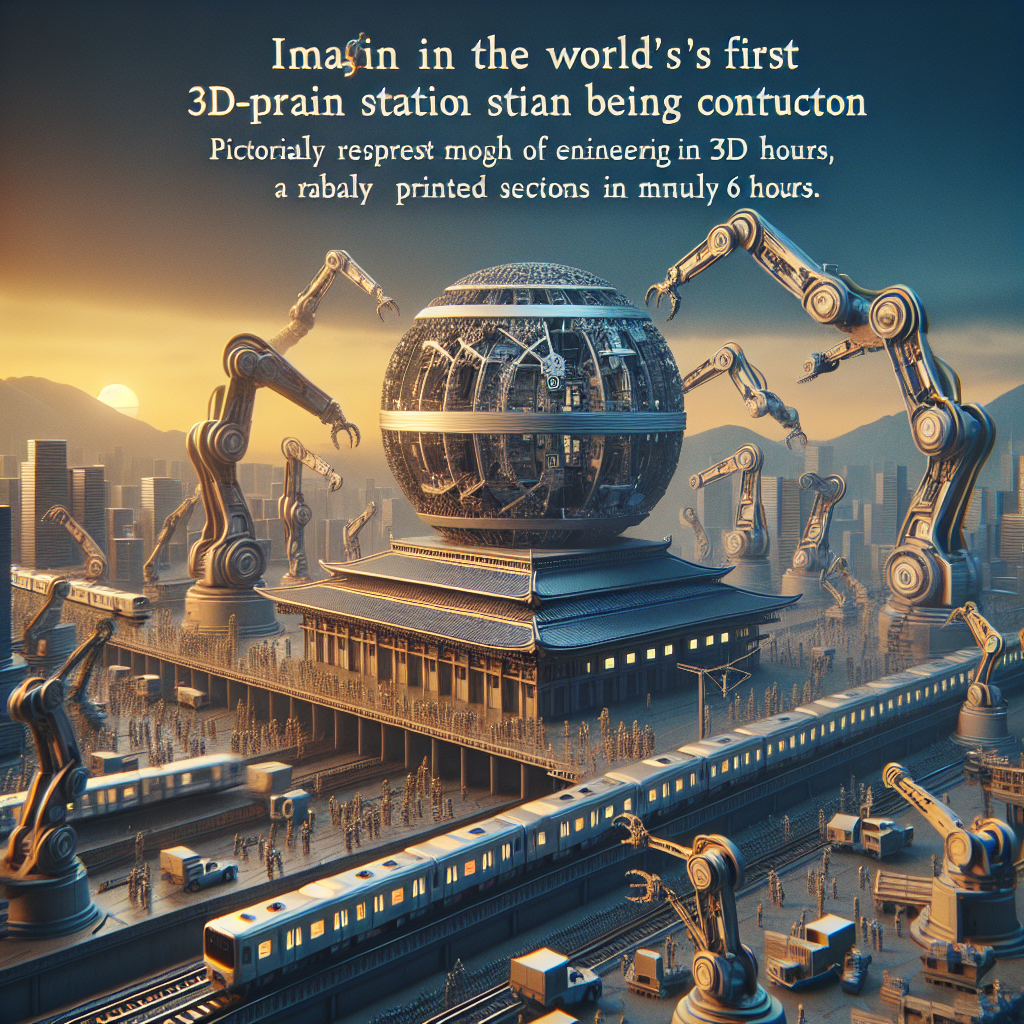
Japan to Construct World’s First 3D-Printed Train Station in Only 6 Hours
Japan’s Revolutionary Leap: The World’s First 3D-Printed Train Station
Introduction to a Groundbreaking Innovation
Japan is set to make history by constructing the world’s first 3D-printed train station, a project that promises to be completed in an astonishingly short time frame of just six hours. This pioneering endeavor highlights Japan’s commitment to technological advancement and sustainable infrastructure development.

Key Features of the 3D-Printed Train Station
- Speed and Efficiency: The entire construction process is expected to take only six hours, showcasing the rapid capabilities of 3D printing technology.
- Environmental Impact: The use of 3D printing significantly reduces waste and energy consumption compared to traditional construction methods.
- Innovative Design: The station will feature a modern and functional design, tailored to meet the needs of commuters while integrating seamlessly with the surrounding environment.
Implications for the Future of Construction
This project is not just a milestone for Japan but also a potential game-changer for the global construction industry. The successful implementation of 3D printing in large-scale infrastructure projects could lead to:

- Reduced Construction Costs: Lower material and labor costs could make infrastructure projects more economically viable.
- Faster Project Completion: The ability to complete projects in a fraction of the time could revolutionize urban development.
- Increased Customization: 3D printing allows for more flexible and innovative designs, catering to specific community needs.
Conclusion
Japan’s initiative to build the world’s first 3D-printed train station in just six hours marks a significant step forward in construction technology. This project not only underscores Japan’s leadership in innovation but also sets a precedent for future infrastructure developments worldwide. As the world watches, this endeavor could pave the way for more sustainable, efficient, and cost-effective construction practices globally.