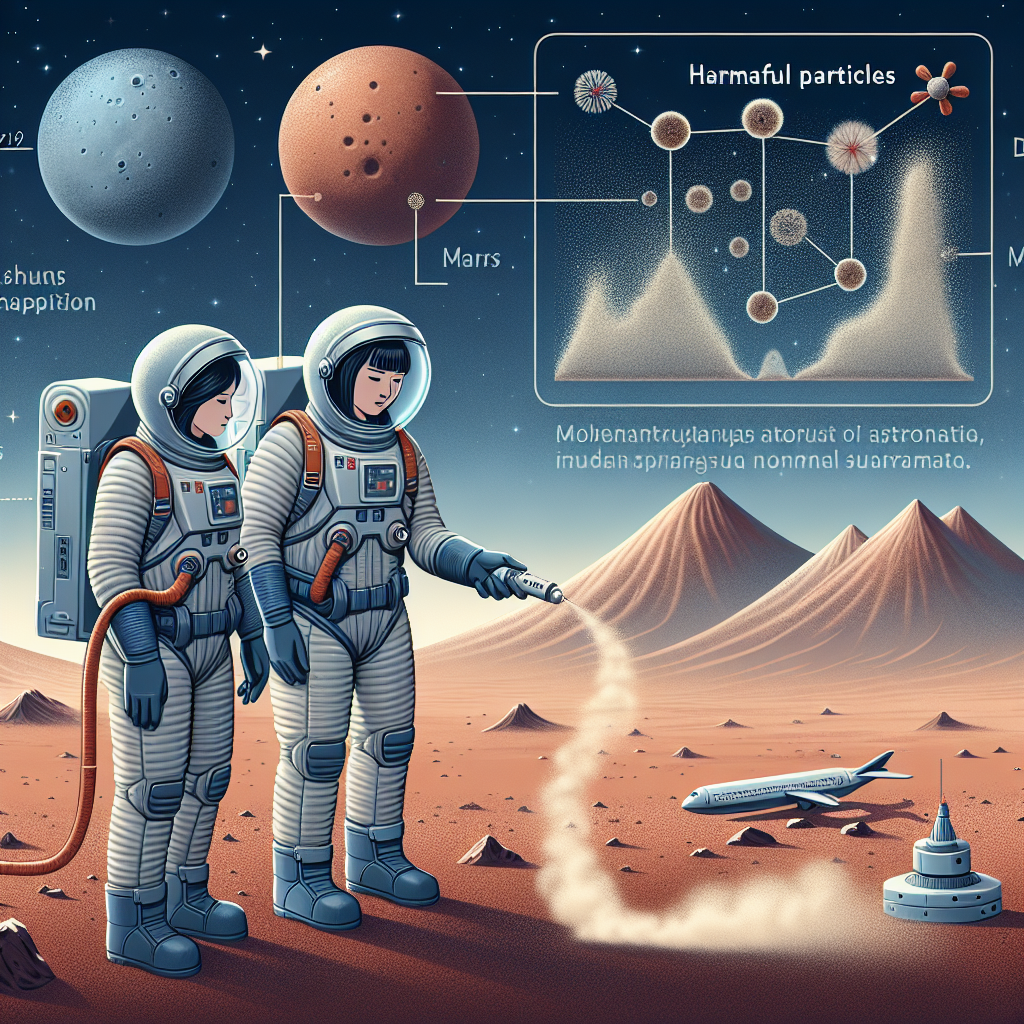
Study Reveals Harmful Particles in Mars Dust Pose Threat to Astronauts
Study Reveals Harmful Particles in Mars Dust Pose Threat to Astronauts
Introduction
A recent study has uncovered that the dust on Mars contains harmful particles that could pose significant health risks to astronauts. This discovery is crucial as space agencies plan for future manned missions to the Red Planet.

Key Findings
- Composition of Mars Dust: The dust on Mars is composed of fine particles that can easily become airborne, making them a potential inhalation hazard.
- Toxicity Concerns: The study highlights that these particles contain toxic chemicals, including perchlorates, which can damage human tissues and organs.
- Respiratory Risks: Inhalation of Mars dust could lead to respiratory issues, similar to those caused by prolonged exposure to asbestos on Earth.
Implications for Future Missions
The findings of this study have significant implications for the planning and execution of future manned missions to Mars. Space agencies must consider:
Ads

- Protective Measures: Developing advanced protective gear and habitats to shield astronauts from dust exposure.
- Health Monitoring: Implementing rigorous health monitoring protocols to detect and address any adverse effects early.
- Research and Development: Investing in further research to understand the full impact of Mars dust on human health and to develop effective countermeasures.
Conclusion
The discovery of harmful particles in Mars dust underscores the need for comprehensive safety measures to protect astronauts on future missions. As space exploration advances, understanding and mitigating these risks will be crucial to ensuring the health and safety of those venturing to the Red Planet.
Ads

Ads

Ads

Ads

Ads

Ads

Ads

Ads

Ads

Ads

Ads

Ads