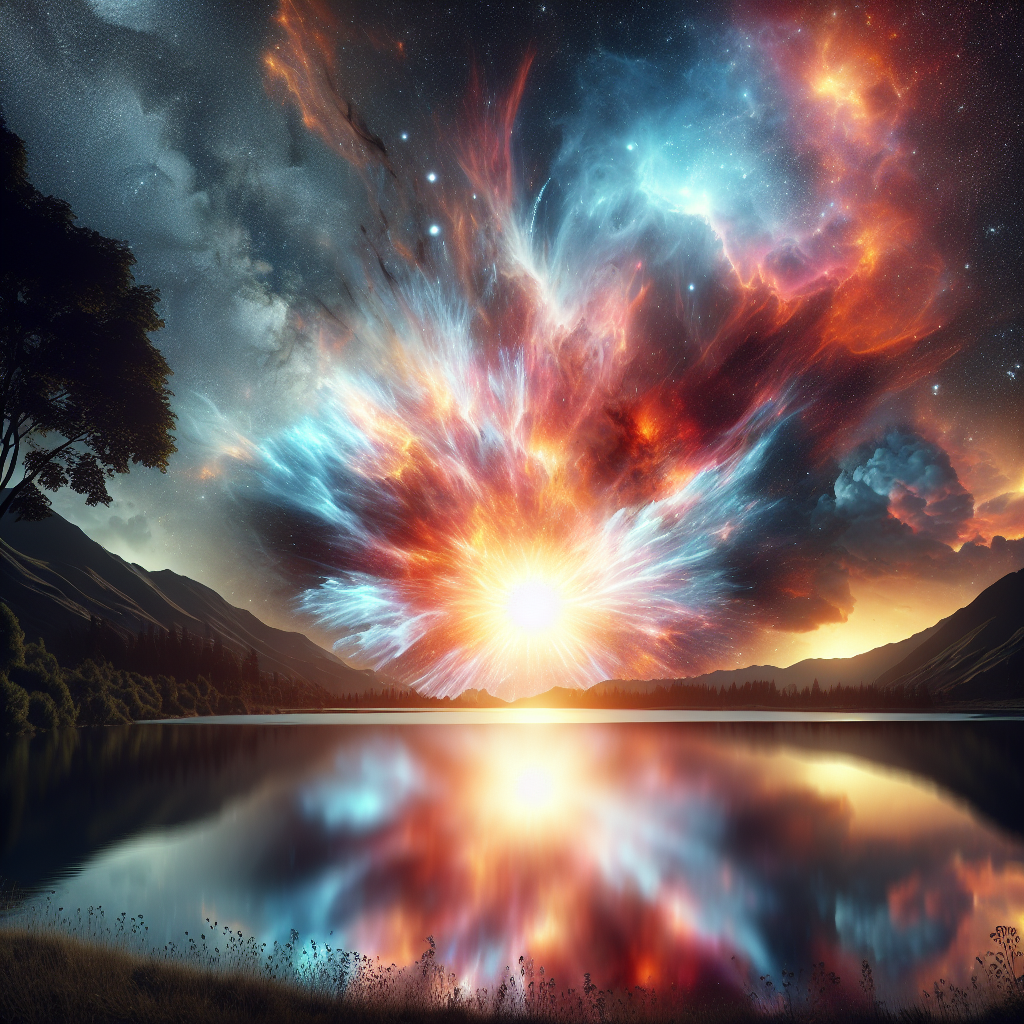
A Star’s Explosion Today: Visible to the Naked Eye

A Star’s Explosion Today: Visible to the Naked Eye
Introduction
In a rare celestial event, a star’s explosion, known as a supernova, has become visible to the naked eye. This astronomical phenomenon offers a unique opportunity for both professional astronomers and amateur stargazers to witness the dramatic end of a star’s life cycle.

What is a Supernova?
A supernova is a powerful and luminous explosion that occurs when a star exhausts its nuclear fuel and collapses under its own gravity. This event releases an immense amount of energy, often outshining entire galaxies for a short period.


Key Highlights
- Visibility: The supernova is visible without the aid of telescopes, making it accessible to anyone with a clear night sky.
- Location: The explosion is occurring in a galaxy relatively close to the Milky Way, enhancing its visibility from Earth.
- Duration: The brightness of the supernova will last for several weeks, providing ample time for observation.
- Scientific Significance: This event offers valuable data for scientists studying the life cycles of stars and the dynamics of supernovae.
How to Observe
To witness this spectacular event, follow these simple steps:


- Find a location with minimal light pollution for the best viewing experience.
- Look towards the specified constellation where the supernova is occurring.
- Use star maps or mobile apps to help locate the exact position in the night sky.
Conclusion
The visibility of a supernova to the naked eye is a rare and awe-inspiring event that captivates both the scientific community and the general public. This celestial spectacle not only provides a glimpse into the universe’s dynamic processes but also reminds us of the vast and ever-changing cosmos we inhabit.