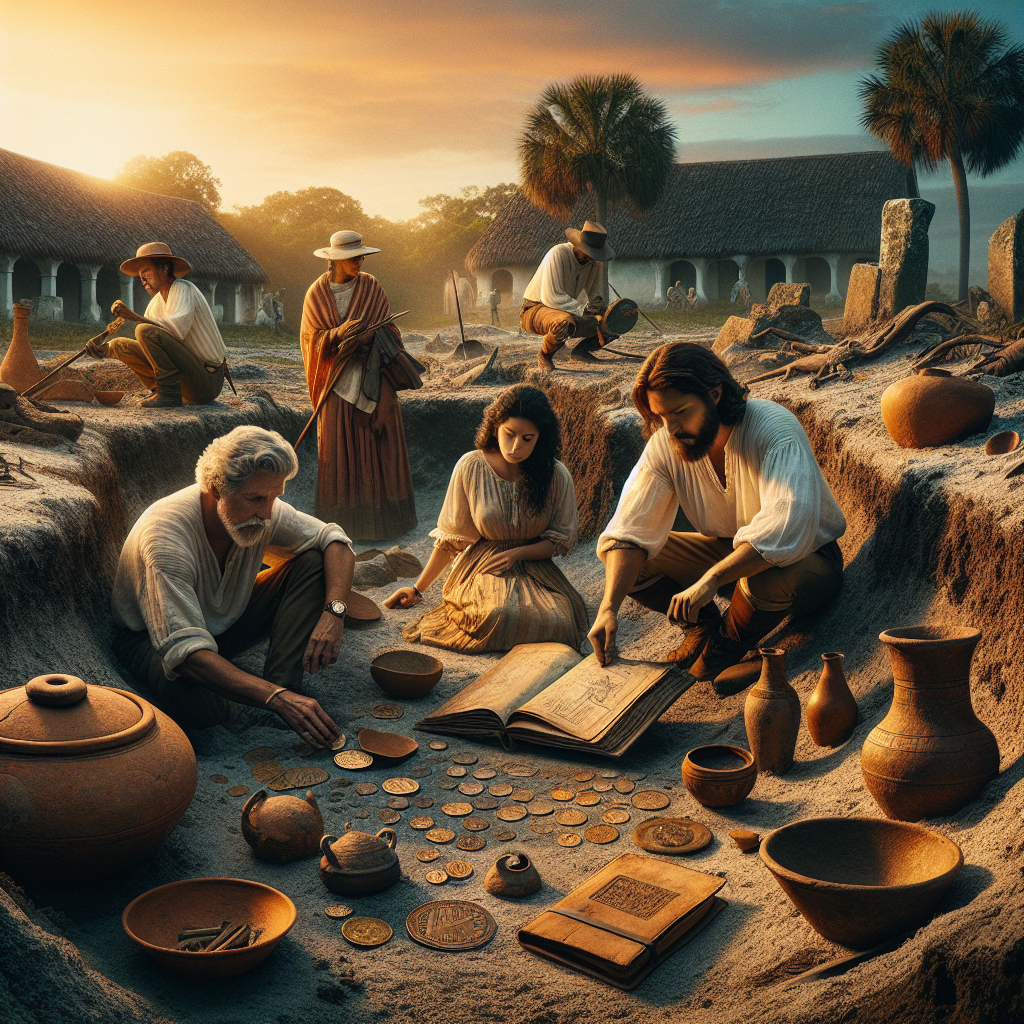
Archaeologists Discover 18th Century British Artifacts in Florida Post-Spanish Era

Archaeological Breakthrough: Unearthing 18th Century British Artifacts in Florida
Introduction to the Discovery
In a remarkable archaeological find, researchers have uncovered a collection of 18th-century British artifacts in Florida, shedding light on a lesser-known period of the region’s history. This discovery offers a unique glimpse into the British influence in Florida following the Spanish era.

Significance of the Artifacts
The artifacts provide valuable insights into the cultural and historical landscape of Florida during the British occupation. These findings are crucial for understanding the transitional period between Spanish and British rule.


- Historical Context: The artifacts date back to the period when Britain controlled Florida, from 1763 to 1783, following the Treaty of Paris.
- Cultural Insights: Items such as pottery, tools, and personal belongings reveal the daily lives and interactions of British settlers and local populations.
- Archaeological Techniques: Modern excavation methods and technologies were employed to carefully unearth and preserve these historical treasures.
Implications for Historical Research
This discovery not only enriches our understanding of Florida’s colonial past but also highlights the complex interplay of European powers in the region. It opens new avenues for research into the socio-economic and cultural dynamics of the time.


- Interdisciplinary Studies: The artifacts will be analyzed by historians, archaeologists, and anthropologists to construct a comprehensive narrative of the era.
- Public Engagement: Plans are underway to display the artifacts in museums, offering the public a tangible connection to this pivotal historical period.
Conclusion
The discovery of 18th-century British artifacts in Florida is a significant milestone in archaeological research, providing a deeper understanding of the region’s colonial history. This find not only enriches our knowledge of the past but also underscores the importance of preserving and studying historical sites for future generations.