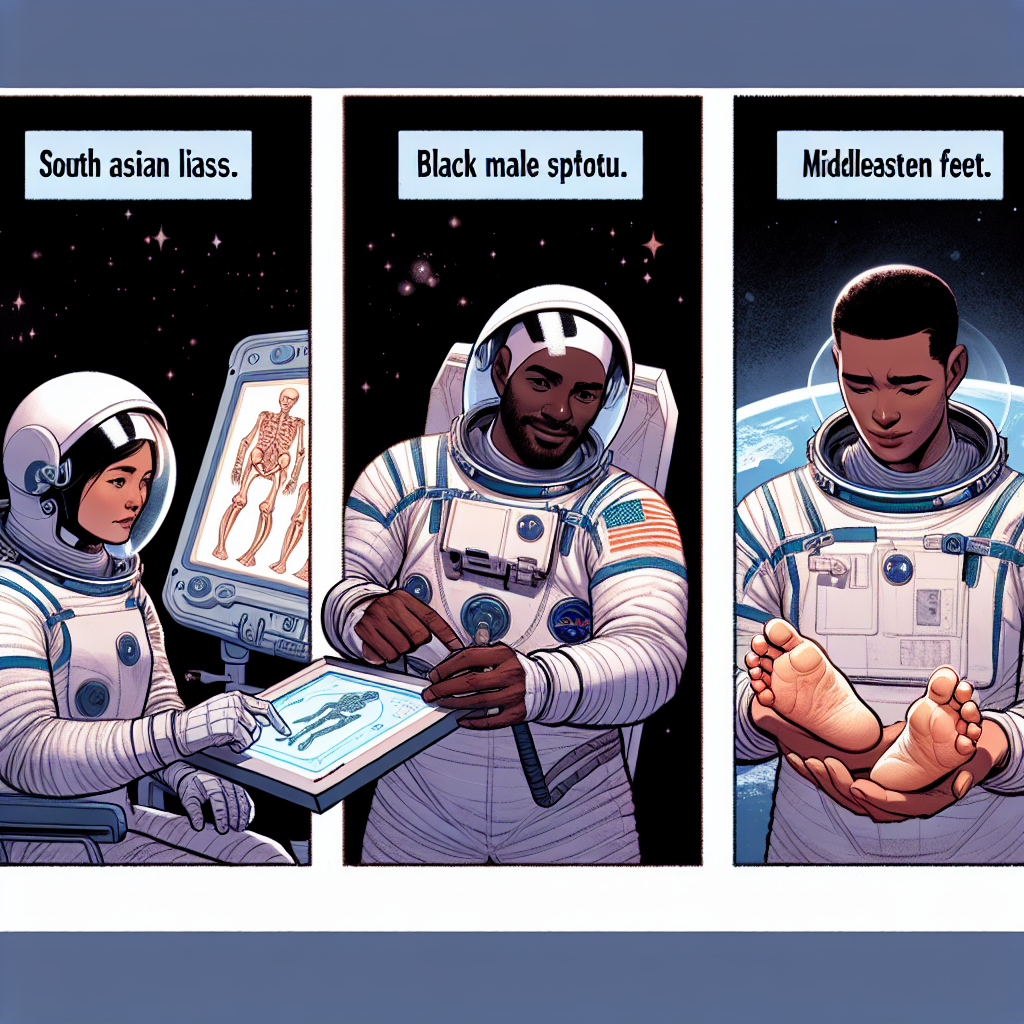
Astronauts’ Challenging Return: Bone Loss, Baby Feet, and Other Struggles

Astronauts’ Challenging Return: Bone Loss, Baby Feet, and Other Struggles
Introduction
Space travel is an extraordinary feat, but it comes with significant challenges for astronauts upon their return to Earth. Recent studies highlight the physical and physiological hurdles faced by astronauts, including bone density loss and changes in foot structure, among other issues.

Key Challenges Faced by Returning Astronauts
Bone Density Loss
-
Extended periods in microgravity lead to significant bone density reduction, particularly in weight-bearing bones.
-
Recovery of bone mass can take years, and some astronauts may never fully regain pre-flight levels.
Foot Structure Changes
-
Microgravity causes the feet to lose their arch, resulting in a condition humorously referred to as “baby feet.”
-
This change can affect balance and mobility upon return to Earth.
Other Physiological Struggles
-
Muscle atrophy due to lack of use in a weightless environment.
-
Cardiovascular deconditioning, making it challenging to adjust to Earth’s gravity.
-
Potential vision problems due to fluid shifts in the body.
Conclusion
The return journey from space is fraught with challenges that extend beyond the mission itself. Astronauts face a host of physical changes, from bone density loss to altered foot structure, which require extensive rehabilitation and adaptation. Understanding these challenges is crucial for improving astronaut health and preparing for future long-duration space missions.