
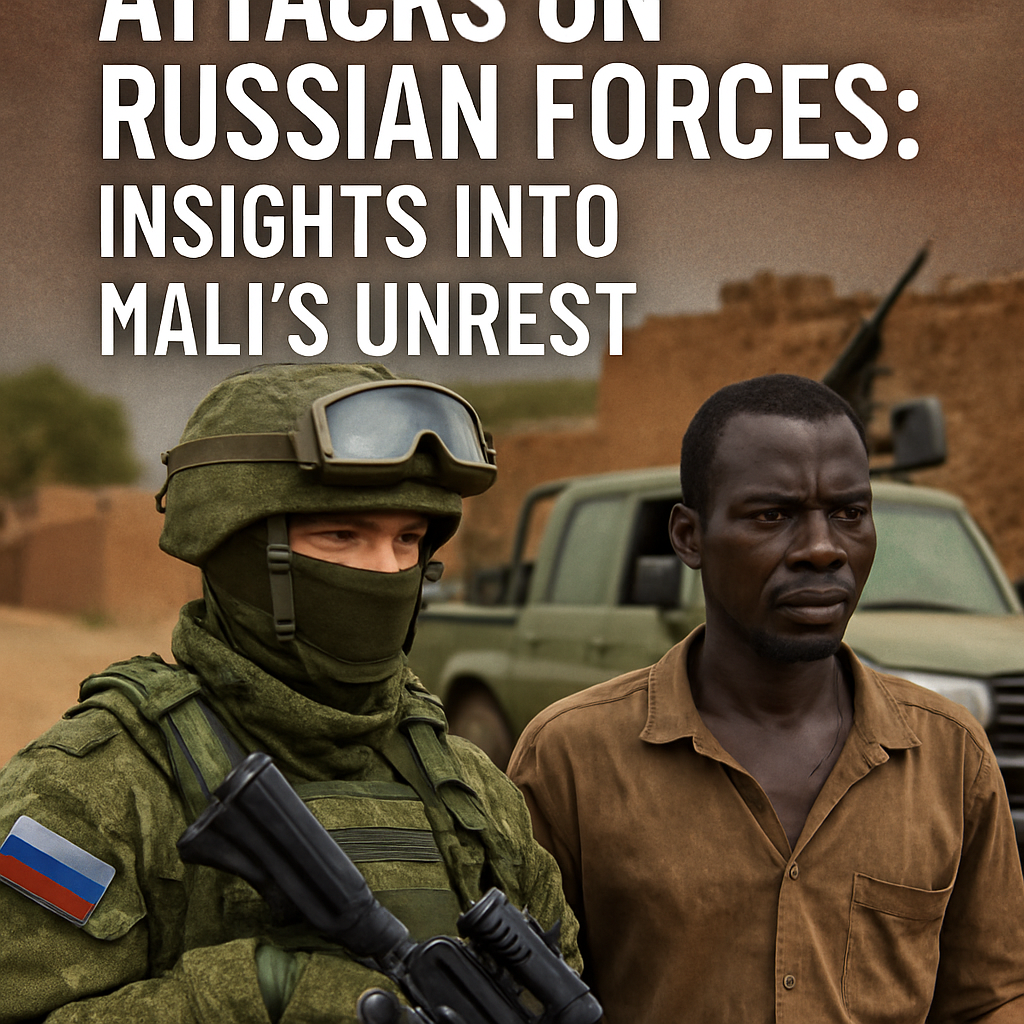
Attacks on Russian Forces: Insights into Mali’s Unrest

Attacks on Russian Forces: Insights into Mali’s Unrest
The ongoing violence in Mali has captured international attention, particularly the rising tensions surrounding Russian military forces operating in the region. These incidents highlight a complex interplay between local discontent, global geopolitics, and the historical context that shapes Mali’s current unrest.

The Rise of Discontent
Mali has faced significant instability for over a decade, with a surge in jihadist violence that has led to military coups and the deteriorating security situation. Recent reports detail how attacks against both the Malian government and foreign military partners, including Russian forces, are increasingly common. This trend stems from a variety of factors, including local grievances against the government’s inability to provide security and the controversial presence of foreign military personnel.


Local Grievances
One essential factor driving unrest in Mali is the discontent among the local populace, which feels abandoned by their government. As highlighted by Al Jazeera, many Malians are skeptical of the government’s ability to address the security threats posed by jihadist groups. The population’s frustration is exacerbated by reports of heavy-handed tactics employed by both local forces and their foreign allies. Russian mercenaries, for instance, have been accused of human rights violations, and these actions contribute to a growing perception that they are not safeguarding the interests of everyday Malians.


Moreover, there is a rising sentiment that the Malian government has been too reliant on external forces, particularly since the military coup in 2021. This dependency has given way to resentment and calls for a more autonomous approach to national security.
Geopolitical Ambitions and Local Consequences
The geopolitical context surrounding Mali’s unrest is equally complicated. The Malian government’s decision to enlist Russian Wagner Group mercenaries stems from a desire to pivot away from Western influences, particularly following strained relations with France. An analysis from RT indicates that Mali may perceive Moscow as a more reliable and less meddlesome partner compared to Western powers, whose interventions have historically been met with mixed results.
However, this pivot has not come without consequences. Attacks against Russian forces have been reported, with insurgent groups leveraging the growing animosity toward foreign involvement to bolster their positions. Sky News reports that some Malians view foreign military presence, including the Russians, as a form of neocolonialism, stirring resentment and a desire for self-determination.
The Cycle of Violence
The cycle of violence in Mali is perpetuated by a complex mix of factors. Attacks on government troops and foreign military units have not only raised questions about the effectiveness of the current strategy but have also intensified the chaos on the ground. The situation is compounded by competing interests from various militant factions, all of which seek to exploit the unrest for their gains.
Furthermore, the international community has been criticized for its slow response to address these issues comprehensively. Mixed narratives about the effectiveness and intentions of Russian forces have left many uncertain about whether their involvement will ultimately stabilize the region or exacerbate existing conflicts.
Conclusion: A Complex Path Ahead
The unrest in Mali, characterized by rising attacks on Russian forces and deep-rooted local grievances, exemplifies the multifaceted nature of modern conflict. The interplay between local dynamics and international influences creates a challenging landscape for dialogue and reconciliation.
While the Malian government strives to forge an independent path toward stability, the complexities of historical relationships, local sentiments, and geopolitical ambitions hinder this quest. As tensions continue to rise, it remains vital for stakeholders—both local and global—to reevaluate their roles in a conflict that is as complex as it is urgent.
In summary, Mali’s unrest is shaped by a multitude of factors that include historical grievances, geopolitical strategies, and the pressing need for national security. Moving forward, addressing these issues requires an honest assessment of past actions, a focus on the needs of Malians, and a commitment to building a more secure and self-determined future.















