
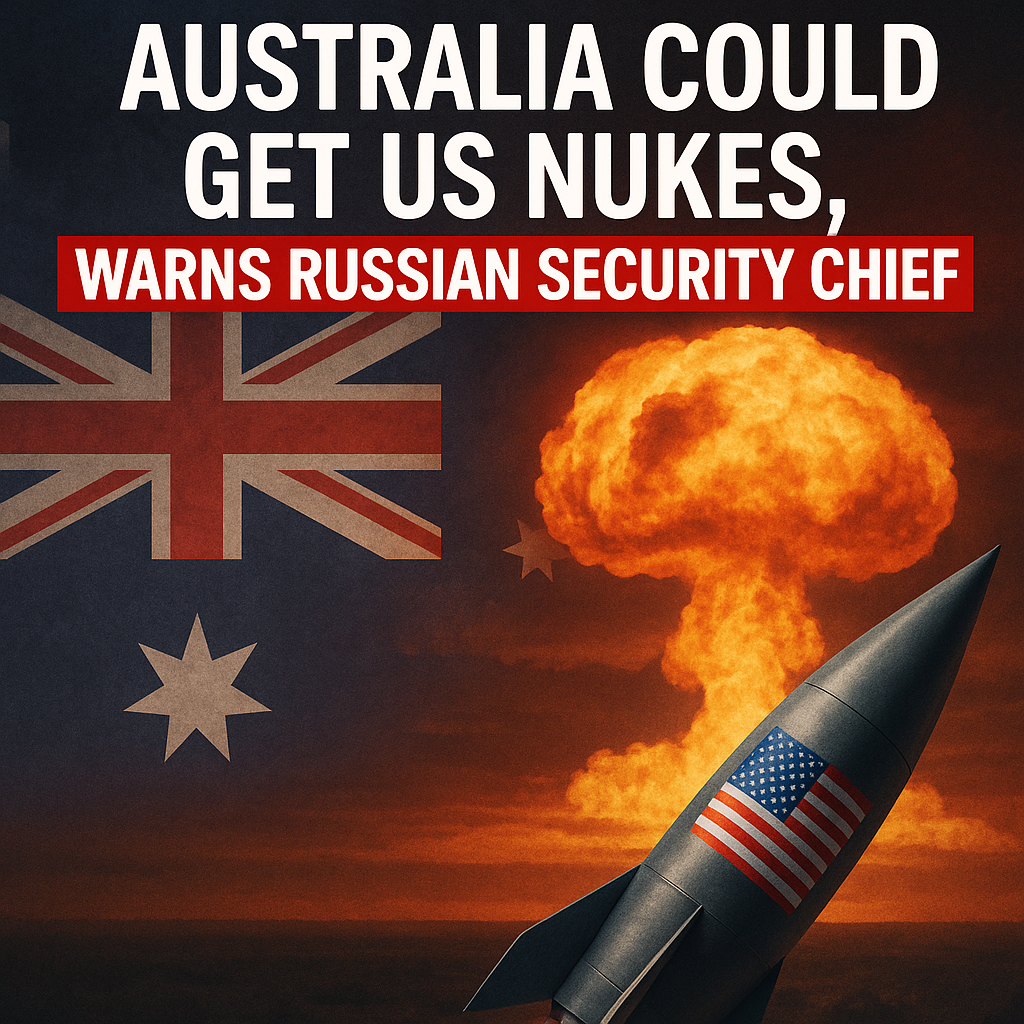
Australia Could Get US Nukes, Warns Russian Security Chief

Australia could potentially become a focal point in escalating geopolitical tensions, particularly concerning nuclear armaments, a prospect recently underscored by the warnings of Russian Security Chief Nikolai Patrushev. As discussions intensify about military collaborations between the United States and Australia, the implications of such alignments are both varied and significant.

The Context of Nuclear Discussions
In a stark statement, Patrushev indicated that the possible deployment of U.S. nuclear weapons in Australia represents an alarming shift that could provoke regional instability. He criticized the U.S. strategy in the Asia-Pacific region, framing it as an attempt to create a front against perceived threats, particularly from China and Russia. This perspective reveals a broader concern regarding nuclear proliferation and the increasingly volatile nature of international relations.


Australia’s alliances, particularly under the AUKUS pact with the U.S. and the United Kingdom, have drawn scrutiny not just from Russia, but also from local advocates concerned about the implications of hosting nuclear weapons. The AUKUS agreement, established in 2021, included provisions for nuclear-powered submarines, a strategic move that aims to bolster defense capabilities in the Indo-Pacific.


Experts suggest that while Australia may not currently host U.S. nuclear weapons, the rhetoric surrounding potential future arrangements serves to heighten tensions among global superpowers. This situation highlights the delicate balance Australia must navigate between bolstering its defense strategies and maintaining regional stability.
Diverging Opinions on Security Implications
Though Russian officials view the potential deployment as an unwelcome development, opinions within Australia and allied nations are more nuanced. Many Australian politicians and defense analysts argue that strengthening ties with the U.S. is crucial for addressing rising security challenges, chiefly those posed by China’s expanding influence in the region.
– Support from Defense Analysts: Some defense experts contend that U.S. nuclear capabilities can act as a deterrent against aggression from adversarial nations. They assert that such military fortifications would not only enhance Australia’s security stature but also contribute to a more stable regional balance of power.
– Opposition from Civil Society: Conversely, civil society groups in Australia vehemently oppose any notion of nuclear armament, citing the catastrophic humanitarian and environmental consequences associated with nuclear weapons. They advocate for a risk-averse approach, emphasizing diplomacy and international cooperation over militarization.
The contrast between the strategic necessity argued by some and the moral imperatives highlighted by others underscores the complexity of the debate surrounding nuclear weapons in Australia.
The Broader Geopolitical Landscape
As these discussions unfold, it is essential to consider the broader geopolitical context. The Sino-American rivalry serves as a backdrop, with China expressing considerable anxiety over U.S. initiatives perceived as encirclement. Chinese officials have publicly condemned the AUKUS partnership, framing it as a provocation that exacerbates tensions rather than alleviating them.
In light of this, the consequences of potential nuclear deployments in Australia extend beyond regional actors. They signal a retreat from the nuclear non-proliferation framework that has governed international relations since the Cold War. Patrushev’s statements are indicative of a global discourse where nations are increasingly entrenched in security dilemmas, prioritizing military preparedness over diplomatic initiatives.
Conclusion: Navigating a Complex Future
Australia’s potential path toward hosting U.S. nuclear weapons is fraught with complications. As tensions with Russia and China escalate, the Australian government faces the challenge of balancing international alliances with national interests and regional stability. Embracing a stance that prioritizes a peaceful resolution while not entirely sidelining security concerns remains a tightrope walk for policymakers.
While the prospect of U.S. nuclear weapons in Australia is not imminent, it reflects a creeping tension in global relations that could reshape the Indo-Pacific landscape. As such, it is imperative for Australia to engage in dialogue with both allies and adversaries alike, ensuring that it remains a nation dedicated to peace amid the specter of militarization.















