
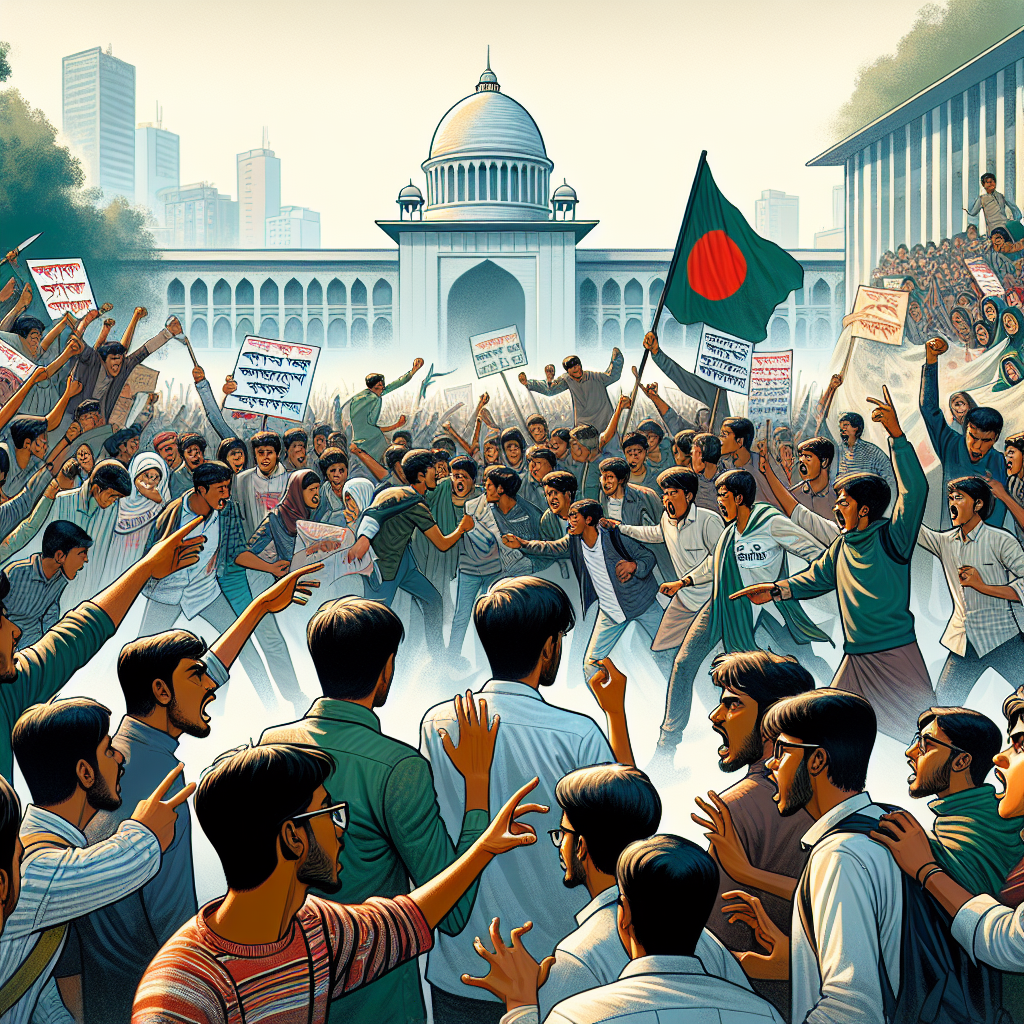
Bangladesh Students Clash in New Wave of Protests

Bangladesh Students Clash in New Wave of Protests
Background
Bangladesh is witnessing a resurgence of student-led protests, marking a significant moment in the country’s socio-political landscape. These demonstrations are primarily driven by demands for educational reforms and better governance.

Key Drivers of the Protests
- Educational Reforms: Students are calling for improvements in the quality of education and infrastructure.
- Corruption Allegations: Accusations of corruption within educational institutions have fueled discontent.
- Employment Concerns: Graduates face high unemployment rates, prompting demands for job creation and fair opportunities.
Recent Developments
The protests have escalated, leading to clashes between students and law enforcement. The situation has drawn national and international attention, highlighting the urgency of addressing the students’ grievances.


Government Response
- Dialogue Initiatives: The government has initiated talks with student leaders to address their concerns.
- Security Measures: Increased police presence has been deployed to manage the protests and prevent violence.
Impact and Implications
The ongoing protests have significant implications for Bangladesh’s political stability and educational policies. The outcome of these demonstrations could shape the future of governance and reform in the country.


Conclusion
The student protests in Bangladesh underscore a critical demand for change in the educational and political systems. As the situation unfolds, the government’s response and willingness to engage in meaningful dialogue will be crucial in determining the path forward.













