
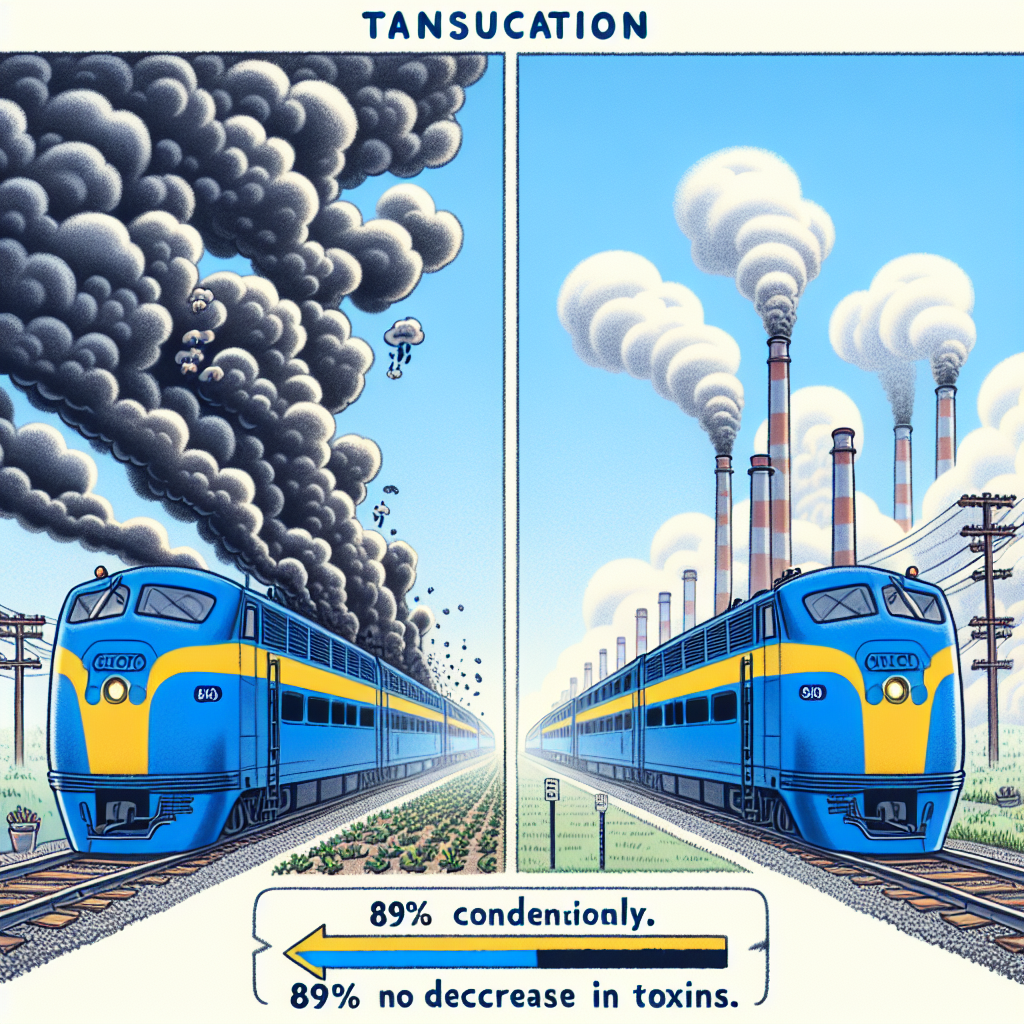
California’s Air Quality Transformed: Electric Trains Slash Toxins by 89%

California’s Air Quality Transformed: Electric Trains Slash Toxins by 89%
Introduction
California has made a significant leap in improving its air quality by transitioning to electric trains. This move has resulted in a dramatic reduction in airborne toxins, marking a pivotal moment in the state’s environmental efforts.

Key Achievements
- Reduction in Toxins: The shift to electric trains has led to an 89% decrease in harmful emissions.
- Cleaner Air: Residents are experiencing noticeably cleaner air, contributing to better public health.
- Environmental Impact: This initiative is a major step towards California’s goal of reducing its carbon footprint.
Benefits of Electric Trains
The transition to electric trains offers numerous advantages beyond just reducing toxins:


- Energy Efficiency: Electric trains are more energy-efficient compared to their diesel counterparts.
- Noise Reduction: They operate more quietly, reducing noise pollution in urban areas.
- Cost-Effective: Over time, electric trains are more cost-effective due to lower fuel and maintenance costs.
Challenges and Future Prospects
While the transition has been largely successful, it comes with its own set of challenges:


- Infrastructure Development: Upgrading existing rail infrastructure to support electric trains requires significant investment.
- Technological Advancements: Continued innovation is necessary to enhance the efficiency and range of electric trains.
Despite these challenges, California remains committed to expanding its electric train network, setting a precedent for other states to follow.
Conclusion
California’s transition to electric trains has not only transformed its air quality but also set a benchmark for sustainable transportation. With an 89% reduction in toxins, the state is paving the way for a cleaner, healthier future. As infrastructure and technology continue to evolve, the benefits of this initiative are expected to grow, reinforcing California’s role as a leader in environmental innovation.













