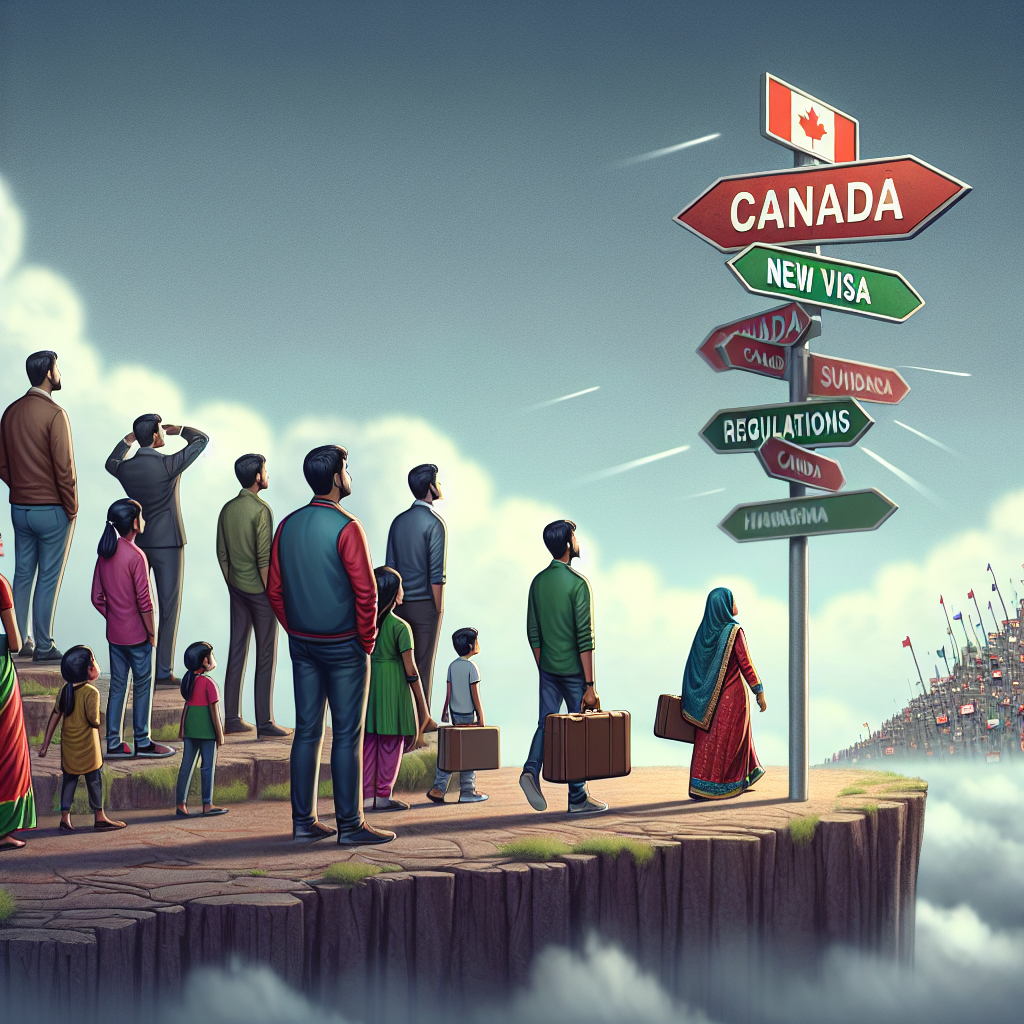
Canada’s New Visa Regulations: A Growing Challenge for Indian Students

Canada’s New Visa Regulations: A Growing Challenge for Indian Students
Introduction
Canada has long been a favored destination for Indian students seeking quality education and global opportunities. However, recent changes in visa regulations are posing significant challenges for these students, potentially impacting their educational and career aspirations.

Key Changes in Visa Regulations
- Increased Documentation Requirements: Students now face more stringent documentation processes, requiring additional proof of financial stability and intent to return to India post-study.
- Longer Processing Times: The processing time for student visas has increased, causing delays and uncertainty for prospective students.
- Higher Rejection Rates: There has been a noticeable rise in visa rejections, attributed to stricter scrutiny of applications.
Impact on Indian Students
The new regulations are creating hurdles for Indian students in several ways:


- Financial Strain: The need for additional financial documentation can be burdensome, especially for students from middle-income families.
- Uncertainty and Stress: Delays and higher rejection rates contribute to anxiety and uncertainty about future plans.
- Potential Shift in Preferences: Students may start considering alternative countries for education, affecting Canada’s position as a top destination.
Responses and Adaptations
In response to these challenges, students and educational consultants are adopting new strategies:


- Enhanced Preparation: Students are being advised to prepare more thoroughly, ensuring all documentation is complete and accurate.
- Exploring Alternatives: Some students are looking at other countries with more favorable visa policies, such as the UK or Australia.
- Advocacy and Dialogue: Educational institutions and student bodies are engaging in dialogue with Canadian authorities to seek clarity and potential easing of regulations.
Conclusion
The new visa regulations in Canada present significant challenges for Indian students, affecting their educational and career plans. While these changes may lead to a shift in student preferences, ongoing dialogue and strategic preparation can help mitigate some of the impacts. As the situation evolves, it remains crucial for students to stay informed and adaptable.