
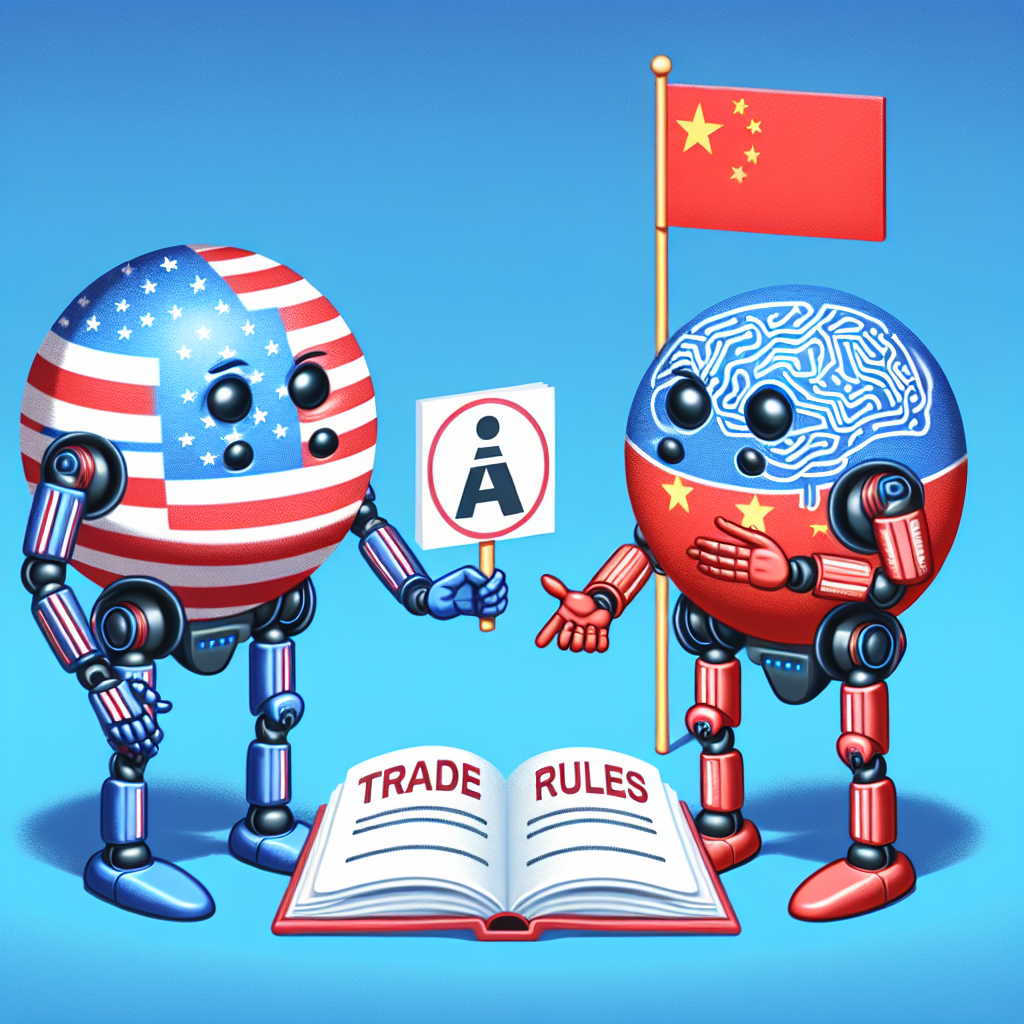
China’s Criticism: US AI Restrictions Violate Trade Rules

China’s Criticism: US AI Restrictions Violate Trade Rules
Overview
China has voiced strong objections to the United States’ recent restrictions on artificial intelligence (AI) technology exports, claiming these measures breach international trade regulations. This development has intensified the ongoing trade tensions between the two economic giants.

Key Points of Contention
- Export Controls: The US has implemented stringent export controls on AI technology, citing national security concerns.
- China’s Response: China argues that these restrictions are unfair and violate World Trade Organization (WTO) rules.
- Impact on Trade Relations: The restrictions could further strain the already tense trade relations between the US and China.
China’s Perspective
Chinese officials assert that the US is using national security as a pretext to hinder China’s technological advancement. They emphasize that such actions disrupt global supply chains and harm international trade cooperation.


US Justification
The US government defends its position by highlighting the potential risks associated with advanced AI technologies falling into the hands of adversarial nations. They argue that these measures are necessary to protect national interests.


Global Implications
- WTO Involvement: China’s criticism may lead to formal complaints being lodged with the WTO, potentially escalating the dispute.
- Technological Decoupling: The restrictions could accelerate the technological decoupling between the US and China, impacting global tech industries.
- Market Uncertainty: Businesses and investors face increased uncertainty as trade policies become more unpredictable.
Conclusion
The US AI export restrictions have sparked significant controversy, with China accusing the US of violating trade rules. This dispute highlights the broader geopolitical struggle over technological dominance and raises concerns about the future of international trade relations. As both nations stand firm in their positions, the global community watches closely, anticipating potential ramifications for the global economy and technological innovation.













