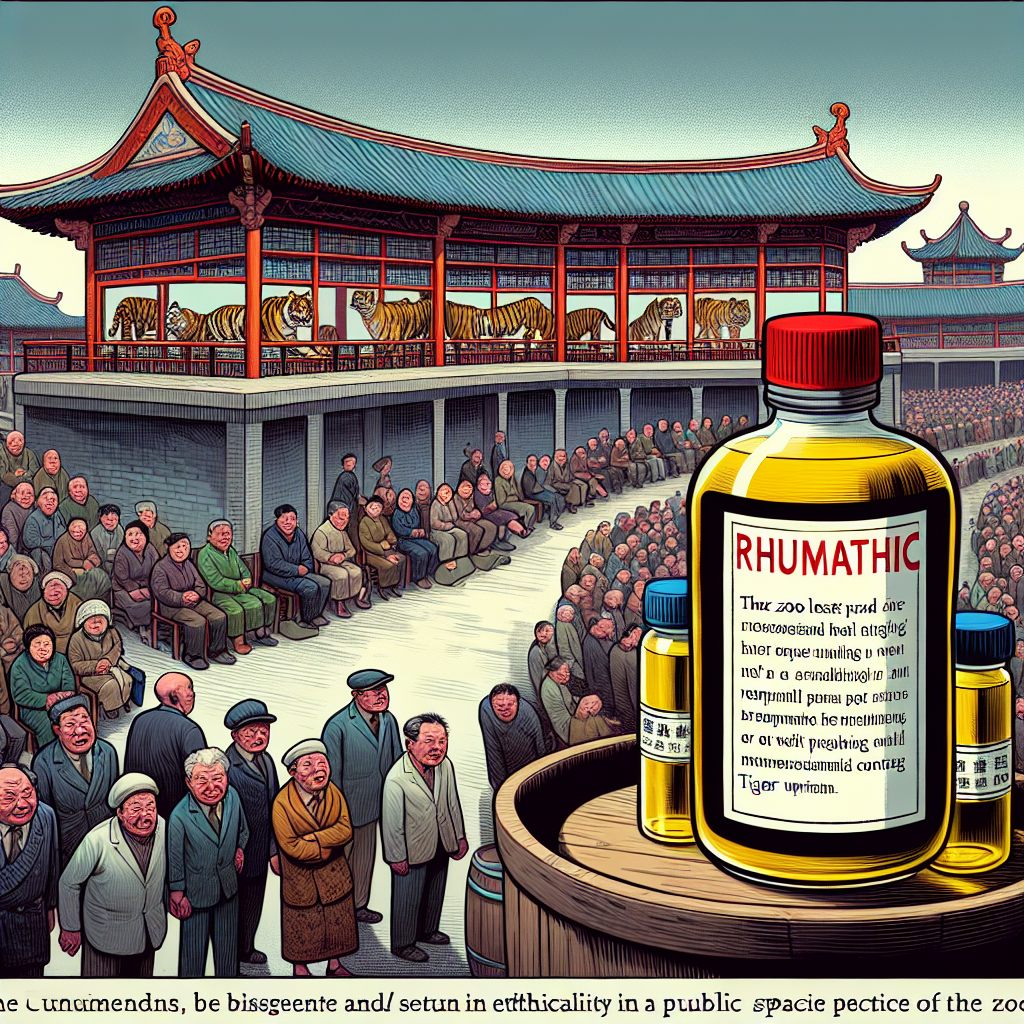
Chinese Zoo Faces Backlash for Selling Tiger Urine as Rheumatism Remedy

Chinese Zoo Faces Backlash for Selling Tiger Urine as Rheumatism Remedy
Overview
A Chinese zoo has come under intense scrutiny and criticism for its controversial practice of selling tiger urine as a remedy for rheumatism. This unusual and ethically questionable practice has sparked outrage among animal rights activists and the general public, raising concerns about animal welfare and the exploitation of wildlife for commercial gain.

Key Points
- Controversial Practice: The zoo has been marketing tiger urine as a traditional remedy for rheumatism, claiming it has medicinal properties.
- Public Outcry: The sale of tiger urine has led to widespread backlash, with many questioning the ethical implications and scientific validity of such claims.
- Animal Welfare Concerns: Activists argue that this practice exploits tigers and may contribute to the mistreatment and abuse of these endangered animals.
- Legal and Ethical Issues: The incident has sparked a debate over the legality and morality of using animal products in traditional medicine.
Reactions and Responses
The backlash has prompted responses from various stakeholders:


- Animal Rights Groups: Organizations have condemned the practice, calling for stricter regulations and better protection for wildlife.
- Public Opinion: Many individuals have taken to social media to express their disapproval and demand accountability from the zoo.
- Zoo’s Defense: The zoo has defended its actions, citing cultural traditions and the demand for traditional remedies.
Conclusion
The controversy surrounding the sale of tiger urine as a rheumatism remedy highlights the ongoing tension between traditional practices and modern ethical standards. It underscores the need for a balanced approach that respects cultural traditions while ensuring the welfare and protection of endangered species. The incident serves as a reminder of the importance of ethical considerations in the use of animal products in traditional medicine.