
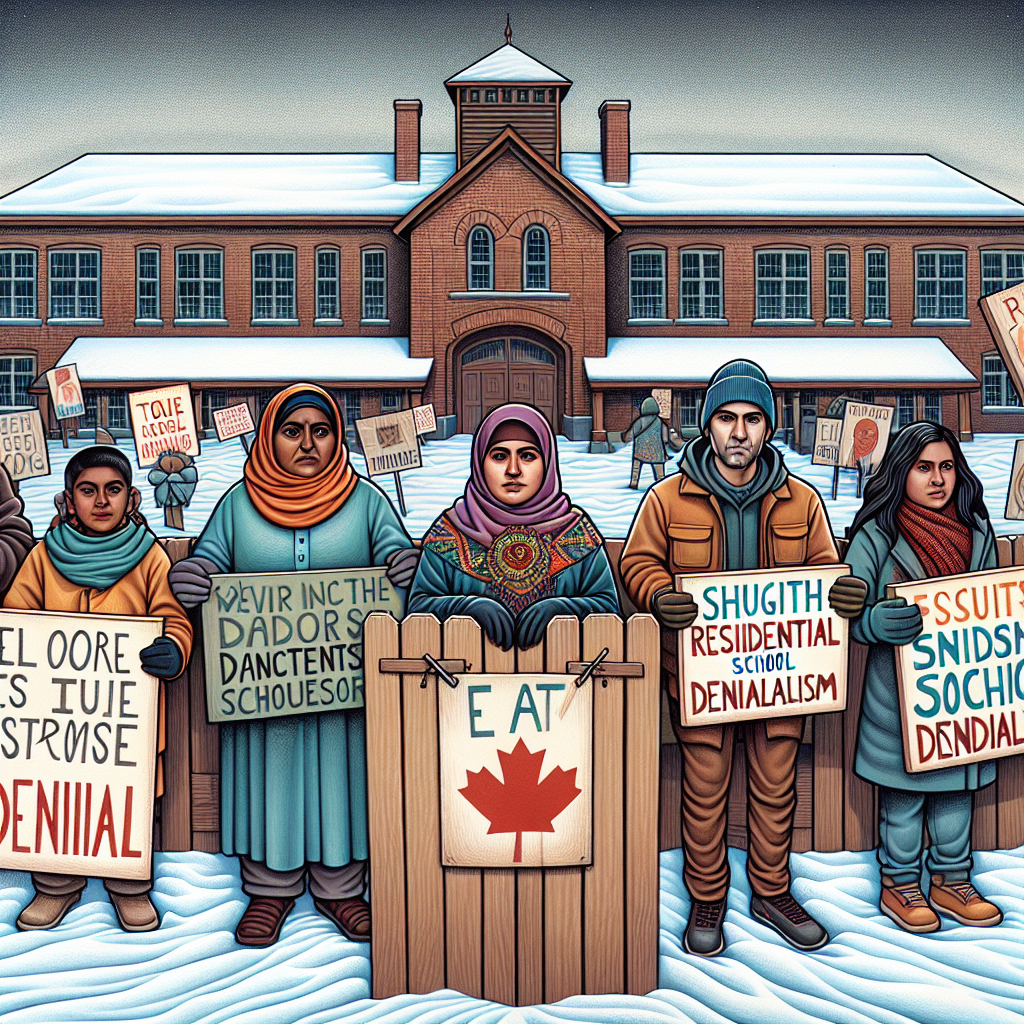
Confronting Residential School Denialism in Canada

Confronting Residential School Denialism in Canada
Understanding the Issue
Residential school denialism in Canada refers to the rejection or minimization of the historical and ongoing impacts of the residential school system on Indigenous communities. This denialism undermines the lived experiences of survivors and hinders reconciliation efforts.

Historical Context
The residential school system, which operated from the late 19th century to the late 20th century, aimed to assimilate Indigenous children by removing them from their families and cultures. The system has left a lasting legacy of trauma and cultural disruption.


Key Challenges
- Public Misunderstanding: Many Canadians lack a comprehensive understanding of the residential school system and its impacts.
- Denial and Minimization: Some individuals and groups deny the severity of the abuses that occurred, often citing misinformation.
- Resistance to Acknowledgment: There is resistance from certain sectors to fully acknowledge and address the historical injustices.
Efforts to Combat Denialism
- Education Initiatives: Increasing educational efforts to inform the public about the true history and impacts of residential schools.
- Survivor Testimonies: Amplifying the voices of survivors to share their stories and experiences.
- Policy and Legal Measures: Implementing policies that recognize and address the harms caused by residential schools.
The Role of Media and Public Discourse
Media plays a crucial role in shaping public perception. Responsible reporting and inclusive narratives can help counter denialism by providing accurate information and fostering empathy.


Conclusion
Confronting residential school denialism is essential for healing and reconciliation in Canada. By acknowledging the past, educating the public, and supporting survivors, Canada can move towards a more inclusive and truthful understanding of its history.















