
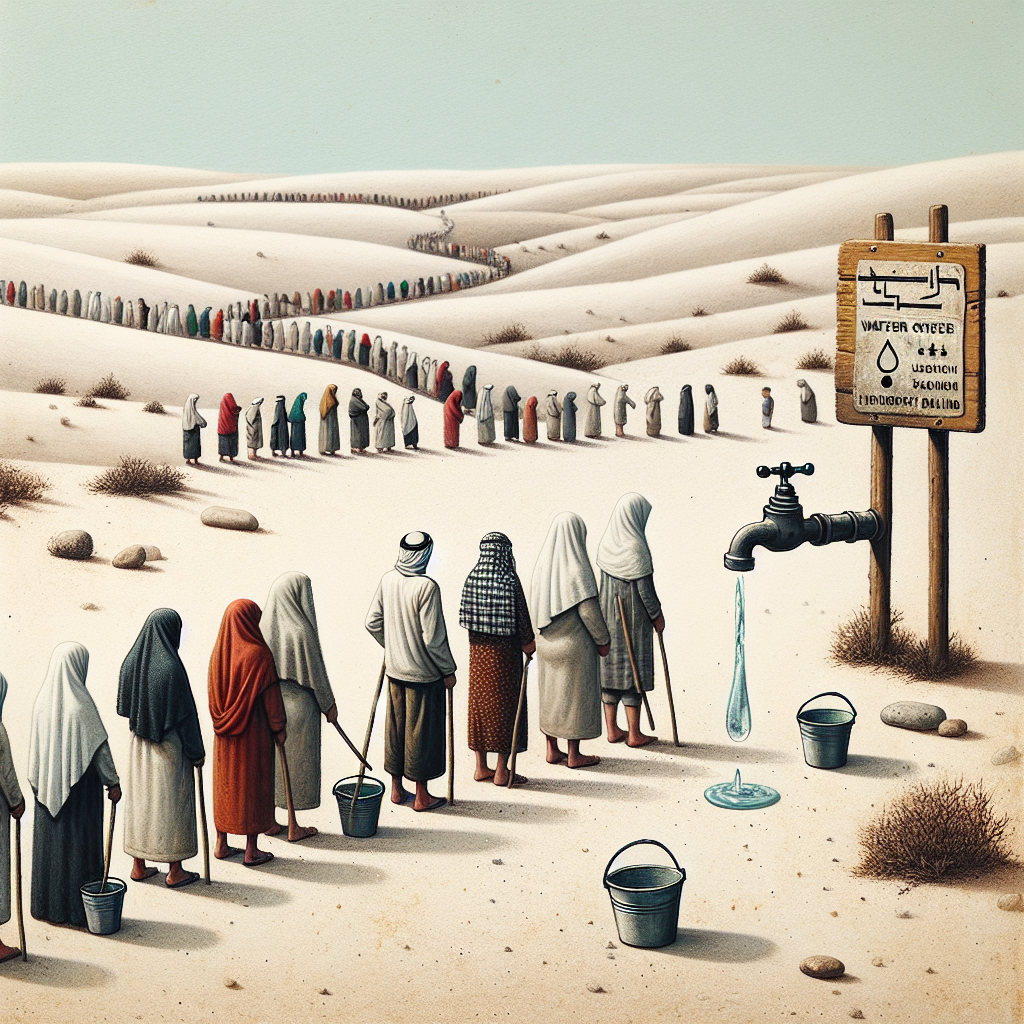
Coping with Scarcity: Northern Gaza’s Water Crisis and Infrequent Bathing

Coping with Scarcity: Northern Gaza’s Water Crisis and Infrequent Bathing
Introduction
The water crisis in Northern Gaza has reached alarming levels, severely impacting daily life and hygiene practices. This summary explores the challenges faced by residents, the causes of the crisis, and the coping mechanisms adopted by the community.

Understanding the Crisis
Water scarcity in Northern Gaza is a multifaceted issue, driven by a combination of environmental, political, and infrastructural factors.


- Environmental Factors: Limited rainfall and over-extraction of groundwater have depleted natural water resources.
- Political Challenges: Ongoing conflicts and blockades have restricted access to essential water supplies and infrastructure development.
- Infrastructural Issues: Aging and damaged water infrastructure further exacerbate the scarcity problem.
Impact on Daily Life
The water crisis has forced residents to adapt their daily routines, particularly concerning personal hygiene and bathing practices.


- Infrequent Bathing: Many residents are compelled to bathe less frequently, often going days without access to clean water.
- Health Concerns: Reduced hygiene practices increase the risk of skin infections and other health issues.
- Psychological Stress: The constant struggle for water adds to the mental burden of living in a conflict zone.
Coping Mechanisms
Despite the challenges, the community has developed various strategies to manage the water crisis.
- Water Conservation: Residents employ strict water-saving measures, such as reusing water for multiple purposes.
- Alternative Sources: Some households rely on rainwater harvesting and purchasing water from private vendors.
- Community Support: Neighbors often share resources and support each other in times of acute scarcity.
Conclusion
The water crisis in Northern Gaza is a pressing issue that affects every aspect of life, from health to social dynamics. While the community has shown resilience through innovative coping strategies, long-term solutions require significant infrastructural and political changes. Addressing these challenges is crucial for improving living conditions and ensuring sustainable access to clean water.















