
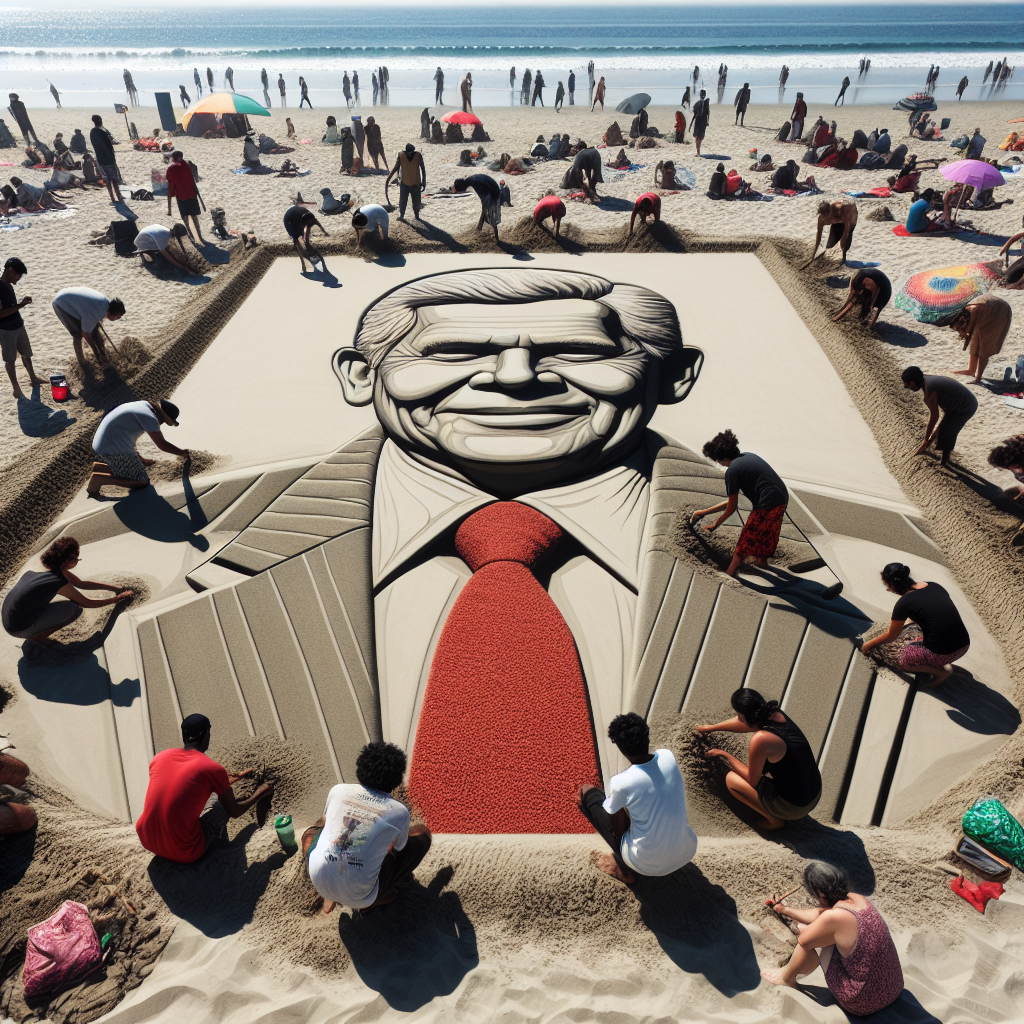
“Defiant Art: Protesters Carve Trump’s Image into Sand”

Defiant Art: Protesters Carve Trump’s Image into Sand
Introduction
In a bold and creative act of protest, artists and activists have taken to the shores to carve the image of former President Donald Trump into the sand. This unique form of expression has captured the attention of both supporters and critics, sparking conversations about art, politics, and freedom of expression.

The Artistic Protest
The sand carvings, which depict Trump’s likeness, are not just artistic endeavors but also serve as a powerful statement against his policies and legacy. These temporary installations are strategically placed in public spaces, inviting onlookers to engage with the message.


Key Features of the Sand Carvings
- Large-scale depictions of Trump’s face and iconic features.
- Intricate details that highlight the artists’ skills and dedication.
- Strategic locations chosen for maximum visibility and impact.
Public Reaction
The sand carvings have elicited a wide range of reactions from the public. While some view them as a clever and peaceful form of protest, others see them as disrespectful. The artworks have sparked debates on social media, with discussions focusing on the role of art in political discourse.


Supporters’ Views
- Applaud the creativity and peaceful nature of the protest.
- See it as a powerful way to express dissent and engage the public.
Critics’ Perspectives
- Argue that the carvings are disrespectful and divisive.
- Question the effectiveness of such temporary art forms in enacting change.
Conclusion
The sand carvings of Trump’s image serve as a testament to the enduring power of art as a tool for protest and expression. While opinions on the carvings vary, they undeniably succeed in sparking dialogue and drawing attention to the issues at hand. This creative protest highlights the intersection of art and politics, reminding us of the diverse ways in which individuals can voice their opinions and challenge the status quo.















