
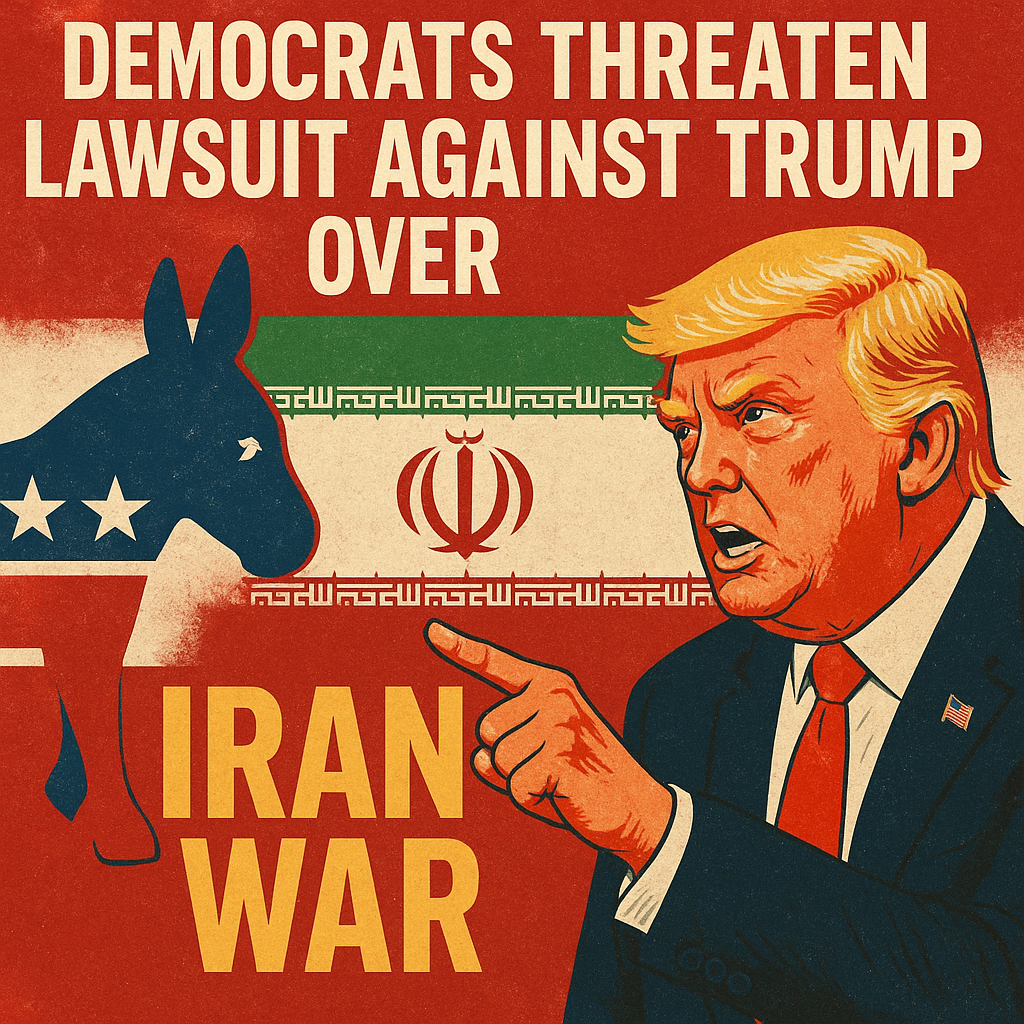
Democrats Threaten Lawsuit Against Trump Over Iran War

Democrats Threaten Lawsuit Against Trump Over Iran War
As tensions simmer regarding U.S. involvement in the ongoing conflicts in the Middle East, recent announcements have indicated that Democrats are contemplating a lawsuit against former President Donald Trump over alleged violations tied to military actions in Iran. This politically charged issue underscores the complex landscape of legal, ethical, and strategic considerations regarding military engagement.

The Legislative Landscape
The Democrats’ potential legal action stems from concerns that Trump’s unilateral decisions regarding Iran may not have adhered to the War Powers Resolution of 1973. This legislation is designed to ensure Congress plays a significant role in decisions to commit U.S. forces into hostilities. Critics argue that Trump’s orders concerning airstrikes and military movements lacked the necessary Congressional authorization, raising alarms among lawmakers who view the military engagements as overreach.


According to an article from RT News, Senate Majority Leader Chuck Schumer expressed deep concerns about the potential ramifications of Trump’s actions. He articulated a growing belief among Democrats that a legal challenge may be necessary to uphold the role of Congress in military affairs. “If we don’t act, it sets a dangerous precedent for future presidents who might bypass Congress altogether,” Schumer warned.


Conversely, some experts highlight that the President holds significant latitude in conducting foreign policy, especially concerning national security threats. Proponents argue that Iran’s continued aggression necessitates swift actions that could be interpreted as self-defense.
Diverse Perspectives on Military Engagement
The broader context surrounding this potential lawsuit involves a longstanding debate over executive power and accountability in military operations. The Democratic Party is not alone in exhibiting concerns about unilateral military action. Many bipartisan voices have emerged to question how U.S. forces engage abroad without sufficient oversight.
In a Sky News report, former military officials weighed in, arguing that while national security is paramount, the implications of bypassing Congress could lead to a slippery slope in military governance. The risks of unmonitored military action may well outstrip its benefits, these experts claim.
On the other hand, some analysts and Trump allies dismiss the lawsuit as a politically motivated move rather than a genuine legal redress. Al Jazeera notes that former White House officials assert that the military actions taken under Trump’s presidency were consistent with previously established protocols during times of heightened threats.
The Legal and Ethical Dilemma
As Democrats contemplate their next steps, the legal implications of pursuing a lawsuit could reverberate throughout American politics. Legal experts are divided on the prospects for success. Some argue that a court could be reluctant to adjudicate a case that fundamentally questions executive military authority.
Samantha Powers, a law professor at a prominent university, commented on the intricacies of the case: “While the intention to hold accountability is commendable, courts tend to be cautious when it comes to interfacing with military actions taken by the President. It’s a delicate balance of power.”
Additionally, critics warn that should this legal challenge proceed, it could further entrench partisan divisions, particularly if the case appears to serve as a political weapon rather than a genuine concern for constitutional adherence.
The Road Ahead
What remains clear is that this potential lawsuit against Trump is not just about Iran; it represents a pivotal moment in the ongoing discourse about presidential authority in military matters. The Democrats’ initiative echoes a larger narrative that seeks to rein in executive power while advocating for a more collaborative approach to military decisions.
As this story develops, it will be essential to monitor how these tensions play out in real-time. Should a court accept jurisdiction, it could lead to a groundbreaking interpretation of the War Powers Resolution.
Nonetheless, the ambiguity surrounding such cases always raises the question of whether political motivations might overshadow genuine legal concerns, leading to a complex interplay of ethics and governance.
In summary, the threat of a lawsuit against Trump over Iran offers a snapshot of the broader issues facing U.S. foreign policy. It highlights the need for accountability and the mechanisms through which the government must engage in military operations—a challenge that remains as pertinent today as ever.















