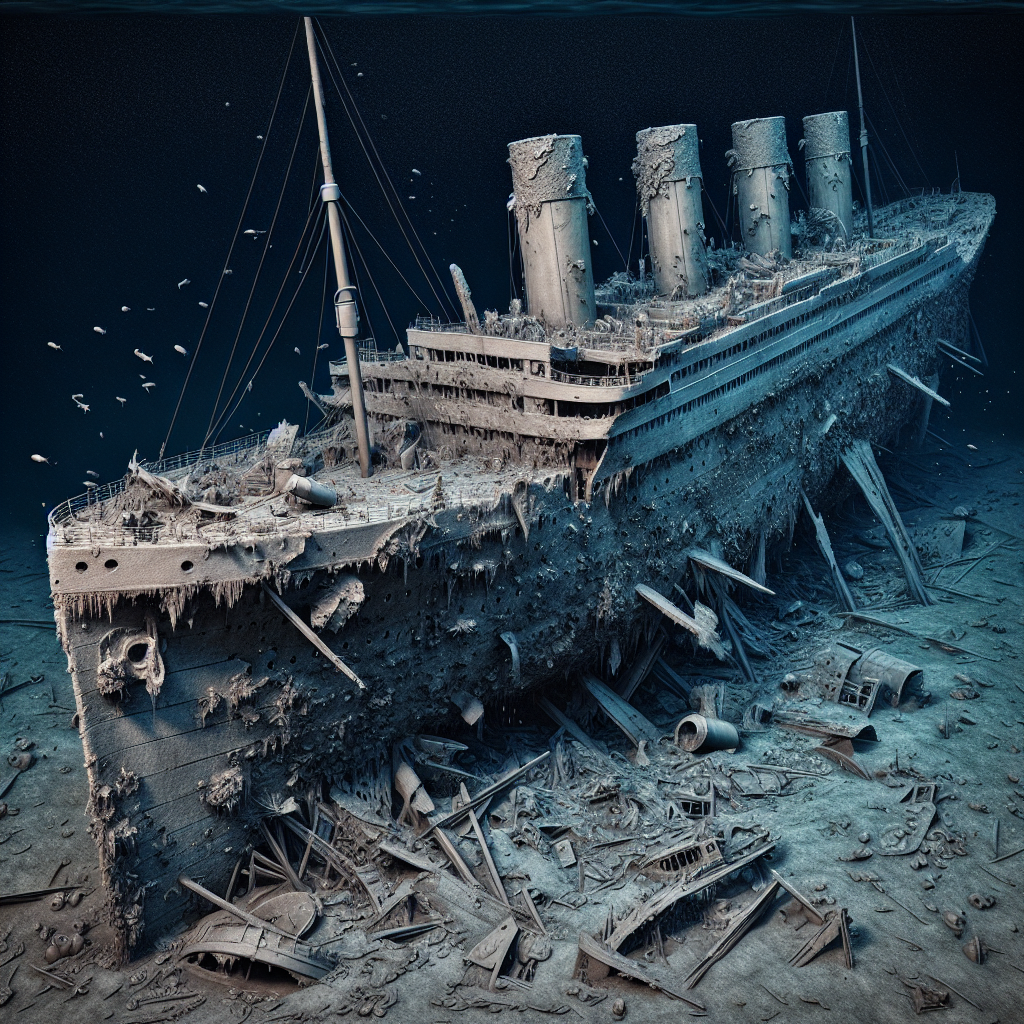
Digital Scan of Titanic Wreckage Uncovers Fresh Insights into Its Last Hours

Digital Scan of Titanic Wreckage Uncovers Fresh Insights into Its Last Hours
Introduction
The Titanic, one of history’s most infamous maritime disasters, continues to captivate the world. Recent advancements in digital scanning technology have provided new insights into the ship’s final moments, offering a deeper understanding of the events that transpired on that fateful night in 1912.

Revolutionary Scanning Technology
Utilizing cutting-edge digital scanning techniques, researchers have been able to create a detailed 3D model of the Titanic wreckage. This breakthrough has allowed for a more comprehensive analysis of the ship’s structure and the sequence of events leading to its sinking.


Key Discoveries
- Structural Damage: The scans revealed previously unseen damage to the ship’s hull, providing clues about the impact and subsequent flooding.
- Debris Field Analysis: A detailed examination of the debris field has offered new perspectives on how the ship broke apart and sank.
- Human Element: Personal artifacts found within the wreckage have shed light on the experiences of passengers and crew during the disaster.
Implications for Historical Understanding
These findings challenge some long-held beliefs about the Titanic’s sinking and offer a more nuanced narrative of the disaster. The new data suggests that the ship’s structural integrity was compromised in ways not previously understood, leading to a faster sinking than earlier estimates.


Conclusion
The digital scan of the Titanic wreckage has provided invaluable insights into one of history’s most tragic events. By enhancing our understanding of the ship’s final hours, this research not only enriches historical knowledge but also honors the memory of those who perished. As technology continues to evolve, further discoveries may yet emerge, deepening our connection to the past.