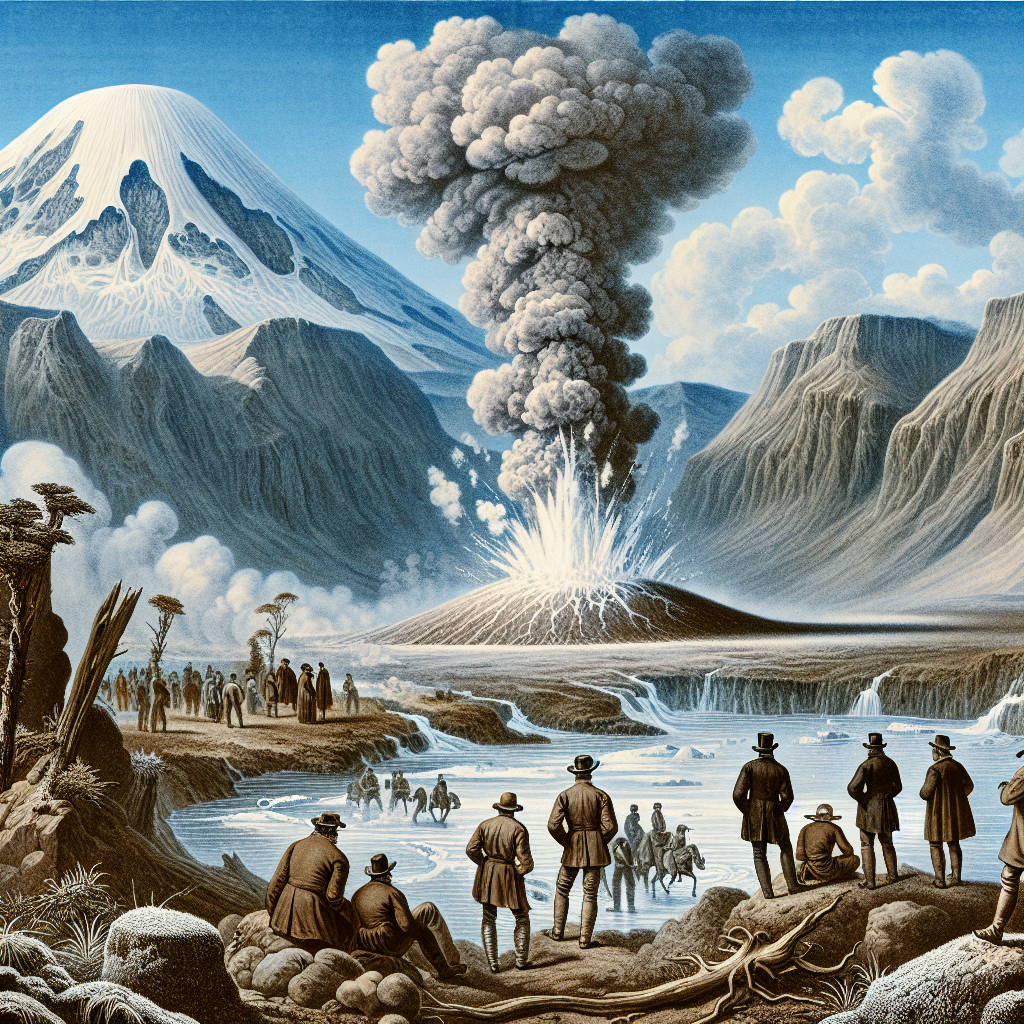
Discovery of the 1831 ‘Mystery Volcano’ That Cooled the Earth 200 Years Ago

Discovery of the 1831 ‘Mystery Volcano’ That Cooled the Earth 200 Years Ago
Introduction to the Enigma
In a groundbreaking revelation, scientists have identified the elusive ‘Mystery Volcano’ responsible for a significant global cooling event nearly two centuries ago. This discovery sheds light on a long-standing geological puzzle that has intrigued researchers for decades.

The Historical Context
In 1831, a mysterious volcanic eruption led to a noticeable drop in global temperatures. Despite its impact, the volcano’s location remained unknown, earning it the moniker of the ‘Mystery Volcano.’


Key Findings
- Location Identified: Researchers have pinpointed the volcano’s location in the Pacific Ocean, near the Tonga archipelago.
- Impact on Climate: The eruption released massive amounts of sulfur dioxide, which formed aerosols in the atmosphere, reflecting sunlight and causing a temporary cooling effect on the planet.
- Scientific Methods: The discovery was made possible through a combination of ice core analysis, historical records, and advanced geochemical techniques.
Significance of the Discovery
This finding not only solves a historical mystery but also enhances our understanding of volcanic impacts on climate. It underscores the importance of studying past volcanic events to better predict and mitigate future climate-related challenges.


Conclusion
The identification of the 1831 ‘Mystery Volcano’ marks a significant milestone in geological research. By unraveling this enigma, scientists have gained valuable insights into the complex interactions between volcanic activity and climate change, highlighting the critical role of historical data in contemporary climate science.