
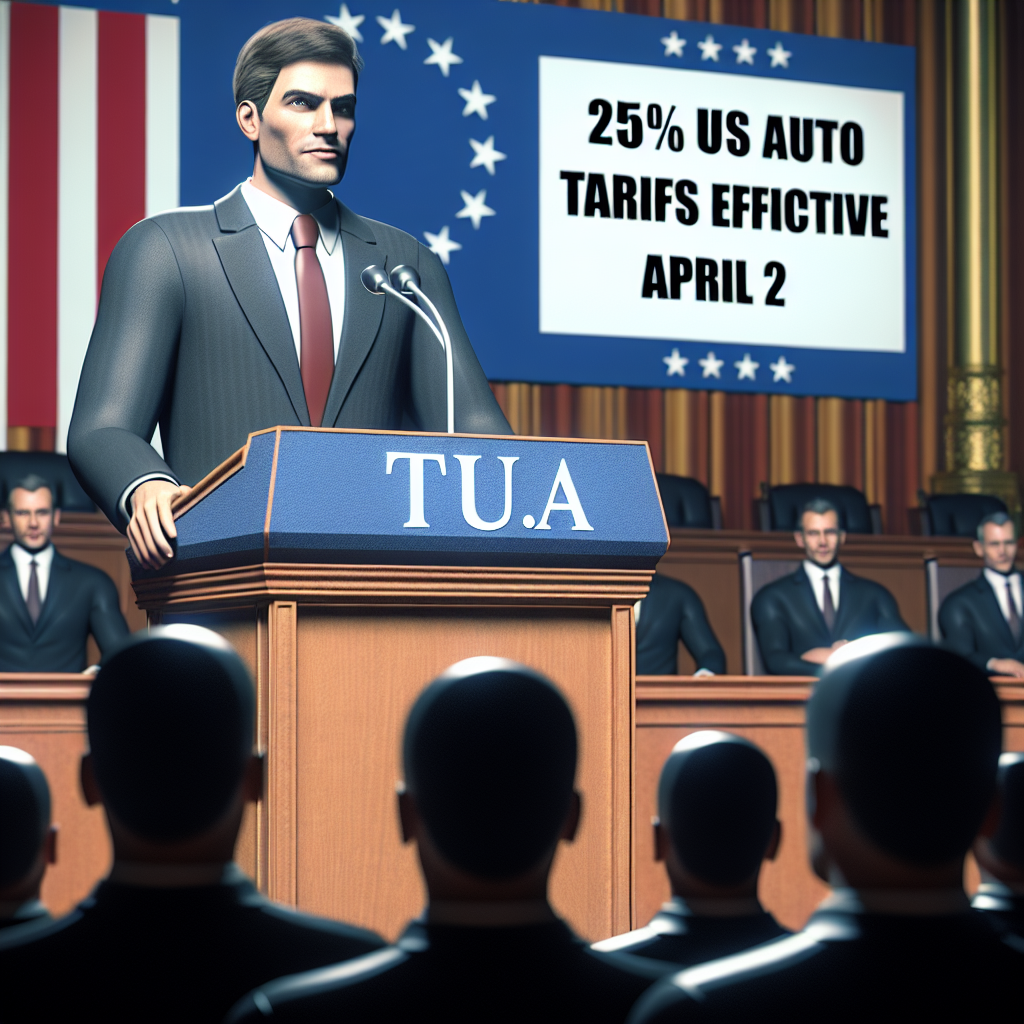
Donald Trump Announces 25% US Auto Tariffs Effective April 2

Donald Trump Announces 25% US Auto Tariffs Effective April 2
Introduction
In a significant move impacting the automotive industry, former President Donald Trump has announced the imposition of a 25% tariff on all imported automobiles to the United States, set to take effect on April 2. This decision marks a pivotal shift in trade policy, aiming to bolster domestic manufacturing and address trade imbalances.

Key Details of the Tariff Announcement
- Implementation Date: The tariffs will be enforced starting April 2.
- Scope: The 25% tariff applies to all imported cars, trucks, and automotive parts.
- Objective: The primary goal is to encourage the growth of the U.S. auto industry and reduce dependency on foreign imports.
Potential Impacts on the Automotive Industry
The introduction of these tariffs is expected to have wide-ranging effects on both domestic and international markets:


- Price Increases: Consumers may face higher prices for imported vehicles and parts.
- Domestic Production Boost: U.S. automakers could see increased demand for locally manufactured vehicles.
- Trade Tensions: The move may escalate trade tensions with key automotive exporting countries.
Reactions from Industry and Political Leaders
The announcement has elicited varied responses from different stakeholders:


- Industry Concerns: Automotive industry leaders have expressed concerns over potential disruptions and increased costs.
- Political Support: Some political figures support the move as a step towards economic nationalism and job creation.
- International Criticism: Foreign governments have criticized the tariffs, warning of possible retaliatory measures.
Conclusion
The imposition of a 25% tariff on imported automobiles by Donald Trump is poised to reshape the U.S. automotive landscape. While it aims to strengthen domestic production, it also raises concerns about increased consumer costs and international trade relations. As the April 2 implementation date approaches, stakeholders across the industry and political spectrum are closely monitoring the potential ramifications of this bold policy shift.













