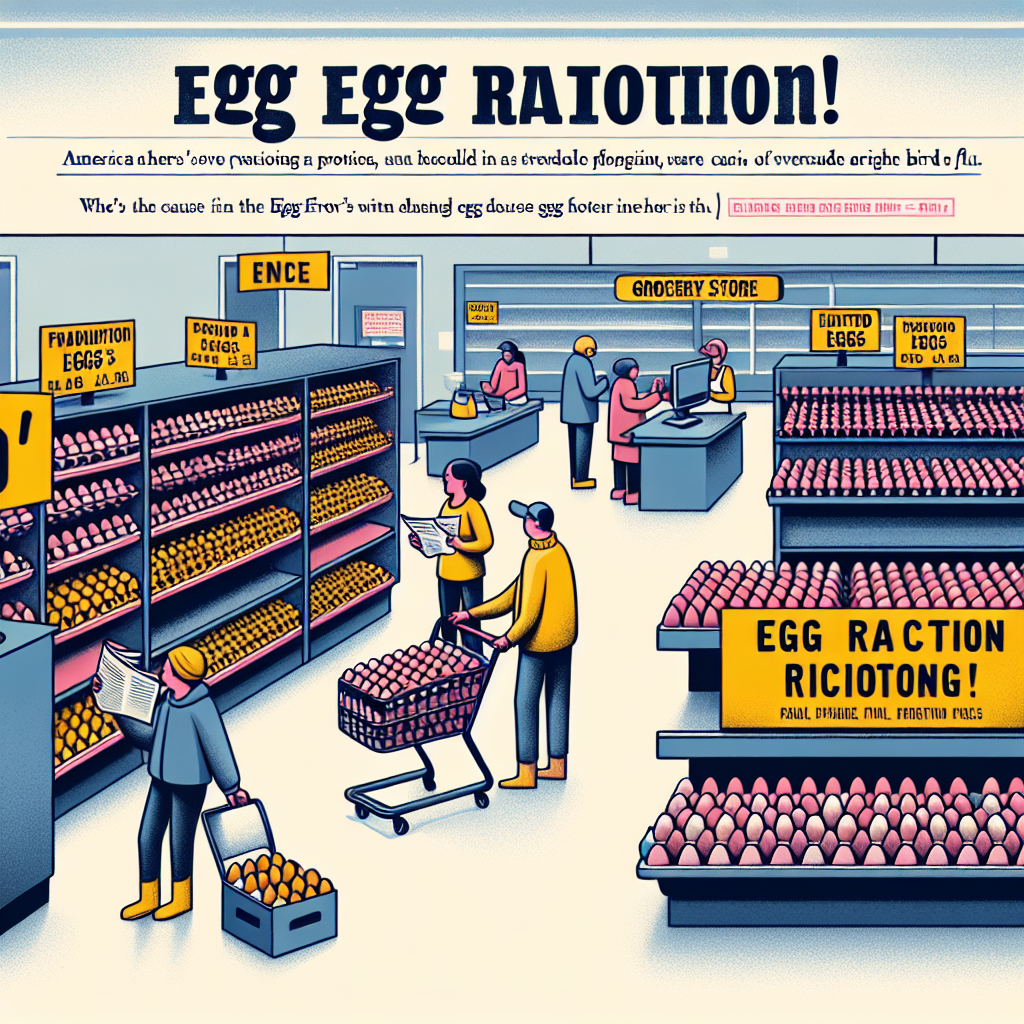
“Egg Shortage Hits US Stores: Severe Rationing Due to Bird Flu Crisis”

Egg Shortage Hits US Stores: Severe Rationing Due to Bird Flu Crisis
Overview of the Crisis
The United States is currently facing a significant egg shortage, leading to severe rationing in stores nationwide. This shortage is primarily attributed to a widespread outbreak of bird flu, which has severely impacted poultry farms across the country.

Key Factors Contributing to the Shortage
- Bird Flu Outbreak: The avian influenza has led to the culling of millions of birds, drastically reducing egg production.
- Supply Chain Disruptions: The pandemic has exacerbated existing supply chain issues, making it difficult to transport eggs efficiently.
- Increased Demand: With more people cooking at home, the demand for eggs has surged, further straining the limited supply.
Impact on Consumers and Retailers
Consumers are experiencing limited availability and increased prices for eggs in grocery stores. Retailers have implemented rationing measures to manage the scarce supply and ensure equitable distribution among customers.


Responses and Mitigation Efforts
- Government Intervention: Authorities are working to control the spread of the bird flu and support affected farmers.
- Alternative Sourcing: Retailers are exploring alternative sources and suppliers to replenish stock.
- Public Awareness: Efforts are being made to inform the public about the situation and encourage responsible purchasing.
Conclusion
The egg shortage in the US, driven by a severe bird flu outbreak, has led to rationing and increased prices. While efforts are underway to address the crisis, consumers and retailers continue to face challenges. The situation underscores the need for robust measures to prevent future disruptions in the food supply chain.