
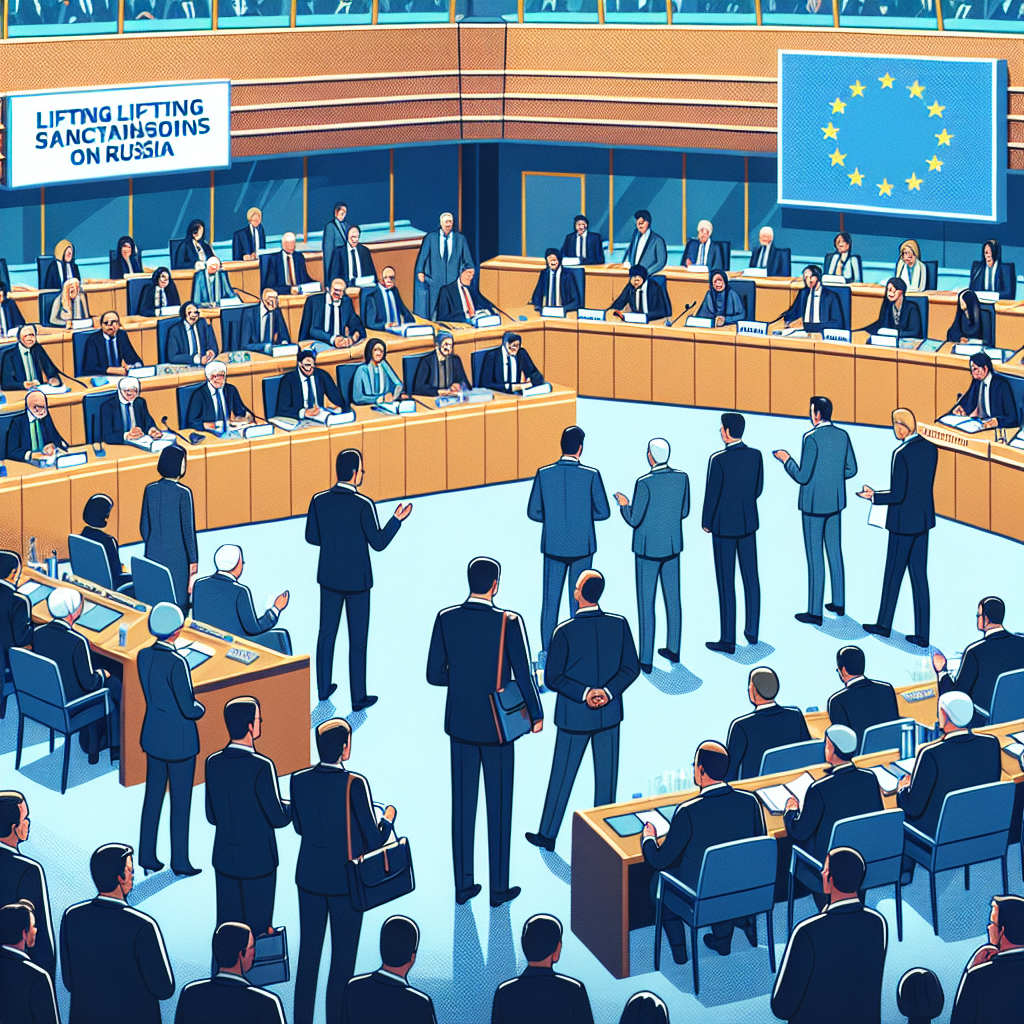
EU Conference Calls for Lifting Sanctions on Russia

EU Conference Calls for Lifting Sanctions on Russia
Overview of the Conference
The recent EU conference has sparked significant debate by advocating for the lifting of sanctions imposed on Russia. This move has generated diverse opinions among member states, reflecting the complex geopolitical landscape and economic considerations at play.

Key Arguments for Lifting Sanctions
- Economic Benefits: Proponents argue that removing sanctions could revitalize trade and economic growth within the EU, particularly benefiting sectors heavily reliant on Russian markets.
- Diplomatic Relations: Improving diplomatic ties with Russia is seen as a strategic advantage, potentially leading to enhanced cooperation on global issues such as climate change and security.
- Energy Security: Lifting sanctions could stabilize energy supplies, as Russia is a major supplier of natural gas to Europe, ensuring energy security for the region.
Counterarguments and Concerns
- Political Implications: Critics warn that lifting sanctions could be perceived as a concession, potentially undermining the EU’s stance on international law and human rights.
- Security Risks: There are concerns that easing sanctions might embolden Russia’s geopolitical ambitions, posing security risks to neighboring countries.
- Internal EU Divisions: The proposal has highlighted divisions within the EU, with some member states strongly opposing any relaxation of sanctions.
Potential Outcomes and Next Steps
The conference has set the stage for further discussions among EU leaders, with potential outcomes including:
Ads


- Forming a task force to evaluate the impact of sanctions and explore alternative strategies.
- Engaging in diplomatic dialogues with Russia to address mutual concerns and explore pathways for cooperation.
- Developing a comprehensive policy framework that balances economic interests with geopolitical stability.
Conclusion
The EU conference’s call to lift sanctions on Russia has ignited a complex debate, balancing economic interests with political and security considerations. As discussions continue, the EU faces the challenge of navigating these multifaceted issues to arrive at a consensus that aligns with its long-term strategic goals.
Ads

Ads

Ads

Ads

Ads

Ads

Ads

Ads

Ads

Ads

Ads

Ads

Ads


