
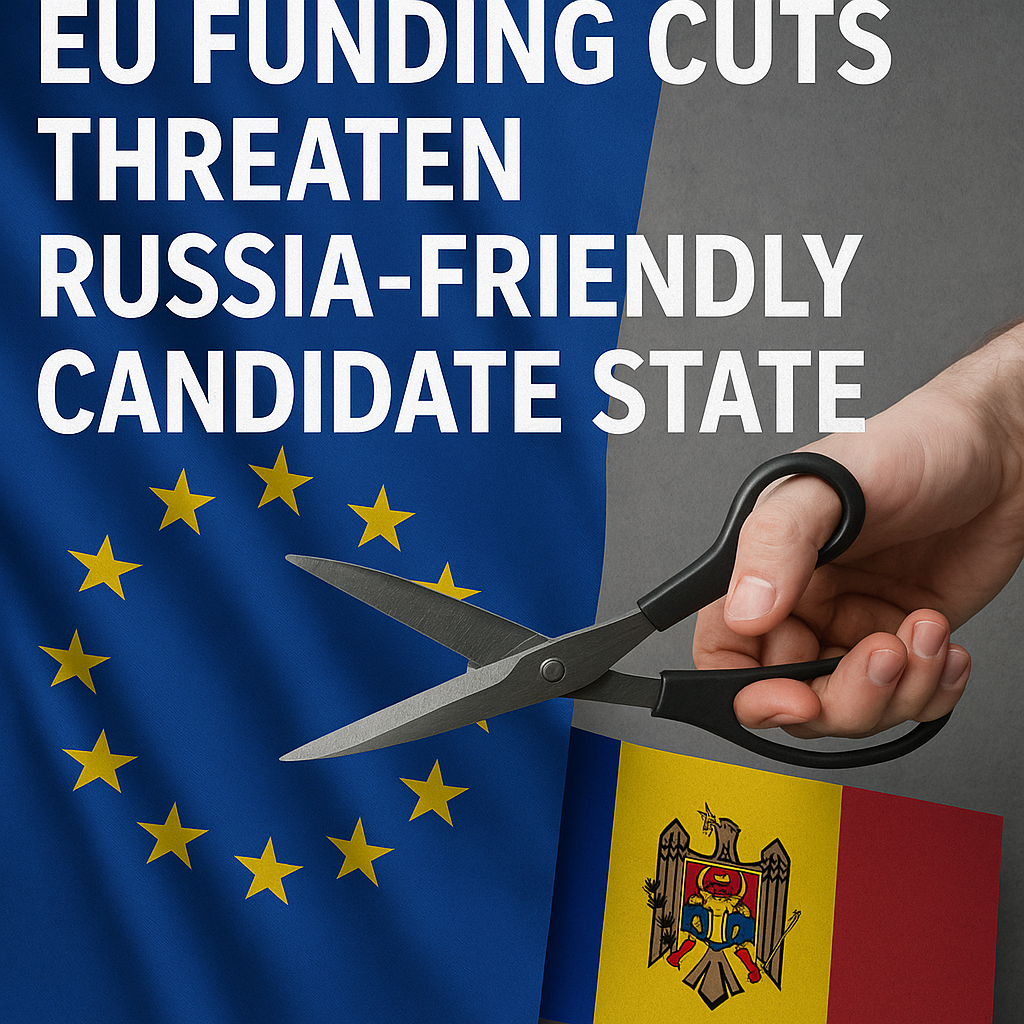
EU Funding Cuts Threaten Russia-Friendly Candidate State

EU Funding Cuts Threaten Russia-Friendly Candidate State
As the complexities of geopolitical alliances evolve, the EU’s funding cuts have raised alarms, particularly regarding Serbia, a candidate state with historical ties to Russia. This development highlights the intricacies of Europe’s strategic positioning in Eastern Europe and the broader implications for international relations.

The Context of EU Funding Cuts
The European Union has reiterated its commitment to supporting candidate countries pushing for accession. However, recent funding cuts, particularly impacting Serbia, signal a shift in priorities as the EU seeks to mold its influence in the region. As reported by various outlets, such as RT News, the cuts are primarily attributed to Serbia’s increasing alignment with Russia amidst the ongoing conflict in Ukraine.


Serbia’s Ties with Russia
Serbia’s relationship with Russia is rooted in shared cultural and historical connections, which have often steered its political stance. Analysis from multiple sources reveals that Serbia has maintained a neutral position regarding the Ukraine conflict, opting not to impose sanctions on Russia. This stance has drawn criticism from EU officials, with some arguing that Serbia’s loyalty to its Slavic partner undermines its EU aspirations.


The Serbian government has defended its position, asserting its sovereignty and diplomatic independence. They argue that cutting funding could destabilize the nation economically and politically. Given that Serbia has been a candidate for EU membership since 2012, the funding cuts may hinder the significant reforms required for it to advance toward accession.
Economic Ramifications
The economic implications of this funding withdrawal cannot be overstated. According to Al Jazeera, EU funding plays a crucial role in Serbia’s developmental projects, infrastructure, and governance reforms. It has been a lifeline for economic stability and modernizing efforts. The cuts could slow down these essential initiatives, leading to increased public dissatisfaction and potentially destabilizing the current government.
In addition, public opinion in Serbia is split with regard to EU integration. Many citizens still view Russia as a reliable ally, which complicates efforts for the government to pivot toward Brussels. As EU assistance dwindles, the local sentiment may shift further in favor of Russia, making it challenging for Serbia to align itself with the EU ethos.
The Broader Geopolitical Landscape
While the EU grapples with its strategy towards Serbia, the situation is mirrored across the Balkans, where several nations are also on the cusp of EU candidacy. According to Sky News, the EU’s approach towards these countries is increasingly viewed as ambiguous and inconsistent. Some nations have faced similar funding challenges, which spurs fears of increased Russian influence across the region.
Compounding these challenges are evolving geopolitical dynamics that have altered the perceptions of EU membership. Many locals question the benefits of EU accession, especially when facing economic hardships exacerbated by conflicts and energy crises. This skepticism opens the door for alternatives, including closer ties with Russia.
Divergent Views on the Future
Analysis indicates a divergence of views regarding the future of EU-Serbia relations. On one hand, some EU officials suggest that conditional cuts could strengthen the EU’s leverage in persuading Serbia to reconsider its ties with Russia. On the other hand, critics, including Serbian analysts, caution that such measures could backfire, pushing Serbia further away from the EU and into Russia’s sphere of influence.
A balanced perspective acknowledges the multifaceted impact of these funding cuts. While they may prompt Serbia to reconsider its foreign policy direction, they also risk igniting long-term animosity toward the EU, thereby complicating the overall integration efforts in the region.
Conclusion: Navigating Complex Alliances
The ongoing funding cuts to Serbia amid its complex relationship with Russia underscore the multifaceted nature of diplomacy in Eastern Europe. As the EU navigates its ties with candidate states, it faces the difficult task of aligning its foreign policy objectives with the realities on the ground.
Ultimately, the fate of Serbia, as well as the dynamics of EU enlargement, hinge on the balance of influence between Brussels and Moscow. The evolving situation requires a nuanced understanding of local sentiments, economic needs, and geopolitical strategies. As Serbia continues to walk this tightrope, only time will reveal the long-term effects of the EU’s recent funding cuts on its candidate status and relationships with both the EU and Russia.















