
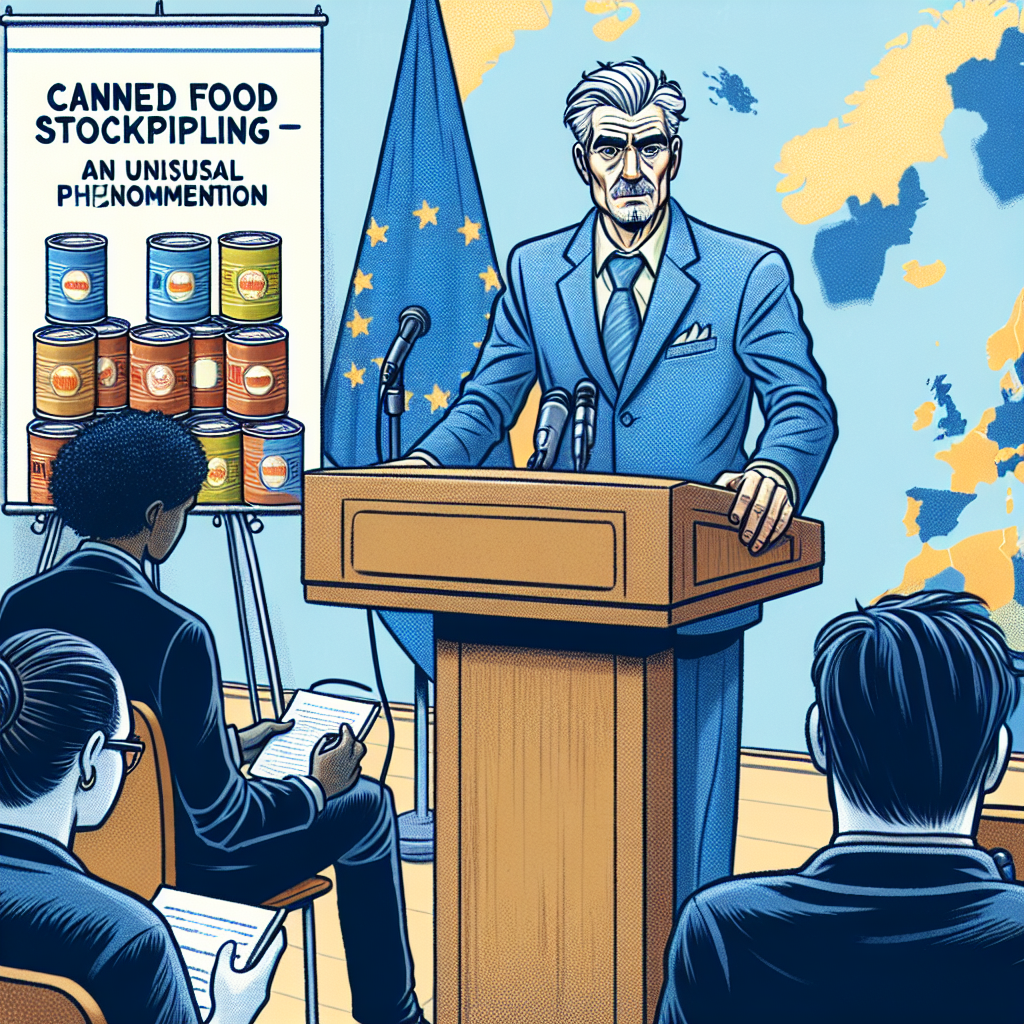
EU Leader Alleges Russian Influence Behind Canned Food Stockpiling

EU Leader Alleges Russian Influence Behind Canned Food Stockpiling
Overview
In a surprising turn of events, a prominent European Union leader has raised concerns about potential Russian influence in the recent surge of canned food stockpiling across Europe. This allegation has sparked widespread debate and scrutiny, as it suggests a strategic maneuver by Russia to destabilize the region’s food security.

Key Allegations
- Russian Influence: The EU leader claims that Russia may be orchestrating a campaign to encourage stockpiling, thereby creating panic and uncertainty in European markets.
- Economic Disruption: The alleged influence is seen as a tactic to disrupt the EU’s economic stability, particularly in the food sector.
- Information Warfare: The use of misinformation and propaganda is suspected to be a tool in this alleged strategy, aiming to manipulate public perception and behavior.
Reactions and Implications
The allegations have prompted a mixed response from EU member states and the international community. While some leaders express skepticism, others call for a thorough investigation into the claims.


- Calls for Investigation: Several EU countries are urging for a comprehensive inquiry to verify the claims and assess the potential impact on food security.
- Public Concern: The news has heightened public anxiety, leading to increased stockpiling behavior among citizens.
- Diplomatic Tensions: The allegations could further strain EU-Russia relations, adding to existing geopolitical tensions.
Conclusion
The assertion of Russian influence in canned food stockpiling presents a complex challenge for the EU, intertwining issues of food security, economic stability, and international relations. As the situation unfolds, it remains crucial for EU leaders to address these concerns with transparency and strategic foresight to safeguard the region’s interests.














