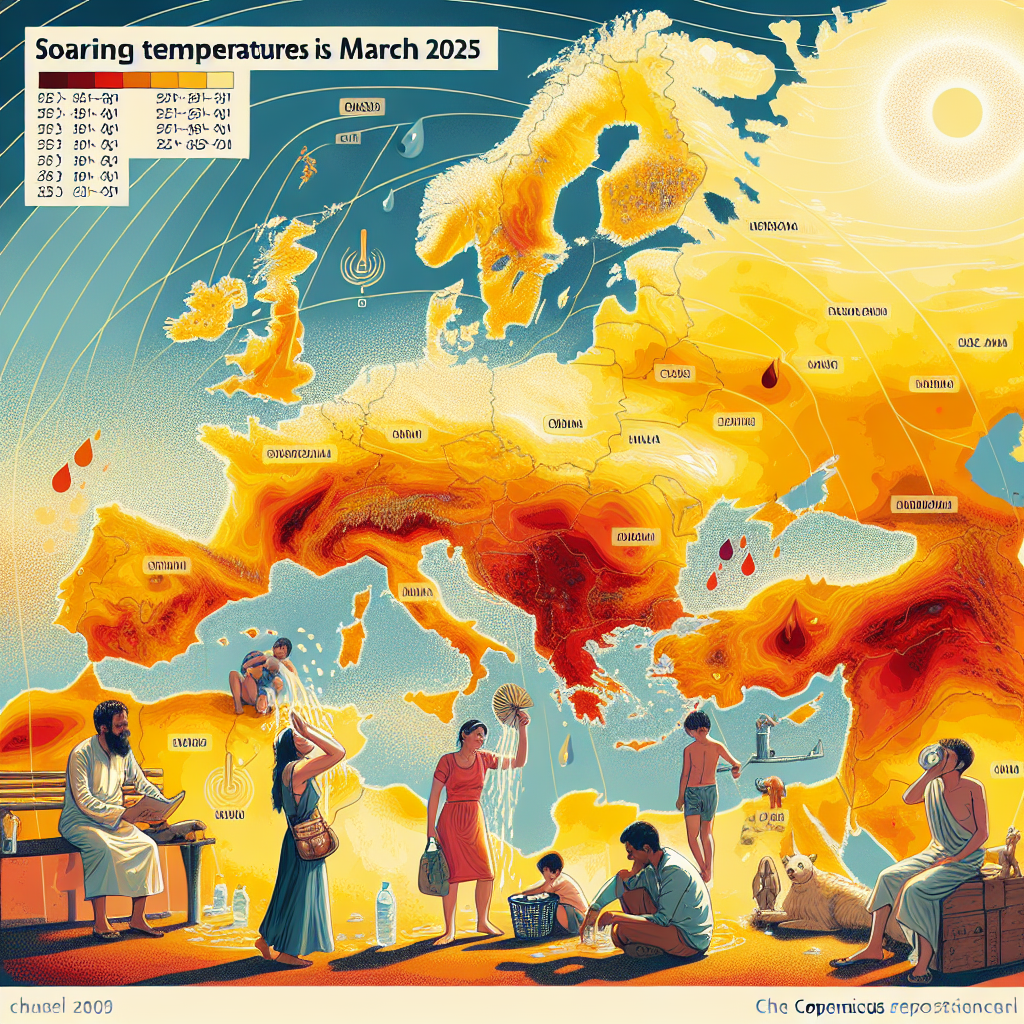
Europe Experiences Record-Breaking Heat in March 2025: Copernicus Climate Report

Europe Experiences Record-Breaking Heat in March 2025
Introduction
In an unprecedented climatic event, Europe witnessed record-breaking temperatures in March 2025, as reported by the Copernicus Climate Change Service. This alarming trend highlights the ongoing challenges posed by climate change and its impact on global weather patterns.

Key Highlights
- Unprecedented Temperatures: March 2025 saw temperatures soaring above historical averages across Europe, with several regions experiencing their hottest March on record.
- Geographical Impact: Southern and Central Europe were particularly affected, with countries like Spain, Italy, and France recording temperatures significantly higher than usual.
- Environmental Consequences: The heatwave exacerbated drought conditions, increased the risk of wildfires, and put additional stress on water resources and agriculture.
Scientific Insights
The Copernicus Climate Change Service attributes this extreme weather event to a combination of natural variability and the ongoing influence of human-induced climate change. The report emphasizes the need for urgent action to mitigate these effects and adapt to a rapidly changing climate.


Response and Adaptation
- Policy Measures: European governments are urged to implement robust climate policies to reduce greenhouse gas emissions and enhance resilience against future heatwaves.
- Public Awareness: Increased efforts are needed to educate the public about the risks associated with extreme heat and the importance of sustainable practices.
Conclusion
The record-breaking heat in March 2025 serves as a stark reminder of the pressing challenges posed by climate change. As Europe grapples with these extreme conditions, the need for comprehensive climate action and adaptation strategies becomes ever more critical. Addressing these issues is essential to safeguarding the environment and ensuring a sustainable future for all.