
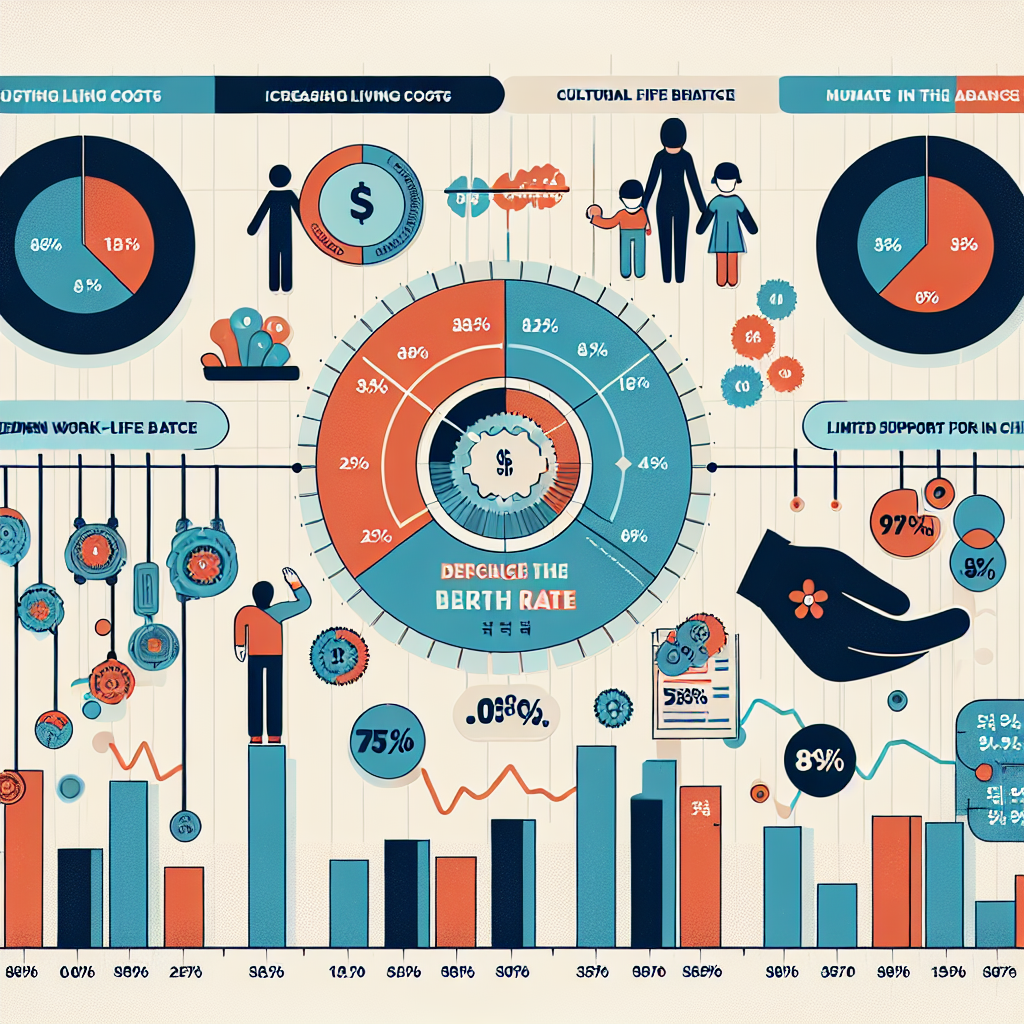
Exploring the Causes Behind South Korea’s Declining Birth Rate

Exploring the Causes Behind South Korea’s Declining Birth Rate
Introduction
South Korea is experiencing a significant decline in birth rates, raising concerns about the country’s demographic future. This trend poses challenges for economic growth and social stability. Understanding the underlying causes is crucial for developing effective policy responses.

Key Factors Contributing to the Decline
Economic Pressures
- High Cost of Living: The rising cost of housing, education, and childcare makes raising children financially burdensome for many families.
- Job Insecurity: Unstable employment conditions and a competitive job market deter young couples from starting families.
Societal and Cultural Influences
- Changing Gender Roles: As more women pursue higher education and careers, traditional family structures are evolving, leading to delayed marriages and childbirth.
- Work-Life Balance: Long working hours and demanding job expectations leave little time for family life, discouraging parenthood.
Government Policies and Support
- Insufficient Support Systems: Despite government efforts, existing policies and incentives are often seen as inadequate or ineffective in addressing the needs of young families.
- Lack of Comprehensive Childcare: Limited access to affordable and quality childcare services further complicates family planning decisions.
Conclusion
South Korea’s declining birth rate is a multifaceted issue influenced by economic, societal, and policy-related factors. Addressing these challenges requires a holistic approach that includes improving economic stability, promoting gender equality, and enhancing support systems for families. By tackling these issues, South Korea can work towards reversing the trend and securing a sustainable demographic future.
Ads


Ads

Ads

Ads

Ads

Ads

Ads

Ads

Ads

Ads

Ads

Ads





