
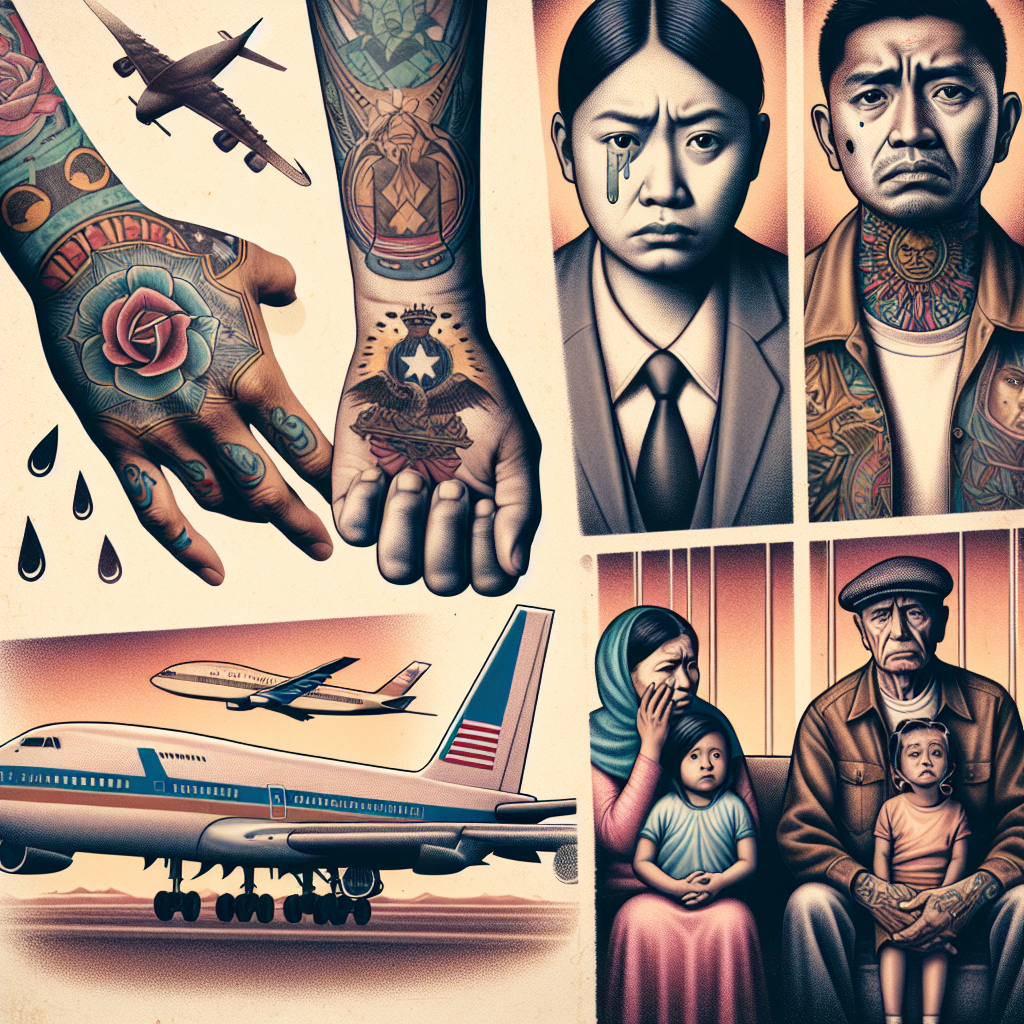
Families Claim Tattoos Led to Unjust Deportations of Loved Ones from US

Families Claim Tattoos Led to Unjust Deportations of Loved Ones from US
Overview
Recent reports have surfaced highlighting a troubling trend where tattoos have allegedly contributed to the unjust deportation of individuals from the United States. Families are voicing concerns that their loved ones are being unfairly targeted and removed based on misinterpretations of body art.

Key Concerns
- Misinterpretation of Tattoos: Authorities are reportedly misreading tattoos as gang affiliations or criminal indicators, leading to wrongful deportations.
- Lack of Context: Many tattoos are cultural or personal expressions, not indicative of criminal activity.
- Impact on Families: Deportations based on tattoos have caused significant emotional and financial strain on families.
Voices from Affected Families
Families have come forward to share their stories, emphasizing the personal and cultural significance of tattoos that have been misinterpreted:


- One family described how a religious tattoo was mistaken for a gang symbol.
- Another individual was deported due to a tattoo commemorating a deceased family member, which was misread as a criminal affiliation.
Calls for Change
Advocacy groups and legal experts are urging for a more nuanced approach to evaluating tattoos in immigration cases. They argue for:


- Better Training: Improved training for immigration officers to understand cultural and personal tattoo meanings.
- Policy Revisions: Calls for policy changes to prevent tattoos from being used as sole evidence for deportation.
- Increased Oversight: Greater oversight and accountability in deportation decisions involving tattoos.
Conclusion
The issue of tattoos leading to unjust deportations underscores the need for a more informed and sensitive approach in immigration enforcement. Families and advocates are calling for changes to prevent further harm and ensure that cultural expressions are not misinterpreted as criminal indicators.















