
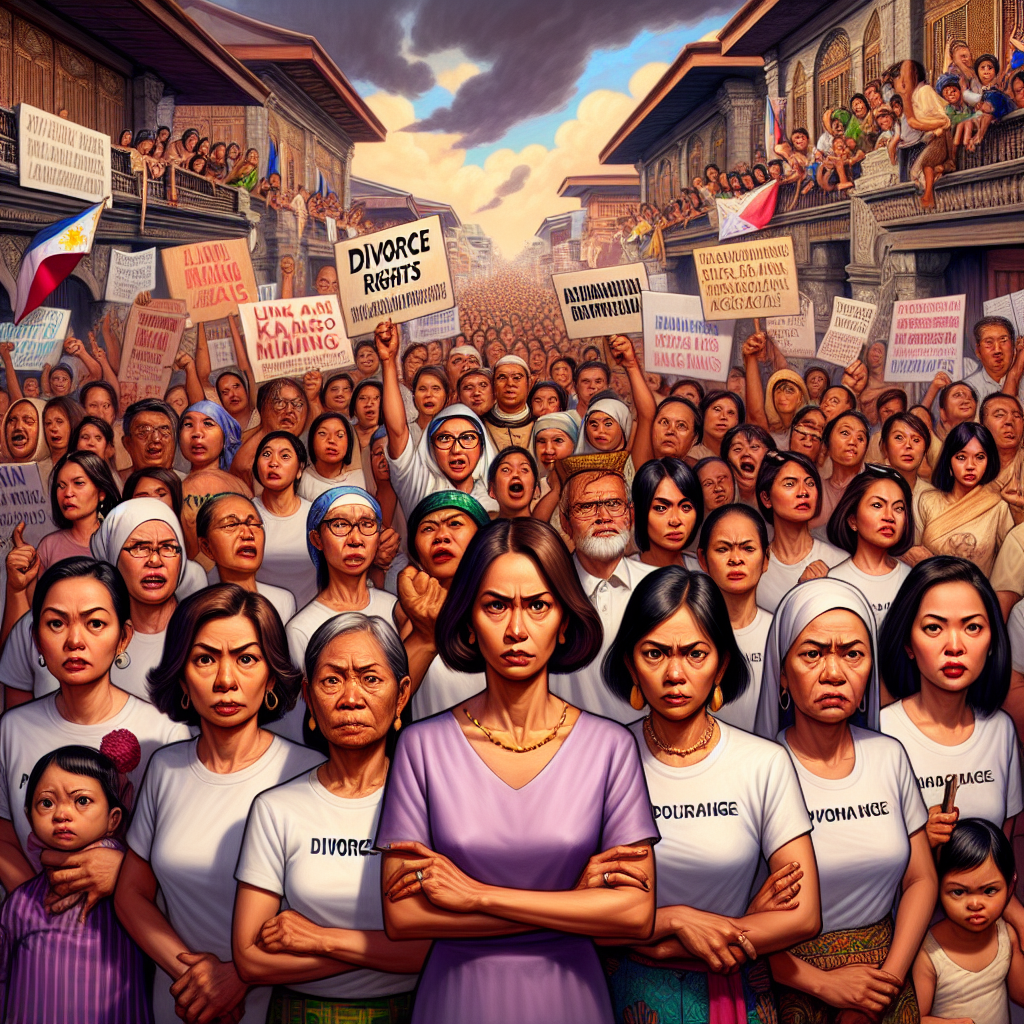
Filipino Women Advocate for Divorce Rights in a Predominantly Catholic Nation

Filipino Women Advocate for Divorce Rights in a Predominantly Catholic Nation
Introduction
In the Philippines, a predominantly Catholic country, a growing movement led by Filipino women is advocating for the legalization of divorce. This push for change highlights the tension between traditional religious values and the evolving societal norms regarding marriage and personal freedom.

The Current Legal Landscape
The Philippines is one of the few countries in the world where divorce is not legally recognized. The absence of divorce laws has significant implications for individuals trapped in unhappy or abusive marriages.


- Divorce is currently illegal, with annulment being the only legal recourse for ending a marriage.
- Annulment is often a lengthy, costly, and complex process, making it inaccessible for many.
Advocacy Efforts
Filipino women are at the forefront of the movement to legalize divorce, emphasizing the need for personal autonomy and protection from abusive relationships.


- Advocates argue that legalizing divorce would provide a necessary escape route for those in toxic marriages.
- Efforts include raising public awareness, lobbying lawmakers, and engaging in public discourse to shift societal perceptions.
Challenges and Opposition
The campaign for divorce rights faces significant opposition from the Catholic Church and conservative groups, who view marriage as a sacred and indissoluble union.
- The Catholic Church holds considerable influence in the Philippines, often shaping public policy and opinion.
- Opponents argue that legalizing divorce could undermine family values and lead to increased marital breakdowns.
Potential Impact
If successful, the legalization of divorce could have profound implications for Filipino society, offering greater freedom and protection for individuals in unhappy marriages.
- It could lead to more equitable gender dynamics by empowering women to leave abusive relationships.
- Legalizing divorce may also prompt broader discussions on family law reforms and gender equality.
Conclusion
The movement for divorce rights in the Philippines represents a significant cultural shift, challenging deeply entrenched religious and societal norms. As Filipino women continue to advocate for change, the nation stands at a crossroads between tradition and modernity, with the potential to redefine marriage and personal freedom in a new era.















