
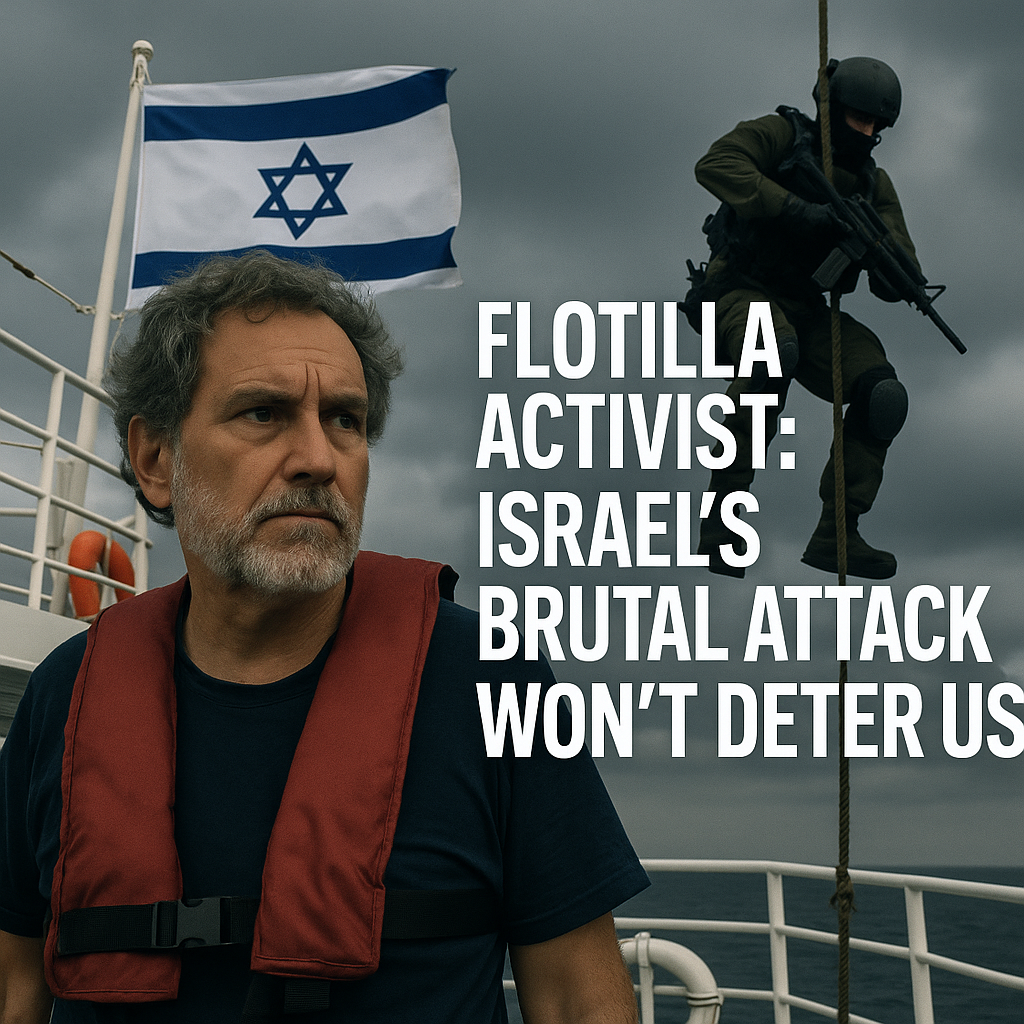
Flotilla Activist: Israel’s Brutal Attack Won’t Deter Us

Flotilla Activist: Israel’s Brutal Attack Won’t Deter Us
The recent escalation in tensions related to maritime protests has underscored the complexities of the Israeli-Palestinian conflict. The phrase “Israel’s brutal attack won’t deter us” captures an unwavering resolve among activists committed to challenging Israel’s policies through flotilla demonstrations. This article explores the diverse opinions surrounding these maritime efforts and examines their implications in the larger geopolitical context.

The Flotilla Movement: A Historical Perspective
Historically, the flotilla movement has been a significant aspect of the Palestinian resistance against Israeli policies. The first major flotilla in 2010 attempted to break the blockade on Gaza, resulting in the tragic deaths of nine activists when Israeli forces carried out a violent raid. Since then, the movement has continued to garner attention, drawing activists from around the globe who aim to bring awareness to the plight of Palestinians and challenge maritime restrictions.


Recent statements from activists, particularly following Israel’s latest military actions, reveal a steadfast commitment to continue these protests. According to Al Jazeera, prominent activists believe that such violence will only serve to strengthen their resolve. “We refuse to be cowed. Our mission is to highlight the injustices faced by our people,” remarked a member of one of the activist organizations. This sentiment resonates deeply within the activist community, even as debates ensue about the effectiveness and safety of these protests.


Diverging Perspectives on Effectiveness
Despite the rallying cry among activists, viewpoints about the success and strategy of the flotilla movement vary widely. Supporters argue that these initiatives are critically important for increasing international awareness and pressuring governments to respond to the humanitarian crisis in Gaza. They highlight that media coverage of these flotilla attempts keeps the issue alive in the global consciousness.
On the other hand, critics question the efficacy of flotilla demonstrations, arguing that they may provoke further violence and entrench opposition from Israeli forces, as reported by RT News. Some analysts suggest that while the intentions behind these initiatives are noble, the consequences could undermine broader peace efforts or attract hardline backlash.
“Every act of aggression from one side leads to retaliation from the other, making peace seem increasingly unattainable,” noted a conflict analyst. This tension underscores the challenge of balancing advocacy with the potential for escalated violence in the already fraught region.
The Role of International Support
International support plays a crucial role in shaping the future of the flotilla movement. Activists have long called upon global communities, humanitarian organizations, and governments to take a stand against the blockade and offer support for their maritime efforts. The backing of prominent international figures can lend weight to their cause and potentially sway public opinion.
However, the nature of this support is multifaceted. While some nations may endorse the flotilla’s aims as part of a broader discourse on human rights, others may remain hesitant due to complex diplomatic relations with Israel. For instance, some Arab nations have recently re-established ties with Israel, complicating the landscape for activists seeking solidarity.
This international entanglement raises questions: How do grassroots movements navigate diplomatic negotiations? And can solidarity translate into effective advocacy without exacerbating tensions?
Concluding Thoughts
As the flotilla movement continues to navigate a sea of challenges, the commitment of its activists remains resolute. Statements affirming that “Israel’s brutal attack won’t deter us” reflect a deep-seated dedication to addressing injustices through peaceful means. However, the ongoing conflict presents numerous obstacles, urging not only recognition of their struggles but also a nuanced understanding of the ramifications these protests may hold.
The debate surrounding the efficacy of protests versus their potential to provoke further violence remains complex. What persists is a vigilant commitment to advocating for Palestinian rights, balanced by the need for thoughtful discourse surrounding the triadic relationship among activists, international supporters, and the geopolitical responses from Israel.
In a world increasingly interconnected by shared narratives and humanitarian calls, the future of the flotilla movement may hinge on finding a viable middle ground—one that champions rights while fostering dialogue and peace.















