
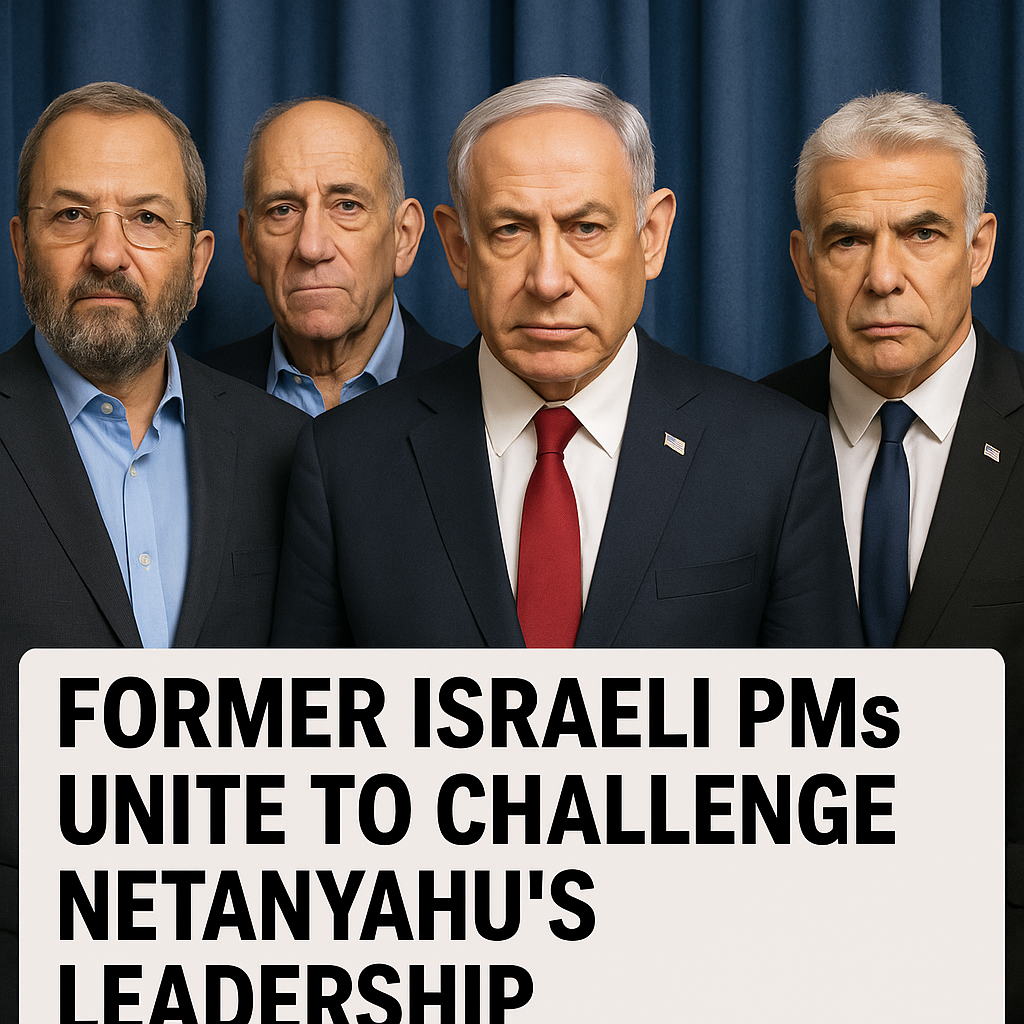
Former Israeli PMs Unite to Challenge Netanyahu’s Leadership

Former Israeli PMs Unite to Challenge Netanyahu’s Leadership
Recent developments in Israeli politics have underscored a significant shift as former Prime Ministers band together to oppose Benjamin Netanyahu’s longstanding leadership. This unprecedented coalition aims to present a consolidated front against what they perceive as an erosion of democratic norms under Netanyahu’s governance.

A Historical Context
The political landscape in Israel has been turbulent, particularly in recent years amid frequent elections and shifting alliances. Former leaders Ehud Olmert, Naftali Bennett, and more recently, Yair Lapid, have voiced increasing concerns regarding Netanyahu’s policies. As reports from various sources indicate, they argue that his governance has increasingly drifted toward authoritarianism, undermining judicial independence and stifling political dissent.


Al Jazeera highlights that Olmert explicitly criticized Netanyahu’s approach to issues such as judicial reform, which has been framed as a power grab by right-leaning factions in Israeli politics. This sentiment resonates with many moderate Israelis who fear that these changes may compromise democratic principles, leading to an erosion of civil rights and liberties.


On the contrary, Netanyahu supporters view these concerns as overblown and politically motivated. They frame the former leaders’ actions as a desperate attempt to regain power, citing the coalition’s lack of a coherent policy agenda beyond their opposition to Netanyahu himself.
Ideological Divides and Political Alliances
This coalition of former leaders is not only about opposing Netanyahu; it also reflects a deeper ideological divide within Israeli politics. Bennett, once an ally of Netanyahu, has now turned his back on him, highlighting the shift in alliances that frequently characterize Israeli political behavior. By joining forces with traditional rivals like Lapid and Olmert, Bennett suggests a willingness to set aside personal and ideological differences in pursuit of a common goal: restoring what they see as the integrity of Israeli governance.
Reports from RT indicate that securing a viable alternative to Netanyahu may also involve reevaluating alliances, especially with Arab parties that were previously marginalized. This suggests a potential shift that could redefine the very fabric of Israeli politics, making it more inclusive. However, such a move would likely face significant opposition, given the contentious history between Jewish and Arab parties in Israel.
Navigating Public Sentiment
Public opinion on Netanyahu and his government has been fluctuating, complicating the former PMs’ strategy. Recent polls point to a divided electorate, with many voters disillusioned yet uncertain about the alternatives. Al Jazeera reported that some segments of the public express a desire for stability over the uncertainty associated with a competing coalition, fearing that an influx of new leaders might lead to additional instability.
This reality presents a challenge for the coalition of former PMs as they seek to resonate with the electorate. They must not only elevate their grievances concerning Netanyahu’s leadership but also articulate a clear vision for Israel’s future. Some observers argue that a herculean effort towards offering coherent solutions on critical issues, such as security, economy, and social unity, will be necessary for any coalition to garner widespread support.
The Road Ahead: Uncertain Outcomes
Despite the formidable challenges ahead, the collaboration among former PMs represents a critical juncture in Israeli politics. Their joint opposition could mobilize support streams that cross traditional party lines. However, the path forward is riddled with uncertainties. While they offer an alternative, the extent of their influence will depend heavily on their ability to unify their platform.
Furthermore, Netanyahu’s track record and political experience may allow him to navigate this growing opposition effectively. Many supporters remain loyal, viewing criticisms as vested interests seeking to disrupt what they consider a robust approach to national governance.
Conclusion
The gathering of former Israeli prime ministers to challenge Benjamin Netanyahu’s leadership indicates a significant potential shift in the political status quo. However, it also embodies the complex dynamics that define Israeli politics, where ideological shifts, public sentiments, and personal rivalries all play a crucial role. As this coalition moves forward, its effectiveness will hinge on its ability to present a unified platform that speaks to the diverse needs and aspirations of the Israeli populace. In a landscape where political loyalty and public trust are ever so fragile, the stakes have never been higher for both the coalition and Netanyahu’s administration.















