
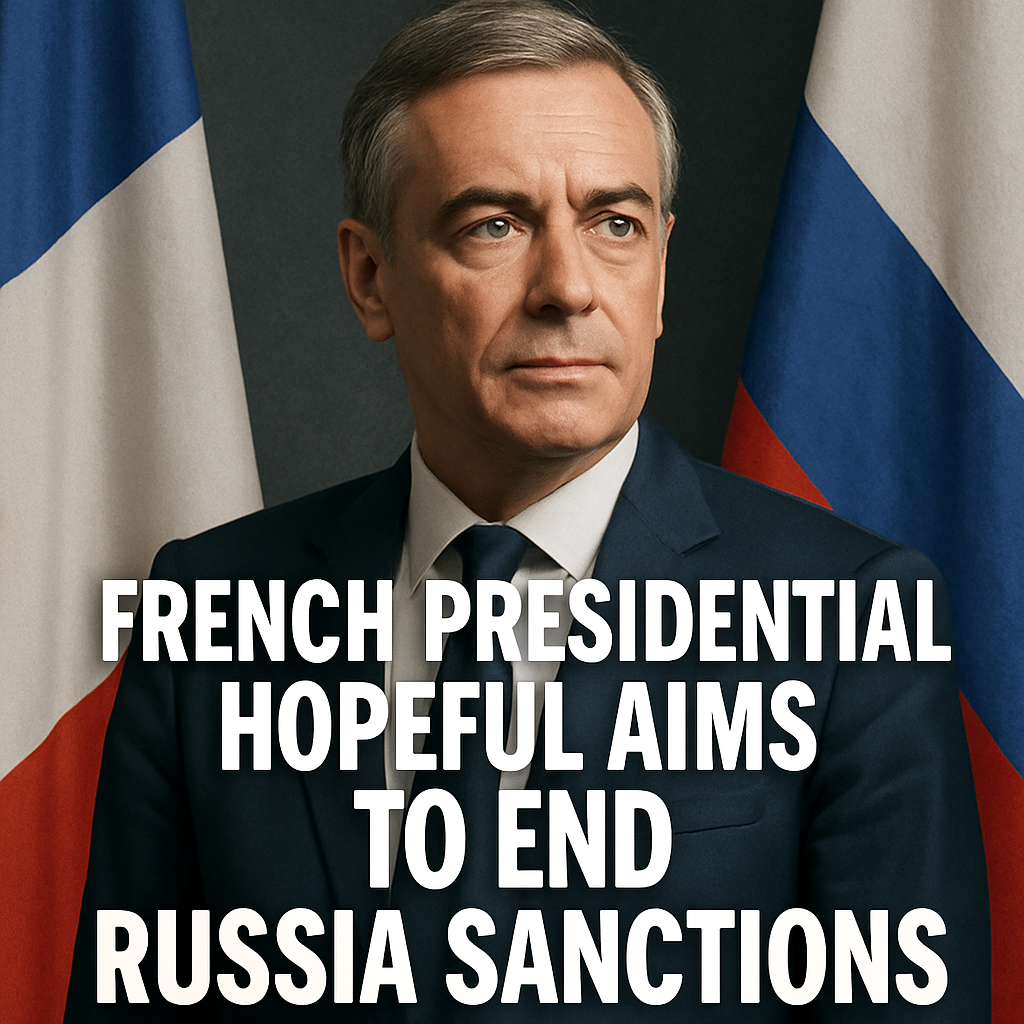
French Presidential Hopeful Aims to End Russia Sanctions

French Presidential Hopeful Aims to End Russia Sanctions
In a striking turn within the French political landscape, a presidential hopeful has emerged advocating for the end of sanctions imposed on Russia. This stance not only encapsulates a significant departure from mainstream political thought in France but also reflects a growing sentiment among some citizens regarding the economic repercussions of these sanctions.

The Case for Ending Sanctions
Philippot, the leader of the patriotic party Les Patriotes, has positioned his campaign around the argument that current sanctions are detrimental to both the French economy and its citizens. He contends that the sanctions, initially aimed at punishing Russia for its actions in Ukraine, have instead led to considerable inflation and rising energy costs in France. Furthermore, he argues that maintaining the sanctions prolongs hostilities and diminishes diplomatic opportunities, suggesting a proactive approach to rebuilding relations with Moscow.


Philippot’s narrative resonates with specific segments of the population who feel the pinch of rising living costs and stagnant wages. According to a poll conducted by Al Jazeera, over 60% of respondents expressed concerns regarding the impact of sanctions on France’s economy, indicating a potential for a shift in public opinion. This sentiment underscores Philippot’s appeal as he seeks to connect with voters who prioritize economic stability and affordability over geopolitical considerations.


Counterarguments: Supporting Continued Sanctions
Contrasting Philippot’s views, many other French political figures maintain that the sanctions are vital for asserting France’s position against aggressive actions taken by Russia. The mainstream opinion, including that of President Emmanuel Macron and members of various parties, argues that maintaining pressure on the Kremlin is crucial to deter future conflicts and uphold international law. They assert that lifting sanctions now could send the wrong message to both allies and adversaries, undermining Europe’s collective security framework.
Critics of Philippot’s approach caution against the potential implications of normalizing relations with a country perceived to be engaging in expansive military aggression. They worry about the message it would send to Ukraine and other nations, which rely on European support against Russian advances.
Weighing the Economic vs. Ethical Considerations
The debate surrounding the sanctions also raises significant ethical questions. While the economic arguments presented by Philippot may resonate on a local level, many who support continued sanctions argue that ethical considerations must take precedence. The conflict in Ukraine is viewed not just as a geopolitical issue but as a humanitarian crisis, with countless civilians caught in the crossfire.
Both sides of the argument reflect a broader tension in European politics, where economic interests frequently clash with moral obligations. The complexity of these issues further complicates public perception, as many individuals find themselves torn between empathy for affected populations and the pragmatism of ensuring their own economic wellbeing.
A Divided France: The Path Forward
As the political atmosphere in France remains polarized, the future implications of Philippot’s campaign could resonate far beyond the presidential elections. His stance reflects a growing dissatisfaction among voters with traditional political responses to international crises, growing fatigue with prolonged sanctions, and an eagerness for a fresh approach to foreign policy.
What remains uncertain is whether this viewpoint will garner enough support to translate into tangible political change. As debates intensify, the necessity for clear and open communication among politicians, citizens, and international stakeholders becomes paramount. Understanding public sentiment and addressing economic concerns while maintaining ethical stances will be essential for the eventual path France takes regarding its relationship with Russia.
The call to end sanctions is not merely a political strategy; it is indicative of a broader desire among some factions in French society to reconsider conventional foreign policy. As the conversation unfolds, it is imperative to balance economic realities with moral imperatives, ensuring that any actions taken truly reflect the complexities of the current geopolitical landscape.















