
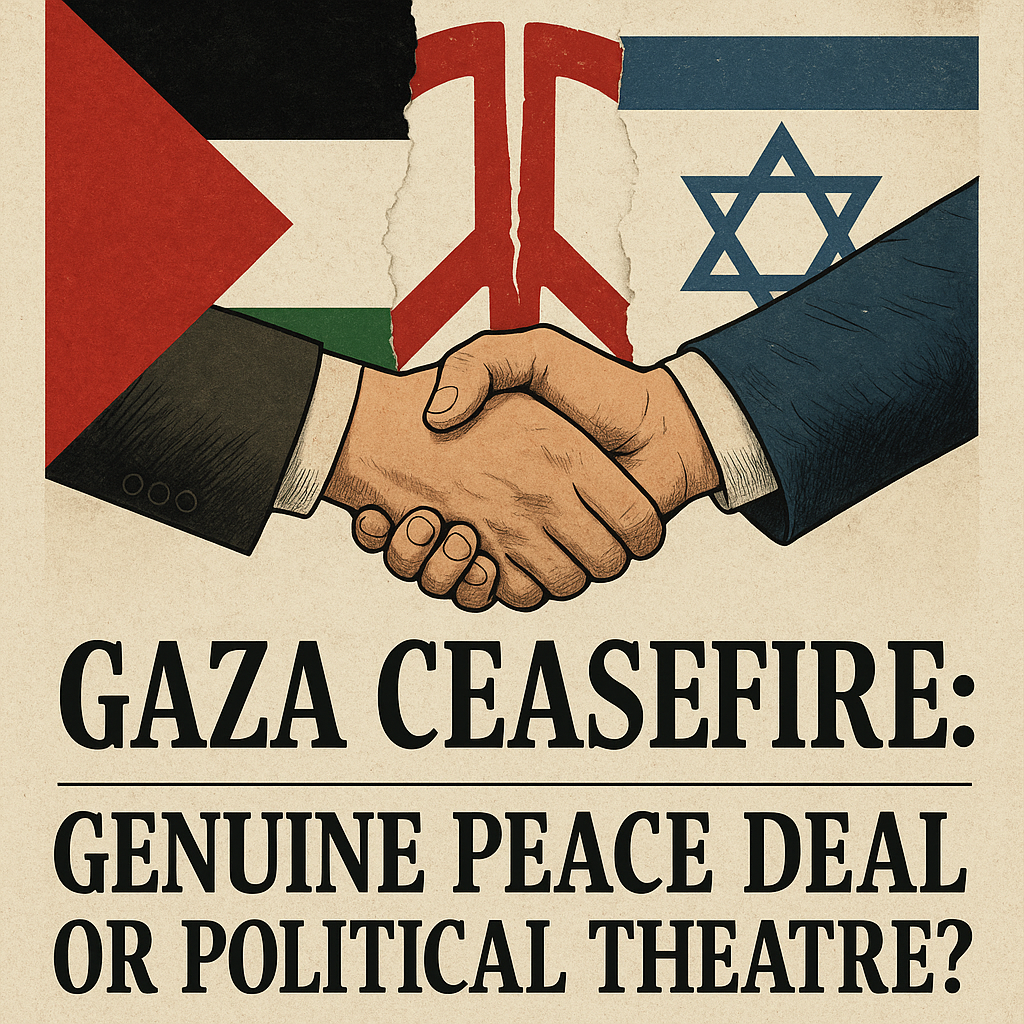
Gaza Ceasefire: Genuine Peace Deal or Political Theatre?

Gaza Ceasefire: Genuine Peace Deal or Political Theatre?
The recent ceasefire in Gaza has raised crucial questions about its authenticity and future implications. Is this truly a stepping stone towards lasting peace, or merely a façade for political maneuvering? With various viewpoints emerging from reputable sources, it is essential to evaluate the claims, sentiments, and unfolding events surrounding this conflict.

Background of the Conflict
The Gaza Strip has been a focal point of tension for years, marked by intermittent bouts of violence. After the latest escalation, various international bodies, including the UN and regional powers, have pushed for a ceasefire. While the cessation of hostilities was welcomed globally, skepticism remains about its longevity and sincerity.


According to Al Jazeera, the ceasefire agreement was brokered under immense international pressure, emphasizing humanitarian needs and the necessity for de-escalation. Yet, reports highlight that underlying grievances, including territorial disputes and broader geopolitical interests, continue to complicate the situation. This mix of urgency and complexity begs the question: can a ceasefire serve as a foundation for meaningful dialogue?


The Arguments For Genuine Peace
One viewpoint champions the ceasefire as a significant achievement in a protracted conflict. Supporters argue that any cessation of violence presents an opportunity for peace negotiations. As noted by Sky News, political leaders have shown signs of willingness to engage in discussions that could pave the way for more lasting resolutions.
– Humanitarian Considerations: The dire humanitarian circumstances in Gaza have fueled arguments for peace. The UN reports indicate that a ceasefire is imperative not just for immediate relief but also to address long-standing issues affecting civilians.
– International Pressure: Influential world leaders have reportedly made commitments to support reconstruction efforts and strengthen peace processes, which underscores the ceasefire’s potential importance beyond mere rhetoric.
While these points suggest a genuine pursuit of peace, they must be juxtaposed against skepticism.
Political Theatre: Doubts and Contradictions
Critics, however, maintain that the ceasefire is more of a political gesture than a commitment to sincere dialogue. RT News points out that past ceasefires have often resulted in temporary relief from violence while failing to address the underlying causes of conflict. There are several reasons for this perspective:
– Historical Precedent: The pattern of repeated ceasefires followed by escalated conflict raises doubts about the current situation. Similar circumstances in the past have led many to question the motives behind this latest agreement.
– Lack of Strategic Framework: Some analysts argue that the ceasefire lacks a comprehensive strategy for addressing key issues—such as the blockade of Gaza and political reconciliation between competing factions. Without addressing these points, the ceasefire may be just a temporary cessation rather than a pathway to peace.
The Complexity of a Lasting Solution
As the dust settles from the latest ceasefire, it remains evident that achieving genuine peace in Gaza is a complex undertaking. The intertwining political, humanitarian, and historical dimensions make any resolution far from straightforward. Various external interests and local factions play pivotal roles in shaping future dynamics.
The Role of International Communities
The international community holds significant sway in determining the trajectory of peace efforts. Al Jazeera highlights that nations with vested interests must engage constructively, rather than contributing to a cycle of instability. The support of international organizations can facilitate dialogue, but this requires adherence to principles of fairness and justice, especially given the historical context of the conflict.
Future Implications
As discussions continue, both optimism and skepticism will shape perceptions of the ceasefire’s potential. Advocates for peace emphasize the humanitarian need for stability, while critics remain alert to the risk of political theatre dominating the narrative. The focus should be on establishing mechanisms to support dialogue and lasting resolution, rather than temporary cessation of violence.
Conclusion: A Path Forward
Ultimately, the Gaza ceasefire represents a fragile truce rather than an assured step toward sustainable peace. While there are valid arguments on both sides, the complexities of the situation demand careful consideration by all stakeholders. Only time will reveal whether this ceasefire evolves into a foundation for genuine negotiation or fades into another chapter of a protracted struggle. Open dialogue, international support, and genuine commitment to addressing core grievances will be essential in charting a path forward for Gaza.















