Gaza Children’s Names Sewn into Tribute Gown by Artist

Honoring Innocence: Gaza Children’s Names Sewn into Tribute Gown by Artist
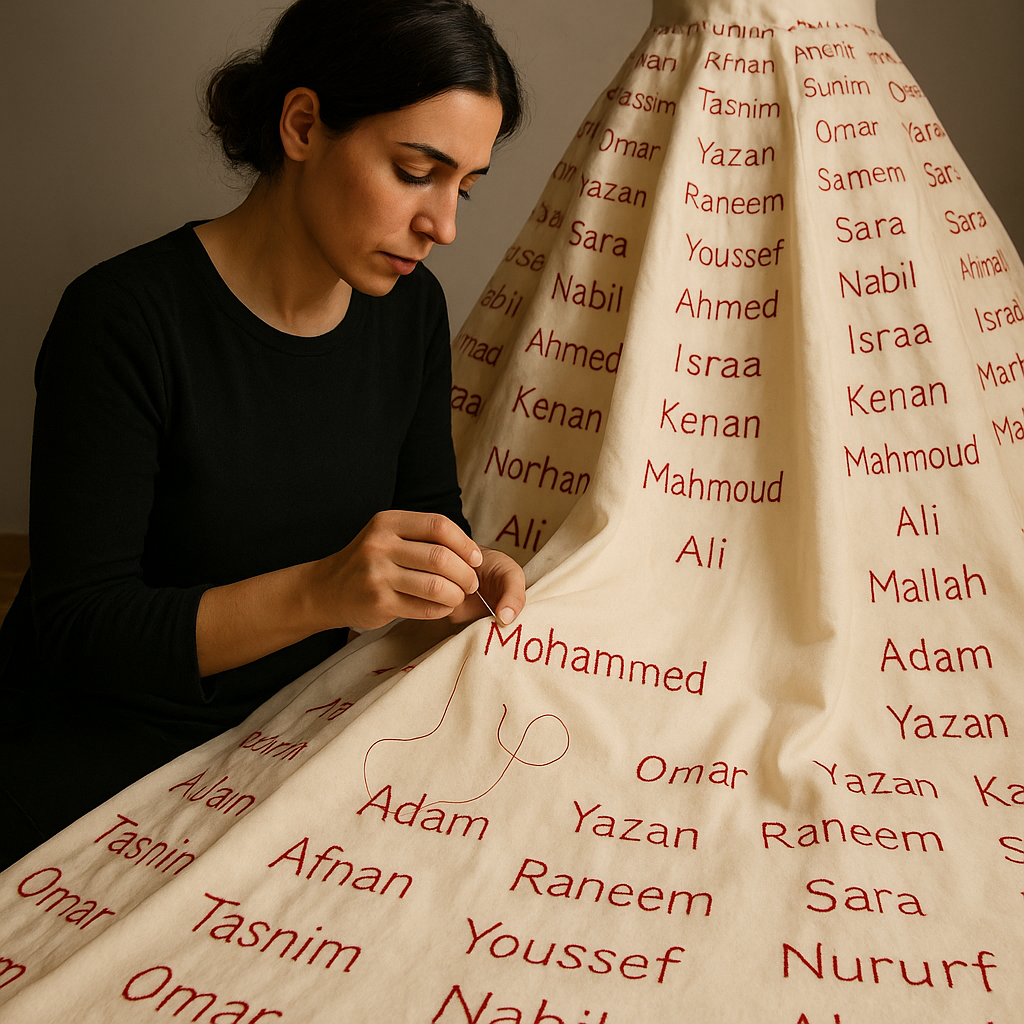
In a poignant act of remembrance, an artist has taken to fabric to make a devastating statement about the loss of life in Gaza, creating a gown adorned with the names of children killed during recent conflicts. This tribute, while deeply moving, amplifies ongoing discussions surrounding the impact of violence on vulnerable populations, particularly children in conflict zones.

The Tribute Gown: A Symbol of Loss and Resilience
The artist, whose work aims to highlight the profound grief experienced by families who have lost loved ones, utilized a traditional gown as a canvas to display the names of these young victims. The gown serves not only as a piece of art but as a narrative of collective sorrow. Each name sewn into the fabric represents a life cut short and a family left in mourning.


Artistic expressions like this gown can bridge gaps between communities, fostering dialogue about the human cost of conflict. Various cultural commentators suggest that such works compel observers to confront uncomfortable realities, prompting empathy and awareness about the plight of children in war-torn regions.


Diverging Perspectives: Art as Protest vs. Art as Division
However, the artwork has elicited a range of responses. While many commend the artist for bringing attention to the plight of Gaza’s children, others argue that focusing solely on one side of the conflict can deepen divisions. Critics point out that while the loss of innocent lives is undeniable, a broader context is necessary for a comprehensive understanding of the conflict’s complexities.
For instance, some commentators argue that highlighting the suffering of Palestinian children should not obscure the suffering experienced by all those affected by violence in the region. The varying viewpoints underscore a fundamental tension in discussions surrounding art that addresses political themes. Is the purpose of such expressions to foster unity and healing, or do they risk entrenching existing divides?
Furthermore, the emotional weight carried by the exhibit forces audiences to grapple with their own feelings of helplessness in the face of systemic violence. This blend of admiration and criticism illustrates the multifaceted nature of the tribute and the discussions it ignites.
Seeking Common Ground: The Need for Continued Dialogue
One thing is clear: the narratives surrounding Gaza and its children do not exist in a vacuum. As conflicts persist, the plight of innocent lives must remain central in any discourse. Advocates for peace emphasize the importance of recognizing not only individual tragedies but also the broader context of the conflict in order to foster deeper understanding and solutions.
Collaborative arts initiatives focusing on shared human experiences may offer a path forward. Various organizations have sought to bring together artists from both sides of the conflict to share their stories, thereby encouraging empathy and connection instead of division. These efforts reflect a growing awareness that healing in such a fractured landscape requires building bridges rather than erecting barriers.
The Ongoing Impact of Conflict on Children
The consequences of war on children extend far beyond immediate loss. Psychological trauma, disruption of education, and the loss of familial structures compound the challenges faced by young individuals in conflict zones, shaping their futures in profound ways. The United Nations and various humanitarian organizations continue to highlight the urgent need for protective measures and programs aimed at safeguarding children affected by violence.
In conclusion, the tribute gown featuring the names of Gaza’s children is more than an artistic endeavor; it represents a cry for recognition of suffering and a call to action for a world that too often overlooks the innocent casualties of war. As diverse voices weigh in, it is crucial for observers to engage thoughtfully with these narratives. Only through sustained dialogue and shared responsibility can we hope to mitigate the impact of such conflicts on the most vulnerable among us.