
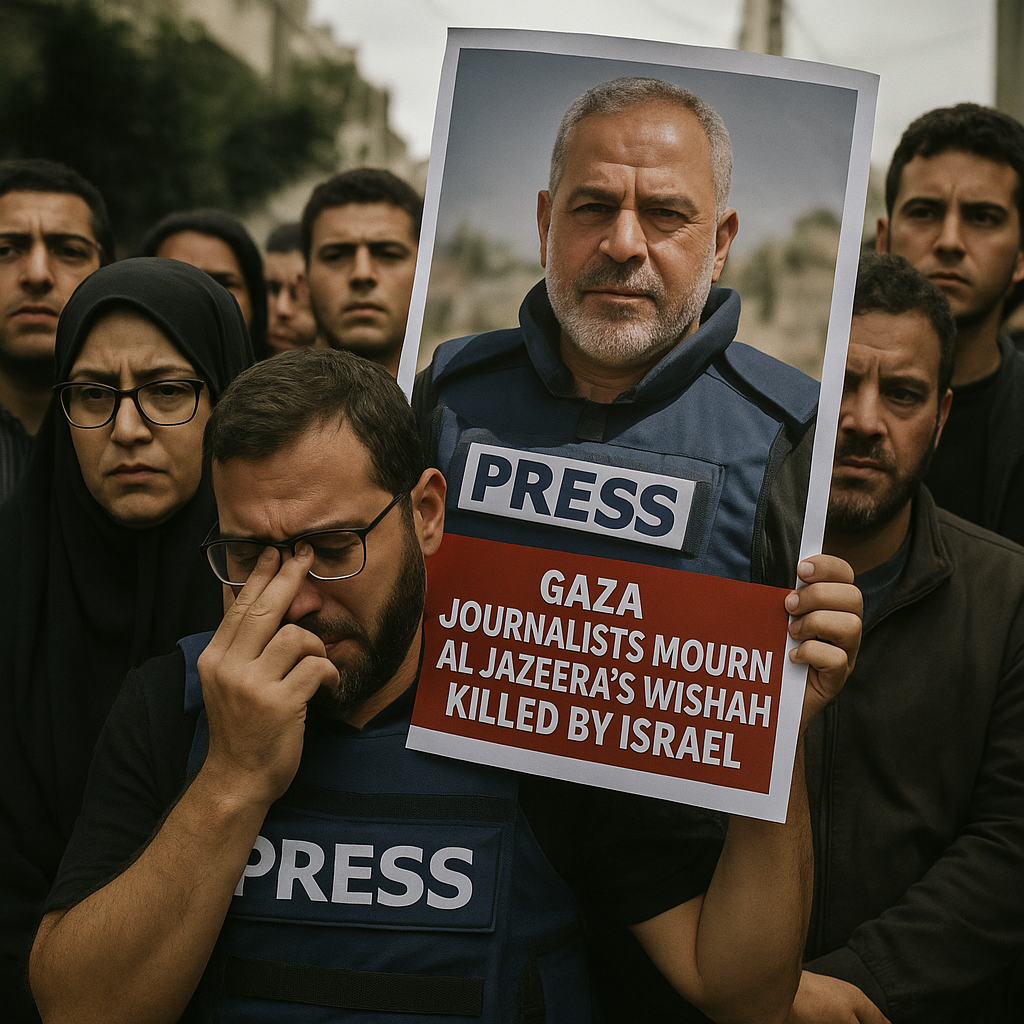
Gaza Journalists Mourn Al Jazeera’s Wishah Killed by Israel

Gaza Journalists Mourn Al Jazeera’s Wishah Killed by Israel
In the ongoing conflict in Gaza, the tragic death of prominent journalist Ghazi Wishah, an Al Jazeera correspondent, has ignited a wave of mourning among journalists and media professionals. This incident highlights not only the personal loss felt by Wishah’s family and colleagues but also the broader implications for press freedom and safety during hostilities.

The Context of the Incident
The killing of Wishah occurred amidst a backdrop of increased military activity in Gaza, where journalists often face significant risks. Eyewitness reports indicate that he was targeted by Israeli airstrikes while covering developments in the region. His death has provoked reactions from various organizations, including Al Jazeera, which condemned the attack as an assault on press freedom.


Al Jazeera characterized him as a dedicated journalist who served as a crucial voice during the Gaza conflict. His colleagues remember him not just for his professional skills but also for his commitment to truthful reporting amidst chaos. This sentiment resonates with many in the journalistic community, who emphasize the vital role of reporters in war zones.


A Snapshot of Reactions
Responses varied significantly among different factions:
– Al Jazeera and Fellow Journalists: Many of Wishah’s colleagues expressed profound grief over his untimely death. Al Jazeera published statements emphasizing the inherent dangers that journalists face in conflict zones and their commitment to covering the truth, no matter the cost. They called for accountability and justice, insisting that protecting journalists is essential for public awareness and democratic discourse.
– Israeli Government Officials: On the contrary, some Israeli officials contended that actions taken were necessary for national security and framed the situation as unfortunate but unavoidable in the context of a broader military operation against groups they label as terrorists. This response has drawn criticism from international press freedom advocates, who argue that the loss of a journalist cannot be dismissed as collateral damage in military strategies.
While professional outrage echoes throughout the journalism community for Wishah’s death, the clean lines dividing combatants from non-combatants continue to blur in a complex conflict marked by deep historical grievances.
The Significance of Journalistic Integrity
The death of Ghazi Wishah not only highlights the personal tragedy experienced by those who knew him but also raises critical questions about the protection of journalists in conflict areas. The Committee to Protect Journalists (CPJ) and Reporters Without Borders have consistently urged for enhanced measures to safeguard journalists globally.
Press Safety in Conflict Zones
– The Risks Involved: Journalists working in war zones must contend with various dangers, ranging from intentional targeting to being caught in crossfires. Organizations advocating for press freedom insist on the need for better protocols and protections for reporters on the ground.
– International Responses: Calls for international mechanisms to hold accountable those responsible for targeting journalists have intensified, especially following tragic incidents like Wishah’s. The question remains: how can the international community ensure that reporters are protected in conflict zones?
As the mourning continues for Wishah, the international community faces pressures to respond more effectively against violations of press freedom, particularly in areas characterized by military conflicts.
Diving Deeper Into the Narrative
Despite the widespread mourning and calls for justice in Wishah’s case, the discourse is further complicated by differing narratives regarding the Israel-Palestine conflict itself. Some media outlets emphasize the perspective of the Palestinian struggle, often portraying journalists as vital voices in relaying their stories. Conversely, others lean towards justifying military actions based on national security concerns.
– Diverse Reporting: The challenge for news organizations is to strike a balance that accurately presents the complexities of the conflict while honoring the lives of those, like Wishah, who are lost in the fray. Ethical journalism demands a nuanced approach that transcends partisanship.
– An Evolving Landscape: In the wake of Wishah’s death, many advocates are calling for new frameworks to prevent the targeting of journalists. Measures could include improved safety training, clearer communication lines with military forces, and international legal repercussions aimed at protecting press freedom.
Conclusion: A Call for Action
The mourning of Ghazi Wishah represents more than just the loss of a colleague; it underscores the urgent need for systemic changes to protect journalists covering conflicts. While the reality remains complex and multifaceted, the united response from the global journalism community suggests a pressing demand for accountability and recognition of their critical role in disaster situations.
As discussions on press freedom continue, the tragic lesson of Ghazi Wishah’s death should serve as a catalyst for meaningful dialogue around the safety and rights of journalists in war-torn regions, ensuring that their commitment to truth-telling is honored and protected.















