
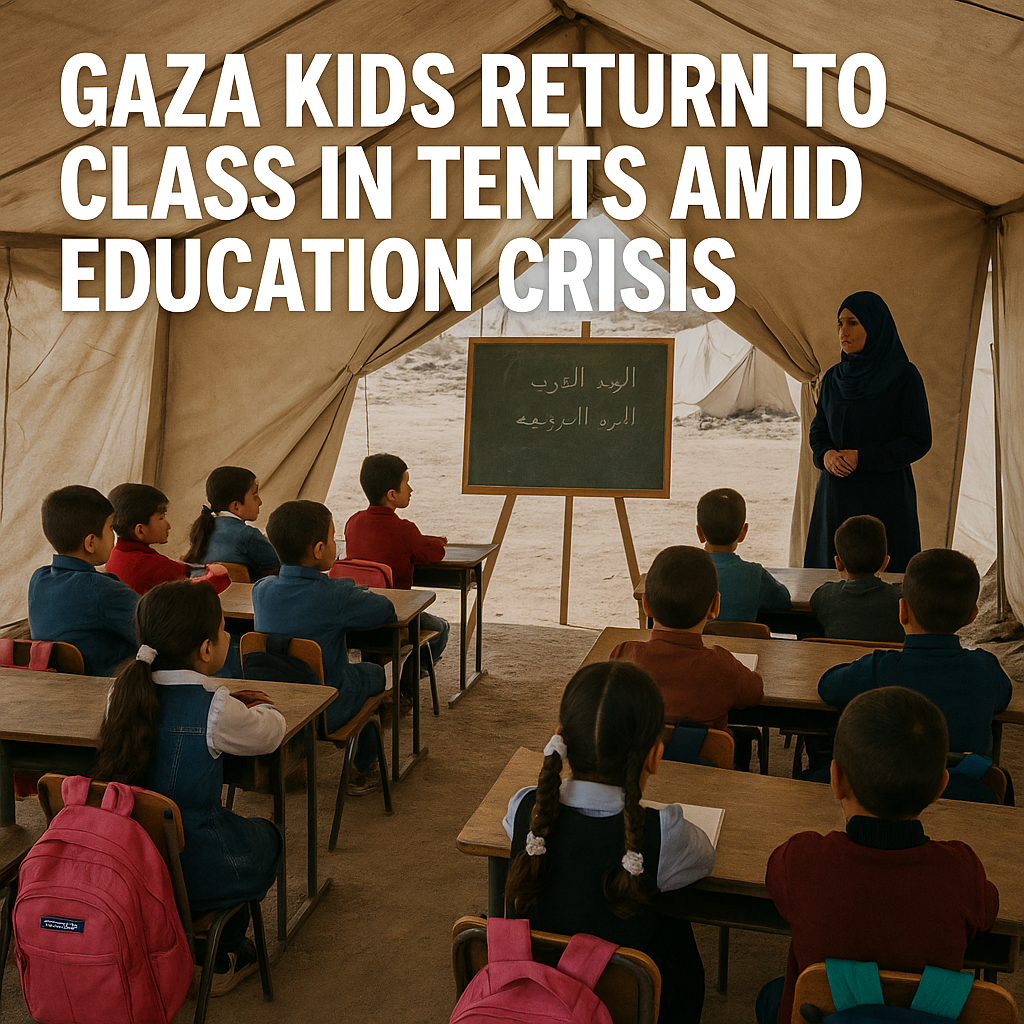
Gaza Kids Return to Class in Tents Amid Education Crisis

Gaza Kids Return to Class in Tents Amid Education Crisis
The situation in Gaza has stirred international concern as children return to school—not in traditional classrooms, but in makeshift tents. This troubling scene symbolizes a burgeoning education crisis that transcends mere logistics, encapsulating profound societal issues resulting from years of conflict and instability.

The Context of the Education Crisis
The education system in Gaza faces unprecedented challenges exacerbated by ongoing conflicts, economic strife, and infrastructural damage. Recent reports have surfaced describing how schools are operating in improvised tents, leaving children with inadequate facilities for learning. Al Jazeera highlights these dire circumstances, emphasizing that the education system is on the brink of collapse.


Life in Tents: An Urgent Necessity
The ad hoc educational settings have arisen as a necessary response to the destruction of many schools due to recent conflicts. According to Al Jazeera, a significant number of buildings were either damaged or repurposed, pushing educators and policymakers to seek alternatives.


> “In the face of ruin, tents have emerged as the only option for many students,” a local educator stated.
In these tents, children endure extreme weather elements and subpar learning conditions, significantly hindering their educational experience. The makeshift classrooms are equipped with only the most essential supplies, a far cry from the resources typically available in formal school environments. Yet, educators strive to create a semblance of routine, hoping to provide continuity despite overwhelming circumstances.
Opinions on Sustainability and Solutions
When discussing the sustainability of education in Gaza, viewpoints vary dramatically among stakeholders. On one hand, local authorities advocate for immediate aid from international organizations to help restore the damaged educational infrastructure. They argue that rebuilding schools is paramount to ensure a stable educational environment for future generations.
Conversely, some critics question the long-term impact of humanitarian assistance and newfound functionality of temporary education settings. An article from RT claims that such solutions might serve as a temporary fix without addressing the roots of the problem—namely, the ongoing conflict and economic sanctions that cripple Gaza’s development. This sentiment underscores the need for a more holistic approach to Gaza’s education crisis, urging for policy changes that not only focus on immediate needs but also long-term solutions.
The Broader Implications of an Education Disrupted
The ramifications of this education crisis extend beyond the immediate physical learning environment. According to reports from Sky News, there’s a profound psychological impact on children who’ve experienced disruption in their education. The uncertainty of their circumstances can lead to emotional and social challenges that affect their ability to learn and grow.
The Importance of Education for Future Generations
Education is not merely a conveyance of knowledge; it is a pivotal element for any society’s progress. The UN has warned that if this crisis is not addressed, the current generation of children in Gaza may face grim prospects, often caught in a cycle of poverty and conflict.
Investments in education are seen as crucial for fostering peace and stability; thus, the effective reform of Gaza’s educational framework should be part of broader peace-building efforts. The international community is urged to play a crucial role in facilitating dialogue among competing factions, focusing on long-standing peace agreements that prioritize educational reform as an essential factor for rebuilding society.
Conclusion
As the children of Gaza return to class in tents, the scene is stark and serves as a powerful reminder of the fragility of their educational system amid a prolonged crisis. The insights from various reports illustrate not only the immediate difficulties these children face but also the broader implications for future stability in the region.
While some propose immediate aid and support to adapt to the current crisis, others emphasize the need for rethinking and reshaping the core issues that underpin Gaza’s education woes. Without a sustainable approach to addressing these challenges, the hopes for a brighter future for Gaza’s children may remain just that—hopes.
Balancing urgency with a strategic viewpoint might be the key to navigating the complexities of this ongoing situation, with education as a critical focal point in the journey toward recovery and resilience.















