
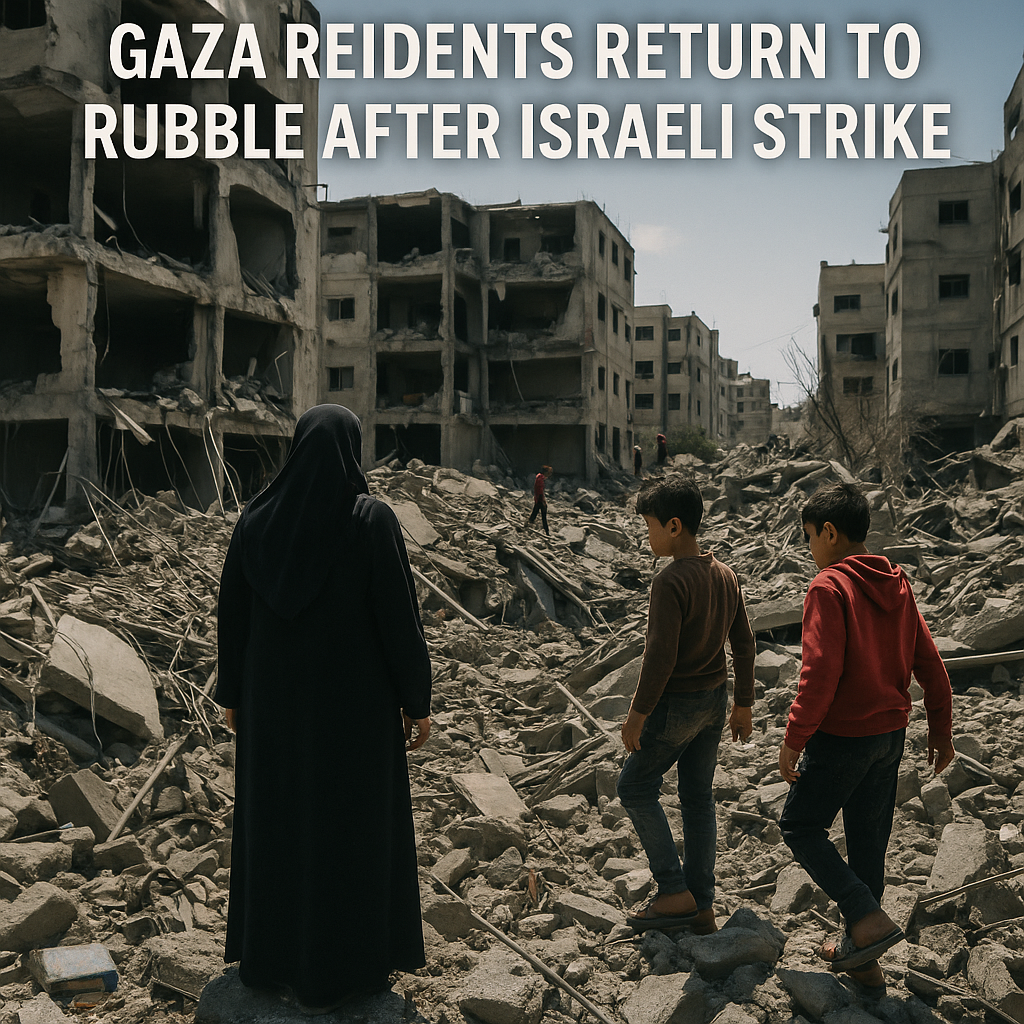
Gaza Residents Return to Rubble After Israeli Strike

Gaza Residents Return to Rubble After Israeli Strike
The recent escalation in Gaza has left residents facing an overwhelming reality: returning to devastation after Israeli airstrikes. These strikes, which were reportedly aimed at military targets, have had catastrophic impacts on civilian life, underscoring the ongoing humanitarian crisis in the region.

The Human Cost
As buildings crumbled and homes were destroyed, countless families have found themselves with nowhere to go. Reports indicate that many residents returned to what is left of their neighborhoods, navigating through a landscape of rubble and despair. The aftermath of the airstrikes is not merely structural damage but profound emotional scars etched into the community. According to local sources, families are grappling with the loss of loved ones and the memories associated with their homes, now reduced to debris.


The United Nations has highlighted the distressing humanitarian situation, stating that essential services are increasingly strained. Access to basic necessities, such as clean water and medical care, has become ever more difficult. In an emergency appeal, UN officials emphasized that the international community must respond decisively to the urgent needs of the Gazan population and push for a ceasefire.


Diverging Perspectives on the Conflict
The situation has attracted varied responses from global media and political authorities. While some outlets focus on the Israeli perspective, emphasizing the need to counter threats from militant groups, others highlight the humanitarian plight of civilians affected by the violence. For instance, reports from Al Jazeera detail the harrowing experiences of returning residents and their struggles with displacement. Footage captures their emotional return, showcasing the resilience of people attempting to rebuild their lives amidst trauma.
Conversely, some analyses provided by Western news agencies often contextualize the strikes within national security narratives, linking them to broader geopolitical tensions. This perspective frequently emphasizes Israel’s right to defend itself against militant attacks. However, critics argue that such narratives risk overshadowing the immediate suffering of civilians caught in the crossfire. They call for a balanced discourse that acknowledges both security concerns and humanitarian imperatives.
The Larger Implications
The rising death toll and extensive destruction in Gaza prompt questions that extend beyond immediate security measures. International observers advocate for a renewed commitment to peace negotiations, urging parties involved to consider long-term solutions rather than a cycle of violence. The repeated patterns of escalation and retaliation reveal the need for deeper understanding and dialogue regarding the grievances of both sides.
Furthermore, the humanitarian crisis in Gaza is exacerbated by the ongoing blockade, limiting the flow of aid and resources necessary for rebuilding. With winter approaching, the urgency of the situation has escalated, prompting organizations such as Amnesty International to call for immediate action from world leaders to relieve the suffering.
Conclusion: Seeking a Path Forward
The return of Gaza residents to rubble encapsulates the heartbreaking reality of war, where civilians bear the brunt of conflicts often beyond their control. While opinions diverge on the paths forward, there exists a universal call for protecting human life. Compassionate responses that prioritize humanitarian assistance and diplomatic efforts are critical in addressing the ongoing crisis. Moving forward, achieving a sustainable peace that respects the rights and aspirations of both Palestinians and Israelis remains an imperative goal, one not easily attainable but desperately sought after in these turbulent times.















