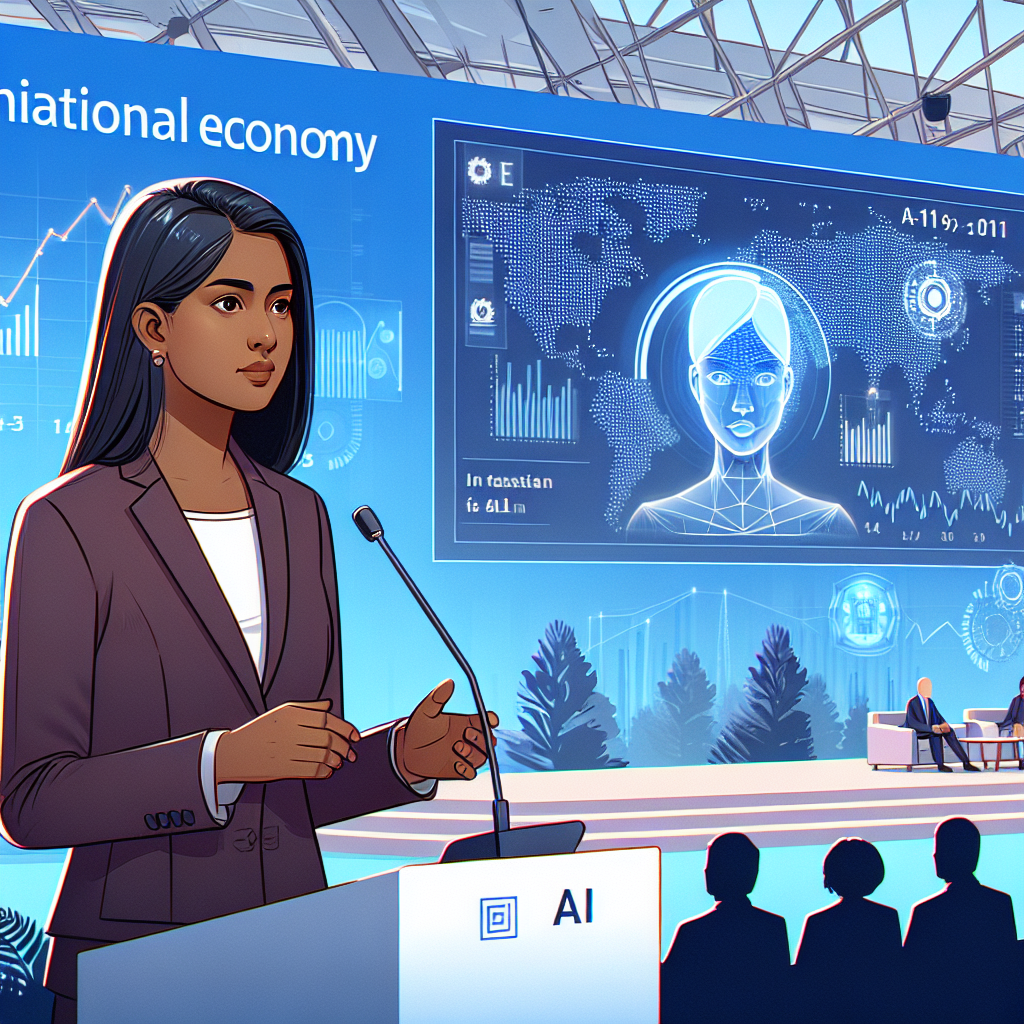
“Gita Gopinath Highlights AI’s Impact on 26% of India’s Workforce at Davos”

Gita Gopinath Highlights AI’s Impact on 26% of India’s Workforce at Davos
Introduction
At the World Economic Forum in Davos, Gita Gopinath, the Deputy Managing Director of the International Monetary Fund (IMF), shed light on the transformative impact of Artificial Intelligence (AI) on India’s workforce. Her insights emphasized the significant changes AI is expected to bring to the employment landscape in India.

Key Insights from Gopinath’s Address
AI’s Influence on Employment
- AI is projected to affect 26% of India’s workforce, altering job roles and skill requirements.
- The technology is expected to create new opportunities while also posing challenges to existing job structures.
Opportunities and Challenges
- AI could lead to increased productivity and innovation across various sectors.
- There is a potential risk of job displacement, particularly in roles that involve routine tasks.
- Upskilling and reskilling initiatives are crucial to prepare the workforce for AI-driven changes.
Strategic Recommendations
- Investment in education and training programs to equip workers with AI-related skills.
- Policy frameworks to support a smooth transition for affected workers.
- Encouragement of public-private partnerships to foster innovation and job creation.
Conclusion
Gita Gopinath’s address at Davos underscores the dual nature of AI’s impact on India’s workforce, highlighting both the opportunities for growth and the challenges of job displacement. Her recommendations stress the importance of proactive measures, such as upskilling and strategic policy-making, to harness AI’s potential while mitigating its risks. As AI continues to evolve, India’s approach to integrating this technology will be crucial in shaping its economic future.