
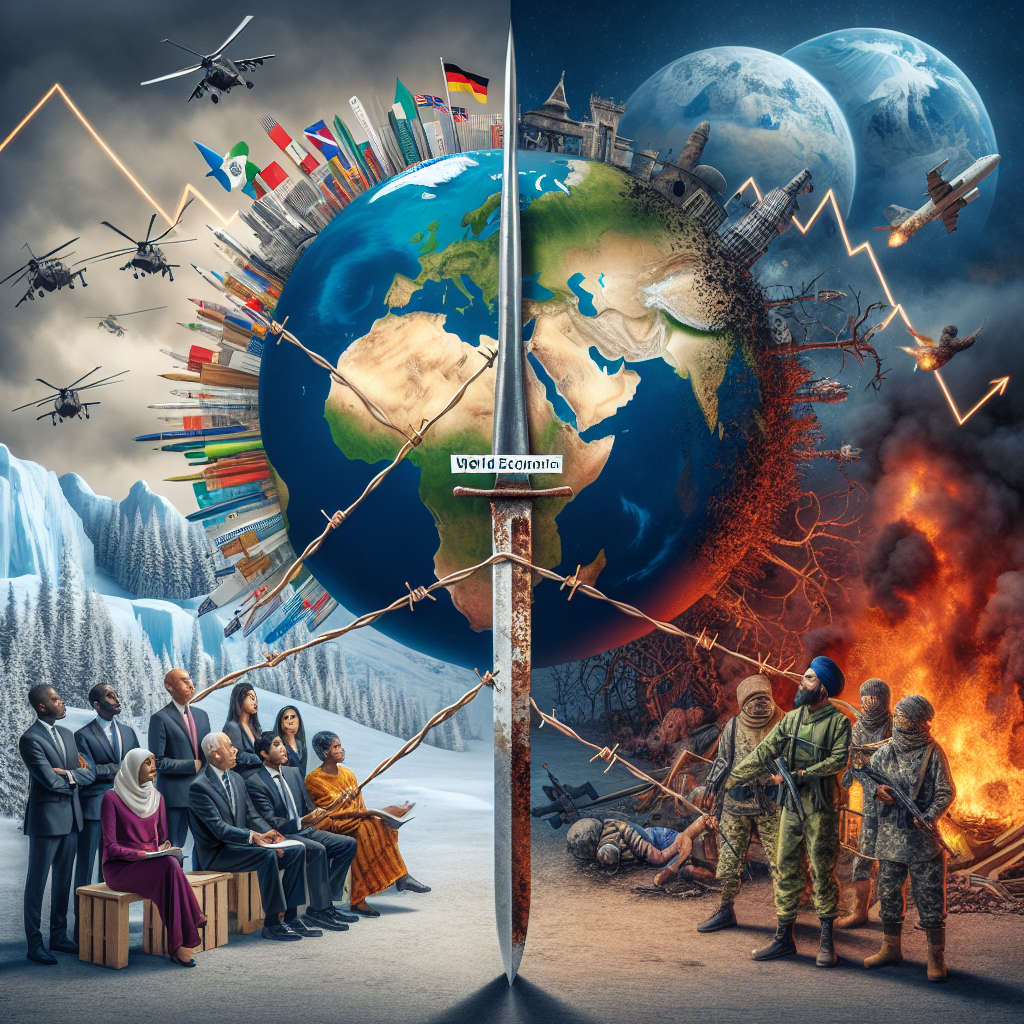
Global Economic Uncertainty Fueled by Armed Conflict and Climate Change: WEF

Global Economic Uncertainty: A Dual Threat
Introduction
The World Economic Forum (WEF) has highlighted a growing concern over global economic instability, driven by the dual challenges of armed conflict and climate change. These factors are creating a complex landscape that threatens economic growth and stability worldwide.

Key Drivers of Economic Uncertainty
Armed Conflict
Armed conflicts across various regions are disrupting global supply chains and increasing geopolitical tensions. The economic impact is significant, affecting trade, investment, and market confidence.


- Disruption of supply chains
- Increased geopolitical tensions
- Negative impact on trade and investment
Climate Change
Climate change is exacerbating economic vulnerabilities by causing extreme weather events and resource scarcity. These environmental challenges are leading to increased costs and risks for businesses and governments alike.


- Extreme weather events
- Resource scarcity
- Increased costs and risks
Implications for Global Economy
The combined effects of armed conflict and climate change are creating a volatile economic environment. This uncertainty is prompting businesses and policymakers to reassess strategies and prioritize resilience and sustainability.
Conclusion
The WEF’s report underscores the urgent need for coordinated global efforts to address these dual threats. By fostering international cooperation and investing in sustainable solutions, the global community can mitigate the risks and pave the way for a more stable economic future.
In summary, the intertwined challenges of armed conflict and climate change are fueling global economic uncertainty. Addressing these issues requires a concerted effort to enhance resilience and sustainability in economic planning and policy-making.















