
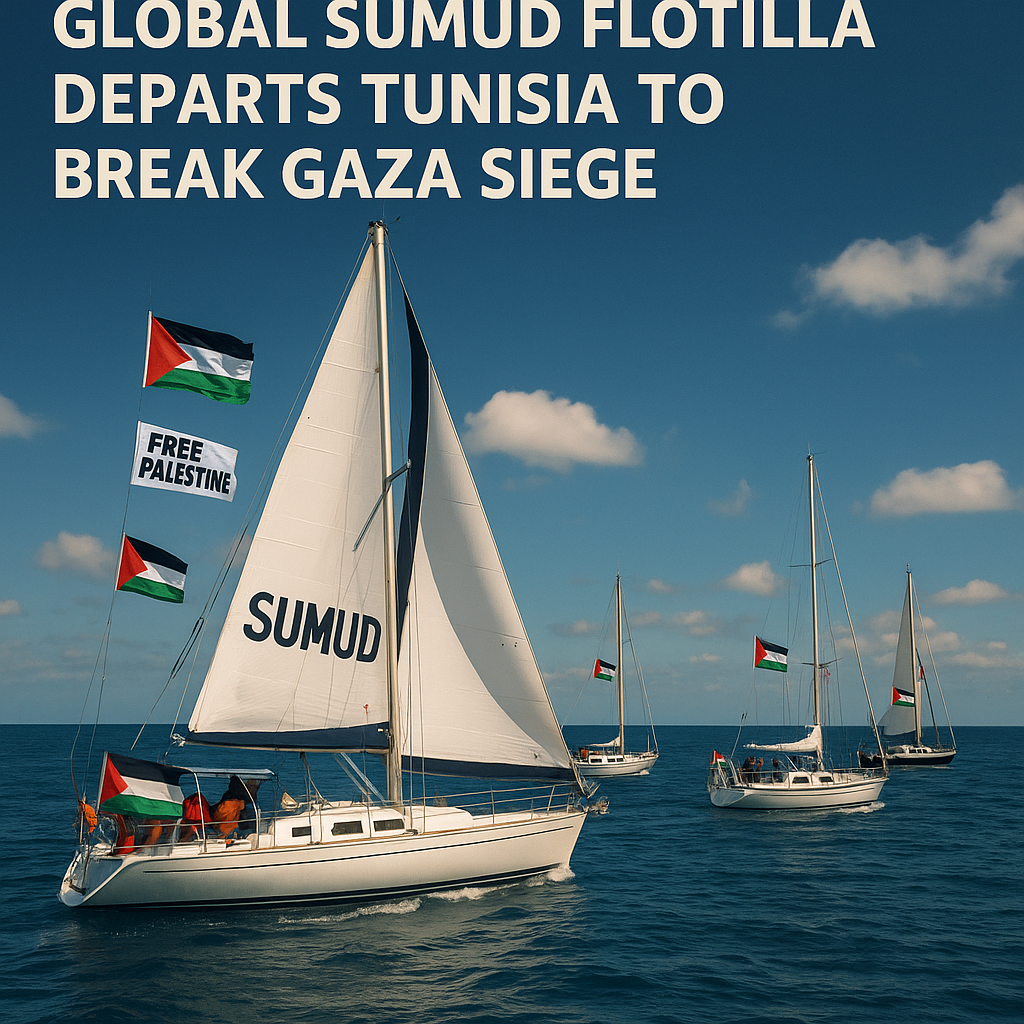
Global Sumud Flotilla Departs Tunisia to Break Gaza Siege

Global Sumud Flotilla Departs Tunisia to Break Gaza Siege
In a bold maritime endeavor aimed at challenging the longstanding Gaza siege, the Global Sumud Flotilla has set sail from Tunisia. This initiative is characterized by a strong sense of solidarity among activists and supporters who seek to draw international attention and advocate for the rights of Palestinians living under blockade.

A Symbol of Resistance and Solidarity
The Global Sumud Flotilla consists of multiple vessels carrying humanitarian aid and messages of hope to the besieged residents of Gaza. Supporters argue that this mission not only serves as a practical effort to provide much-needed supplies but also symbolizes a larger resistance against perceived injustices. As reported by Al Jazeera, proponents of the flotilla express that it is crucial for the international community to take a stand in support of Palestine, particularly as the humanitarian situation in Gaza continues to deteriorate.


Activists aboard the flotilla have emphasized the urgency of their mission. They assert that the people of Gaza are facing severe shortages of essential resources, including medical supplies, food, and water. With the blockade intensifying over the years, the flotilla is portrayed as more than a humanitarian initiative; it aims to send a powerful political message that the people of Gaza will not be forgotten.


However, the undertaking is not without risks and challenges. The flotilla could potentially face interception by Israeli naval forces, as has occurred in previous attempts by similar missions. For instance, past flotillas have frequently encountered conflict, with some resulting in severe consequences including arrests and violent confrontations.
Mixed Reactions: Support and Opposition
The departure of the flotilla has garnered varied reactions on the international stage. Supporters praise its mission as a necessary articulation of solidarity, while detractors view it as a provocative act that might escalate tensions in an already volatile region.
Some analysts maintain that while the effort has noble intentions, it risks inflaming diplomatic relations and further complicating the humanitarian landscape. As expressed by commentators in sources like RT, there is concern that such actions might result in heightened military responses from Israel, potentially jeopardizing lives both on the flotilla and within Gaza.
Critics also highlight the effectiveness of such initiatives, questioning whether they serve to promote tangible change or simply act as symbolic gestures. They argue that meaningful assistance to the people of Gaza could more effectively be delivered through diplomatic channels rather than direct confrontation against military forces.
The Humanitarian Perspective
The humanitarian crisis in Gaza has reached alarming levels, with frequent reports of escalating needs amid ongoing political conflicts. According to a report by Al Jazeera, over two million residents face severe restrictions that compromise not just daily living conditions but also health and wellbeing. As the flotilla departs, the focus on humanitarian motives could potentially shift the narrative surrounding Gaza—drawing global attention that advocacy groups hope will lead to greater pressure on policymakers.
Additionally, the involvement of diverse activists—spanning different nationalities and backgrounds—highlights a united front in calling for change. Reports indicate that the flotilla’s participants include individuals from various countries, coming together with a shared goal of making visible the plight of Palestinians. This aspect of the endeavor underscores its cultural and social significance, as it aims to bridge divides and foster international awareness.
What Lies Ahead for the Flotilla
As the Global Sumud Flotilla continues its journey, numerous questions loom regarding its potential outcomes and consequences. Will it succeed in delivering its humanitarian aid, or will it be met with opposition that stifles its efforts? Furthermore, how will the Israeli government respond, and what implications might that hold for broader geopolitical dynamics in the region?
While uncertainty is inherent in such conflicts, the flotilla’s departure signifies a moment of both hope and trepidation. The risks involved are significant, yet the resolve shown by its members reflects a commitment to advocating for fundamental human rights, even amid adversity.
Conclusion: A Call for Dialogue and Action
The Global Sumud Flotilla’s initiative to challenge the Gaza siege should encourage a critical dialogue surrounding the complex realities facing Palestinians. It serves as a reminder of the persistent struggles for dignity and justice that transcend borders. As various stakeholders weigh in on the implications of this maritime venture, it is essential to approach the topic with empathy and attentiveness to the nuanced perspectives involved.
Global awareness and collective action could indeed play pivotal roles in affecting change, and as the flotilla sails onward, its impact—whether felt through direct humanitarian aid or as a catalyst for wider discourse—remains to be seen. Balancing humanitarian efforts with political realities will be crucial in shaping future dialogues around the Israeli-Palestinian conflict and the ongoing plight of Gazans.















